Virtual Reality Headset
Step Inside a Digital World!
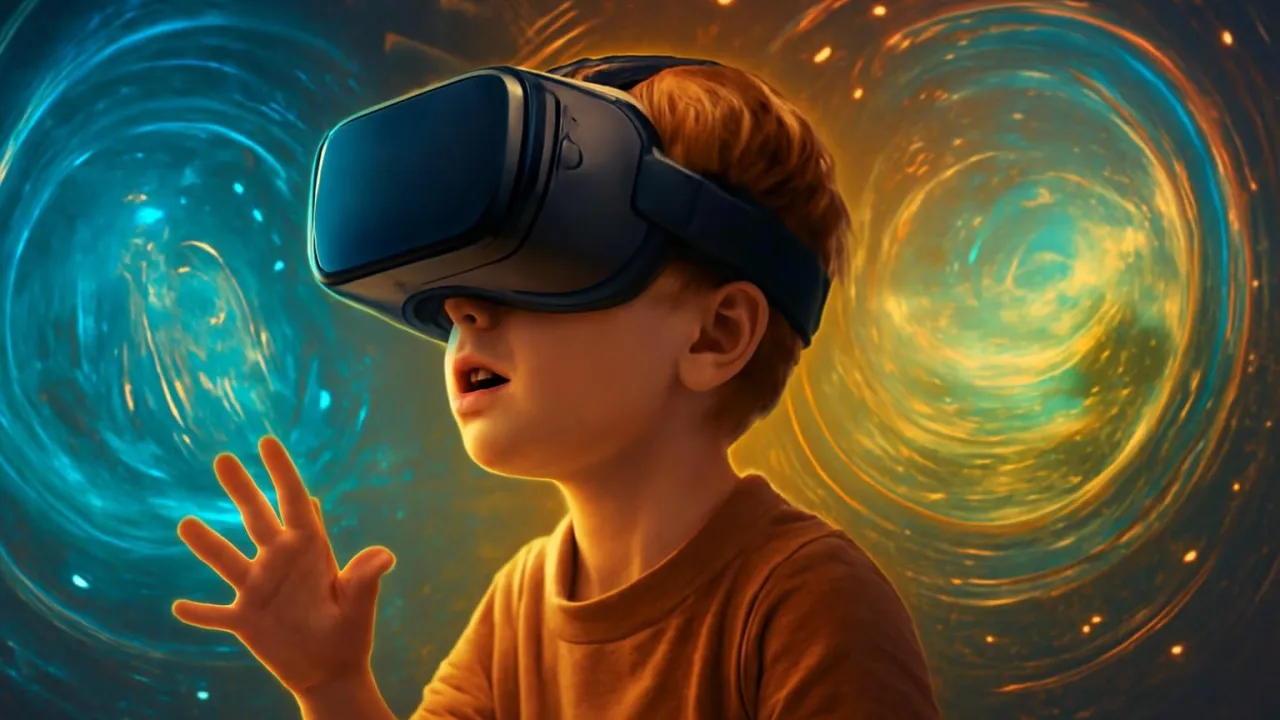
Modern VR headsets can display over 16 million colors and refresh images up to 120 times per second!
1 The Science of Virtual Worlds
Virtual reality headsets create immersive experiences by combining advanced display technology, precise optics, and motion tracking. Each headset contains two high-resolution screens—one for each eye—paired with convex lenses that bend light to simulate depth, producing a stereoscopic 3D effect. Motion sensors, including gyroscopes and accelerometers, detect even the slightest head movement, while some systems use external cameras or infrared sensors to track your position in space. This integration of hardware and software enables the headset to update the digital scene in real time, maintaining the illusion of presence.
2 Engineering for the Human Brain
To prevent discomfort, VR headsets must minimize —the delay between your movement and the screen’s response. Most modern systems achieve latencies below 20 milliseconds, which is fast enough to keep your brain convinced that the virtual world is real. Field of view, refresh rate, and pixel density are all carefully engineered to match human vision. Some headsets also include eye-tracking, allowing for , where only the part you’re looking at is rendered in full detail to save computing power.
3 From Gaming to Global Solutions
While VR is popular for immersive gaming, its impact extends far beyond entertainment. Medical professionals use VR simulations for surgical training, exposure therapy, and even pain management. Scientists and engineers explore virtual prototypes of spacecraft, buildings, and vehicles before constructing real ones. In education, students can explore ancient civilizations or conduct virtual chemistry experiments, making abstract concepts tangible and memorable.
4 A Brief History and Future Vision
The concept of virtual reality dates back to the 1960s, when Ivan Sutherland created the first head-mounted display, nicknamed the 'Sword of Damocles.' However, it wasn’t until Palmer Luckey’s Oculus Rift in 2012 that consumer VR became practical and popular. Today, companies like Sony, Meta, and HTC continue to advance VR technology, making headsets lighter, more affordable, and more interactive. As wireless systems and become standard, the line between virtual and real continues to blur.
5 Transforming How We Experience the World
Virtual reality has the potential to revolutionize communication, creativity, and problem-solving on a global scale. Remote teams collaborate in shared virtual offices, doctors treat patients across continents, and artists sculpt in digital space. As VR technology evolves, it raises important questions about accessibility, ethics, and the boundaries of human experience. The headset is not just a gadget—it’s a gateway to new ways of seeing, learning, and connecting.
1. Why is low latency important in virtual reality?
2. Which early invention inspired today’s VR headsets?