Mechanical Clock
Tick-Tock Timekeepers That Changed the World
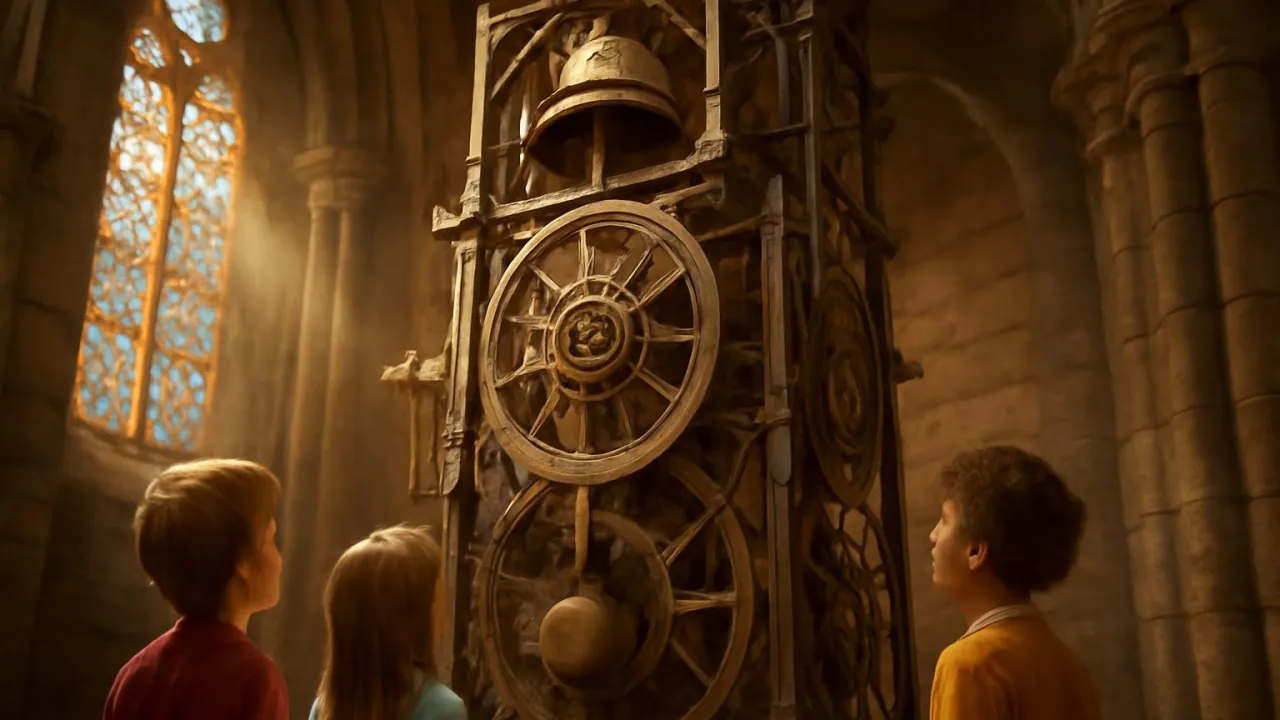
The Strasbourg astronomical clock has over 18,000 moving parts and tracks planets and eclipses!
1 The Mechanical Clock: An Engineering Marvel
In the late 13th century, European inventors revolutionized timekeeping by creating the first true mechanical clocks. These devices used a system of descending weights, ropes, and precisely cut gears to convert potential energy into the controlled movement of clock hands. The heart of the mechanism was the verge-and-foliot , which regulated the release of energy and divided time into equal intervals. This breakthrough allowed clocks to measure hours and, eventually, minutes with remarkable accuracy for the era. Early clocks were massive, often filling entire rooms or tower spaces, with some weighing several tons.
2 Physics in Motion: How Clocks Keep Time
The mechanical clock’s operation relies on fundamental physics principles, including gravity, friction, and periodic motion. As the suspended weights descend due to gravity, they drive the gear train, while the mechanism interrupts the motion at regular intervals. This creates a steady tick-tock rhythm, which is both audible and visible in the swinging foliot or, later, the pendulum. Clockmakers had to carefully balance the effects of friction and vibration, using lubricants and precisely crafted metal parts to maintain accuracy over long periods.
3 From Monasteries to Metropolises: Social Impact
Mechanical clocks were first installed in monasteries, where they structured daily prayers and activities. As their reliability improved, city leaders commissioned enormous public clocks for cathedrals, town halls, and market squares. These timekeepers synchronized the lives of thousands, regulating work hours, market times, and community events. The public display and sound of striking bells unified townspeople and introduced the idea of shared, standardized time. This transformation laid the groundwork for modern schedules, transportation, and even global time zones.
4 Innovation and Evolution: The Clockmaker’s Quest
Clockmakers faced numerous technical challenges, such as gear wear, temperature changes, and mechanical that could disrupt accuracy. Over centuries, they introduced improvements like the anchor and, in the 17th century, the pendulum, which dramatically increased . The addition of minute and second hands, along with more compact spring-driven mechanisms, made personal clocks and watches possible. Each innovation built upon earlier designs, showing how science and engineering evolve through experimentation and problem-solving.
5 Legacy: The World Runs on Mechanical Time
The invention of the mechanical clock changed humanity’s relationship with time forever, making it measurable, predictable, and shared. Today’s digital and atomic clocks are direct descendants of these early inventions, but the fundamental principles remain the same. The mechanical clock’s influence can be seen in everything from school schedules to train timetables and scientific experiments. By mastering the measurement of time, people unlocked new possibilities in science, industry, and daily life, proving that even the tick of a gear can change the world.
1. What key invention let clocks divide time evenly?
2. How did public clocks change city life?