Mechanical Clock
Tick-Tock Timekeepers That Changed the World
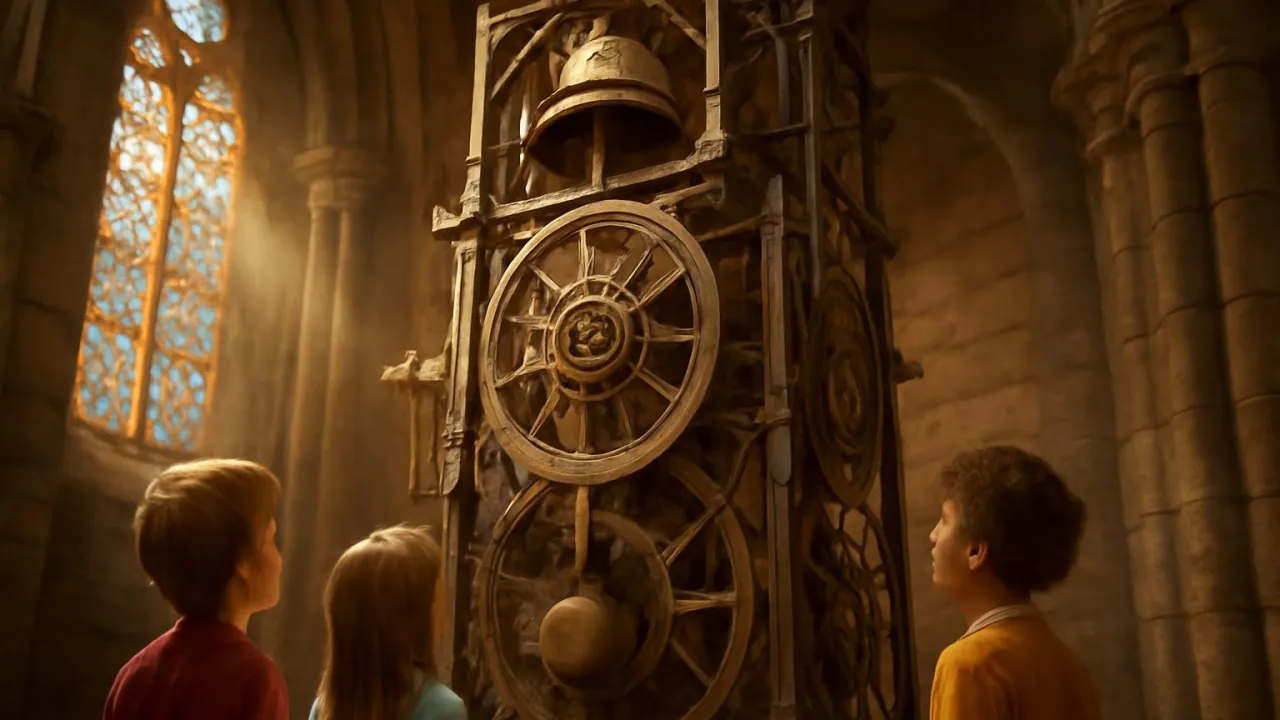
Some medieval tower clocks were so large, people could stand inside their wooden gears!
1 Inside the Tower: Gears, Weights, and Wonders
Mechanical clocks use a system of interlocking gears powered by heavy weights suspended on ropes. As the weights slowly descend, they turn the gears, which move the clock’s hands at a steady, controlled rate. A special called an regulates the movement, preventing the gears from spinning too quickly. This innovation allowed clocks to keep time much more accurately than earlier sun or water clocks.
2 The Birth of Public Timekeeping
The earliest mechanical clocks appeared in European monasteries and in the late 1200s. Monks needed precise times for prayers, so inventors created clocks that could ring bells at set hours. Soon, city leaders realized these clocks could help organize work, trade, and daily life for everyone in town.
3 Engineering Challenges and Triumphs
Building a reliable clock was not easy, as clockmakers had to overcome problems with friction, vibration, and wear. They experimented with different designs, like the verge escapement, to improve accuracy. Over time, clockmakers added more features, such as minute hands and striking that chimed on the hour and quarter-hour.
4 A World Synchronized by Bells
Mechanical clocks changed society by making time public and shared, not just personal. People could now meet at exact times, making towns and cities more organized and connected. The idea of keeping time spread across Europe and later the world, shaping how people live, work, and travel even today.
1. Why did monks want accurate clocks?
2. What problem did the escapement solve?