Refracting Telescope
Peeking Far into Space with Glass and Light
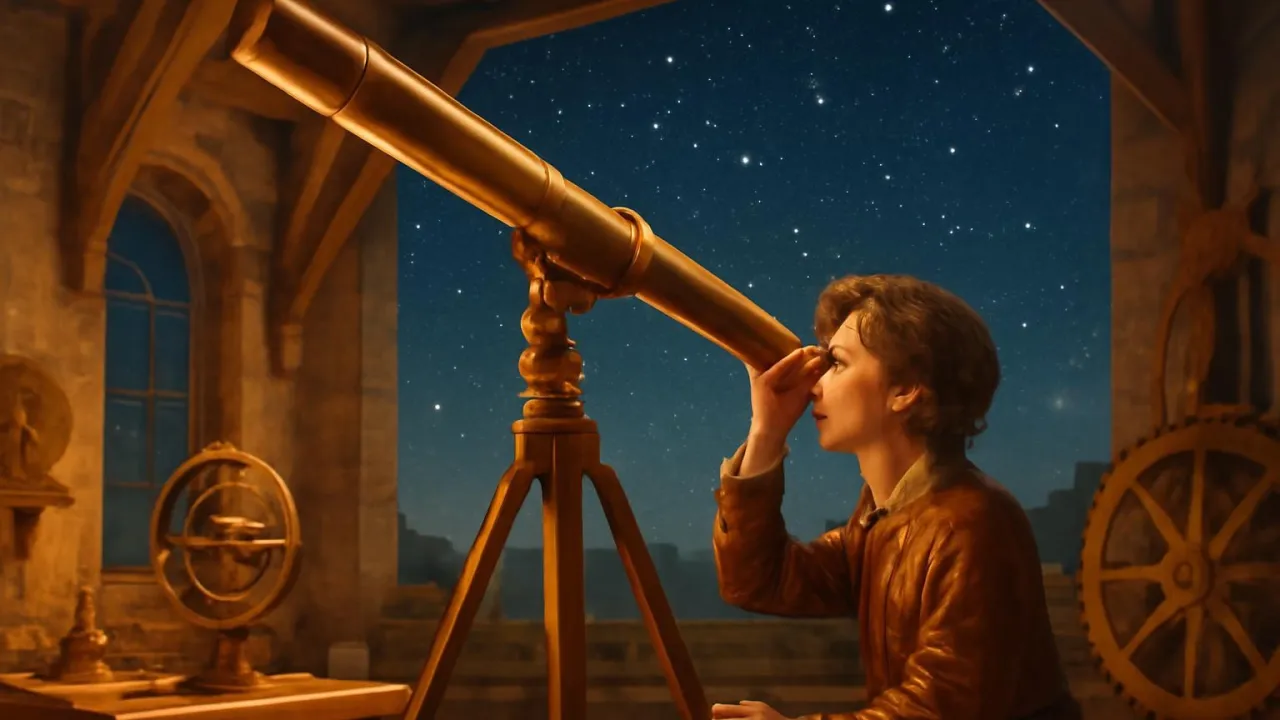
Some early refracting telescopes were over 30 feet long to see more clearly!
1 The Birth of the Refracting Telescope
In the early 1600s, Dutch lensmaker Hans Lippershey built the first refracting telescope. This invention used two curved glass lenses set in a long tube to magnify distant objects. When people looked through it, the moon’s craters and Jupiter’s moons became visible for the first time. The refracting telescope quickly spread across Europe, exciting scientists and explorers alike.
2 How Refraction Makes Distant Things Clear
Refraction is the bending of light as it passes through curved glass. The objective lens at the front collects light from faraway objects and bends it to a . The eyepiece lens then magnifies this focused image so your eye can see details. This clever use of lets us study things too far away to see with just our eyes.
3 Galileo’s Observations Change Science
Galileo Galilei improved the refracting telescope and pointed it at the heavens in 1609. He discovered Jupiter’s four largest moons, mountains on the moon, and the phases of Venus. These findings challenged old beliefs about our solar system and inspired new scientific ideas. Galileo’s work showed that telescopes could unlock mysteries no one had ever imagined.
4 Modern Uses and Lasting Impact
Today, refracting telescopes are used in schools, observatories, and by amateur astronomers. They are prized for their sharp images and simple design, though large telescopes now often use mirrors instead of lenses. The refracting telescope’s invention sparked centuries of discovery in astronomy and changed how humans see their place in the universe.
1. Why did some early telescopes need to be so long?
2. What did Galileo discover with his telescope?