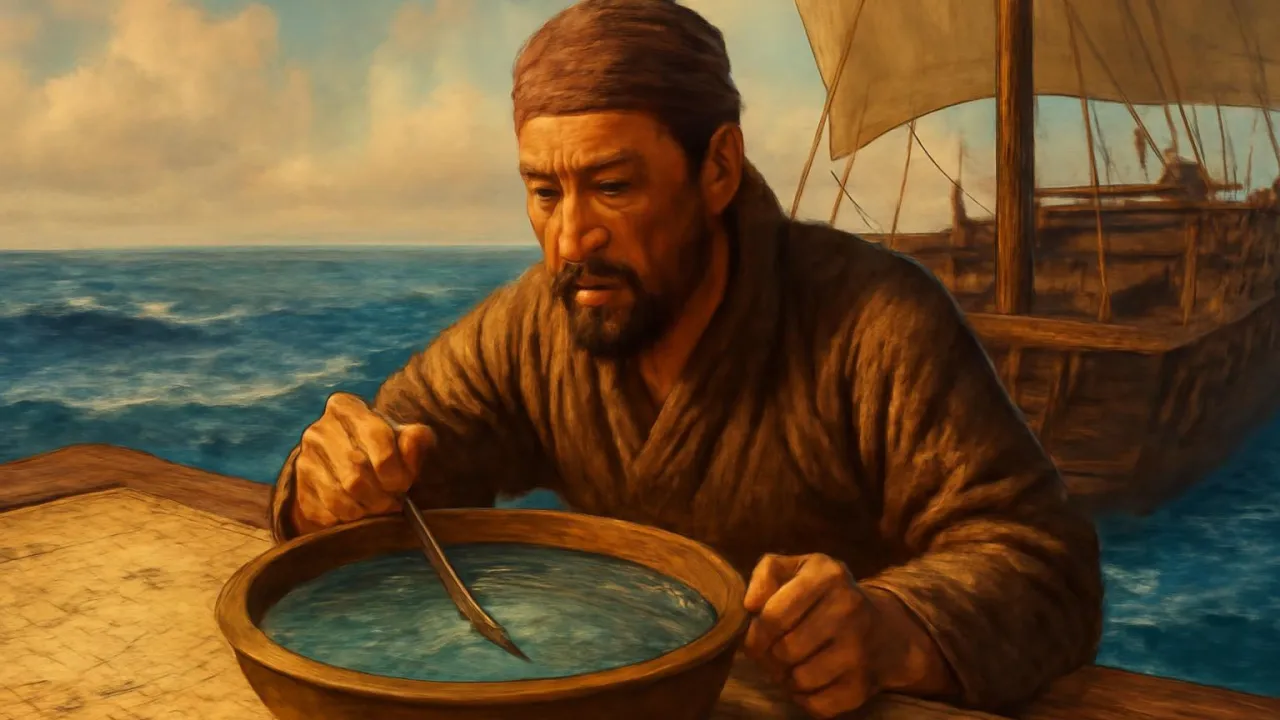
The first compasses used a rock called lodestone that could attract metal.
✨ Word Sparks (Grade 2 Glossary)
Tap 🔊 to hear
direction
The way you are going or facing
needle
A thin, sharp piece of metal
lodestone
A rock that attracts metal
🪝
Have you ever wondered how people find their way in the wild?
1
A Needle That Knows North
A compass has a small metal that spins around. The needle always points north, no matter where you are. People can trust it to show the right .
2
How People Use It
You hold the compass flat and let the settle. Hikers and sailors use it when they travel far from home. It helps them find their way even in fog or at night.
3
A Cool Invention
The compass was invented in China a long time ago. It changed how people explored the world. Now, anyone can go on adventures without getting lost.
Some early compasses floated their magnetized needles on water to help them spin freely.
✨ Word Sparks (Grade 3 Glossary)
Tap 🔊 to hear
magnetism
A force that pulls certain metals
vibrate
To move quickly back and forth
align
To line up with something
🪝
Imagine being lost in a thick forest—how could you find your way home?
1
The Magic of Magnetism
A compass works because its needle is magnetized and senses Earth's magnetic field. The needle slightly but always settles pointing north. This special property is called , and it helps people find direction.
2
How a Compass Works
The needle floats or spins freely inside the compass case. When you hold the compass flat, the needle with Earth's invisible magnetic lines. This makes it a reliable tool for explorers, sailors, and hikers.
3
A Tool for Adventure
Long ago, ancient Chinese inventors made the first compasses using lodestone, a naturally magnetic rock. Later, people improved the design by using iron needles and protective cases. The compass became a key tool for world exploration.
4
Changing the World
With compasses, sailors could cross oceans without getting lost, and maps became more accurate. The compass opened up new lands and trade routes for many cultures. Today, compasses are still used for hiking, boating, and even in smartphones.
Earth’s magnetic north is not the same as the North Pole—it actually moves over time!
✨ Word Sparks (Grade 4 Glossary)
Tap 🔊 to hear
magnetic field
Invisible force around magnets and Earth
pivot
To turn or spin around a point
navigation
Finding your way from place to place
🪝
What would happen if you had to sail across the ocean with no stars or sun to guide you?
1
The Science Behind the Needle
A compass works because its needle is made of magnetized metal, which aligns itself with Earth's . This invisible field is created by the movement of molten iron deep inside our planet. The needle on a tiny point, allowing it to spin freely and settle in the direction of magnetic north. Even when the sky is cloudy or dark, the compass gives a constant guide.
2
A Chinese Invention That Changed the World
The first compasses were invented in China during the 11th century, using a naturally magnetic mineral called lodestone. Early versions floated a lodestone on water or suspended it by a thread to let it turn easily. Later, inventors discovered that rubbing an iron needle with lodestone would magnetize it, making it even more useful and portable. This breakthrough allowed explorers to travel farther and map the world more accurately.
3
From Ancient Mariners to Modern Hikers
Sailors relied on compasses to cross vast oceans, especially when stars or landmarks were hidden. The compass became essential for , helping ships avoid getting lost and making global trade possible. Today, hikers, pilots, and even robots use compasses to find their way. Modern compasses can be tiny digital sensors inside your phone or watch.
4
The Compass’s Lasting Impact
By making reliable, the compass helped connect different continents and cultures through exploration and trade. It allowed for the creation of accurate maps, which led to new discoveries and scientific knowledge. The compass remains a symbol of adventure and curiosity, guiding people wherever they go—even in the age of GPS technology.
Earth’s magnetic field is so strong that it protects the planet from harmful solar radiation, making life possible.
✨ Word Sparks (Grade 5 Glossary)
Tap 🔊 to hear
magnetoresistive
A material that changes when near a magnet
gimbal
A device that keeps things level while moving
pivot mechanism
A part that lets something spin easily
🪝
Imagine crossing an endless ocean, clouds covering the sky—how would you know which way to go?
1
Magnetism: The Invisible Force
The compass revolutionized navigation by harnessing Earth’s magnetic field, a force generated by the movement of molten iron within the planet’s outer core. A compass needle, crafted from magnetized iron or steel, aligns itself with the planet’s magnetic field lines, always pointing toward magnetic north. This alignment occurs because the needle’s north pole is attracted to Earth’s magnetic south pole, which is near the geographic North Pole. The delicate reduces friction, allowing the needle to respond quickly and accurately to magnetic changes. Even subtle vibrations or nearby metal objects can affect the needle’s behavior, so careful handling is essential for precise navigation.
2
From Lodestone to Precision Engineering
Ancient Chinese inventors first used naturally magnetic lodestone suspended on water or silk threads to create the earliest compasses around the 11th century. By the 13th century, European mariners had adopted the dry compass, which featured a magnetized needle mounted on a pin inside a protective case. Later improvements included the addition of a compass rose, liquid damping to reduce needle wobble, and even to keep the compass level on rocking ships. Each innovation made navigation more accurate and reliable, enabling longer and safer voyages across previously uncharted waters.
3
Global Exploration and the Age of Discovery
The compass was a catalyst for the Age of Exploration, empowering sailors to cross vast oceans and discover new continents. Before the compass, navigation relied on the stars, sun, and landmarks, which were often hidden by weather or darkness. With a compass, explorers like Zheng He, Vasco da Gama, and Christopher Columbus could maintain a steady course even in challenging conditions. The spread of compass technology transformed trade routes, fostered cultural exchange, and led to the mapping of the entire globe.
4
Modern Compasses and Digital Navigation
Today, compasses come in many forms, from traditional magnetic models to advanced digital sensors in smartphones and satellites. Modern compasses may use materials or gyroscopes to detect direction with incredible precision. Despite the rise of GPS, the magnetic compass remains a trusted backup for navigation, especially in remote areas where electronic signals may fail. Understanding how compasses work is still a key skill for scientists, engineers, and adventurers alike.
5
The Compass’s Enduring Legacy
The invention of the compass not only changed the course of history but also symbolizes human curiosity and the drive to explore the unknown. Its simple yet powerful design, rooted in the physics of magnetism, continues to inspire new generations of inventors and explorers. From ancient mariners to modern astronauts, the compass has guided countless journeys, making it one of humanity’s most important scientific instruments. Its legacy lives on in every adventure that begins with the question, 'Which way should we go?'