Papermaking
From Mulberry Bark to Modern Books
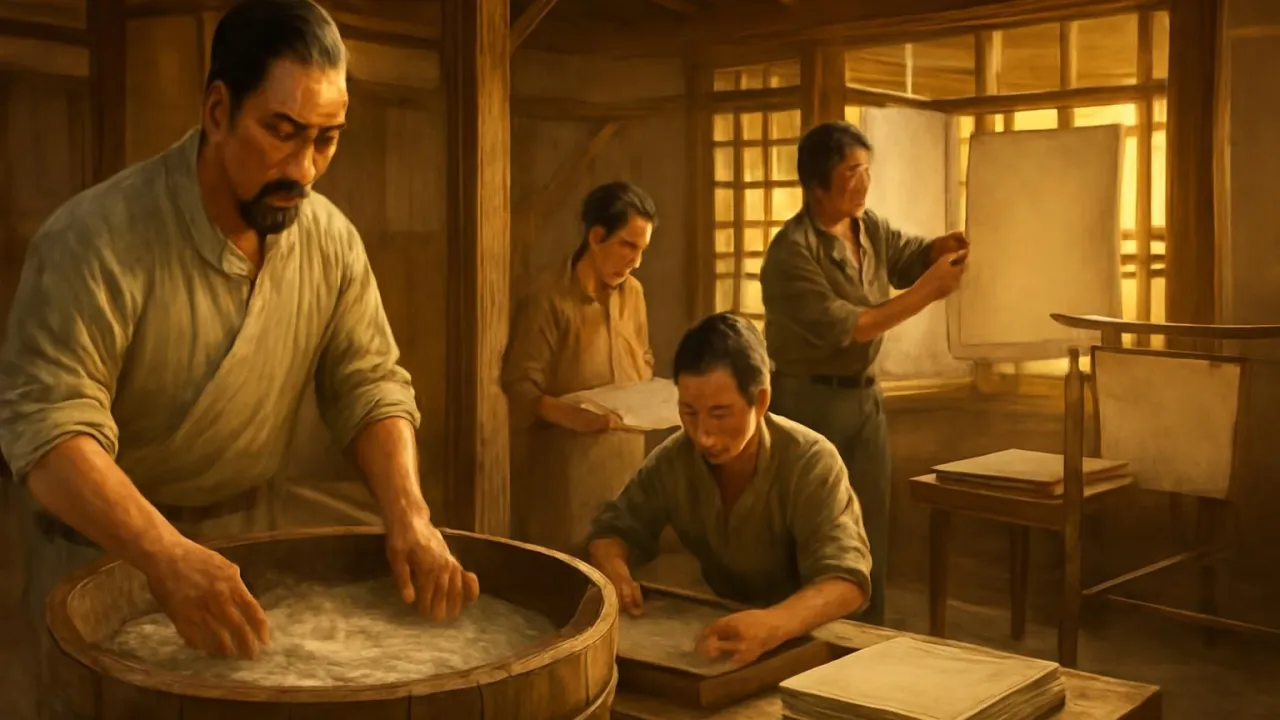
A single modern paper machine can produce over 60 miles of paper in just one hour!
1 The Ingenious Origins of Papermaking
In the early second century CE, Cai Lun, a Chinese court official, revolutionized communication by inventing the first true paper. Prior to this, people wrote on bamboo slips, silk cloth, and animal hides, all of which were costly or cumbersome. Cai Lun’s breakthrough involved macerating mulberry bark, hemp, and old rags in water to create a fibrous pulp. This pulp was then spread onto a woven screen, pressed, and dried to form thin, flexible sheets. His method was so effective that it quickly spread throughout the Han Dynasty and beyond.
2 Engineering the Perfect Sheet
The papermaking process is a fascinating example of fiber engineering and material science. Plant fibers are composed of , which becomes sticky when wet and forms as it dries. When the pulp is poured onto a screen, water drains away, and the fibers interlock through a process called mechanical entanglement. The sheet is then pressed to remove excess water and dried, resulting in a strong, uniform surface ideal for writing and art. This technique relies on the physics of , adhesion, and fiber bonding.
3 Global Spread and Innovation
Papermaking technology gradually traveled along the Silk Road, reaching the Islamic world by the 8th century and Europe by the 12th century. Each region adapted the process, using local materials like flax, cotton, or wood pulp to suit their needs. The introduction of water-powered paper mills in medieval Europe greatly increased production speed and consistency. As a result, books, newspapers, and official documents became more accessible, fueling the spread of literacy and scientific knowledge across continents.
4 Cultural and Scientific Impact
The invention of paper had a profound impact on human civilization, transforming education, government, and the arts. Paper enabled the creation and preservation of vast libraries, allowed for the mass production of texts, and made artistic expression more affordable and widespread. Scientific discoveries, laws, and stories could now be recorded and shared with future generations. Even today, paper remains a crucial medium for learning, creativity, and communication, despite the rise of digital technology.
5 Modern Papermaking and Environmental Challenges
Today’s papermaking industry uses advanced machines that can produce thousands of sheets per minute from wood pulp. Modern paper is made by chemically and mechanically breaking down wood fibers, then bleaching and pressing them into large rolls. However, this process can lead to deforestation and pollution if not managed sustainably. Recycling paper and using alternative fibers, such as bamboo or agricultural waste, help reduce environmental impact. The science and history of papermaking continue to evolve as we seek greener solutions for the future.
1. What scientific principle helps fibers stick together in papermaking?
2. How can we make papermaking better for the environment?