Television
How Flickering Screens Changed Our World
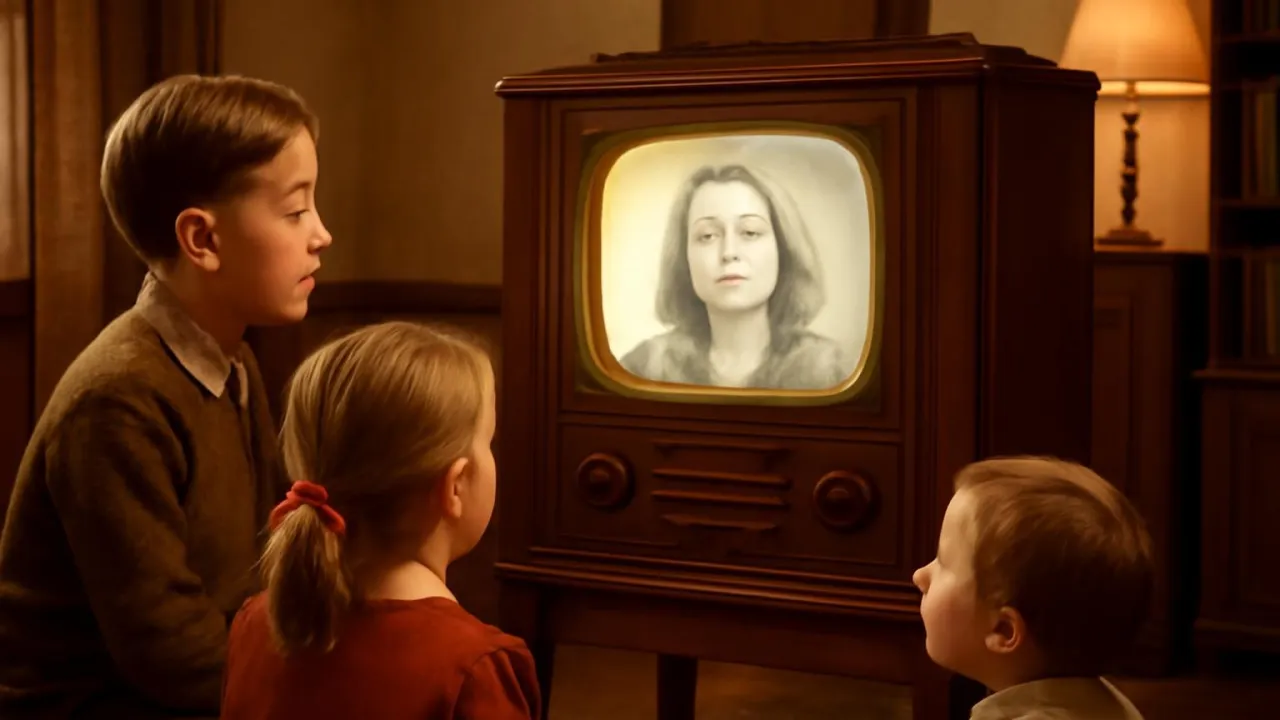
Over 1.7 billion households worldwide own at least one television set today.
1 Birth of a Revolutionary Invention
In the 1920s and 1930s, inventors like Philo T. Farnsworth in the United States and John Logie Baird in the United Kingdom raced to make moving pictures travel through the air. Farnsworth’s electronic television used a device called an image dissector to turn light into electrical signals, while Baird’s early mechanical television relied on spinning disks and neon lamps. By the late 1930s, electronic television became the standard, allowing clearer images and faster broadcasts than mechanical systems ever could.
2 How Television Turns Signals into Moving Images
Television works by transforming visual and audio information into electromagnetic signals, which are sent through the air as radio waves or through cables. Early TVs used cathode ray tubes, which fired streams of electrons onto a screen, lighting up thousands of tiny pixels to form images. Modern flat-panel televisions use liquid crystal displays (LCDs) or organic light-emitting diodes (), which manipulate light and color with remarkable precision. The rapid changing of images—at least 24 frames per second—creates the illusion of continuous motion for the human eye.
3 Channels, Frequencies, and Remote Controls
Each television channel is assigned a specific , allowing multiple programs to be broadcast simultaneously without interference. Remote controls, first invented in the 1950s, use infrared or radio signals to communicate with the television, enabling viewers to change channels, adjust volume, or even pause live broadcasts. Cable and satellite technology expanded the number of available channels, making it possible for families to access news, sports, science, and entertainment from around the globe.
4 Television’s Cultural and Global Impact
Television revolutionized how people receive information, experience world events, and understand different cultures. Historic broadcasts—like the 1969 moon landing—were watched by over 600 million people worldwide, creating shared moments in human history. TV has also been a powerful tool for education, public safety, and social change, allowing important messages and discoveries to reach millions instantly. Today, television continues to connect people everywhere, shaping opinions and inspiring curiosity.
5 The Future of Television Technology
Modern televisions are thinner, lighter, and smarter than ever, featuring ultra-high-definition screens and internet connectivity. Streaming services now deliver shows and movies on demand, while smart TVs can access educational apps, video calls, and interactive content. Engineers continue to push boundaries with technologies like 8K resolution, virtual reality integration, and energy-efficient displays. As television evolves, it remains a powerful window to the world, blending science, storytelling, and innovation in every pixel.
1. Why did electronic television replace mechanical systems?
2. How do modern TVs create the illusion of motion?