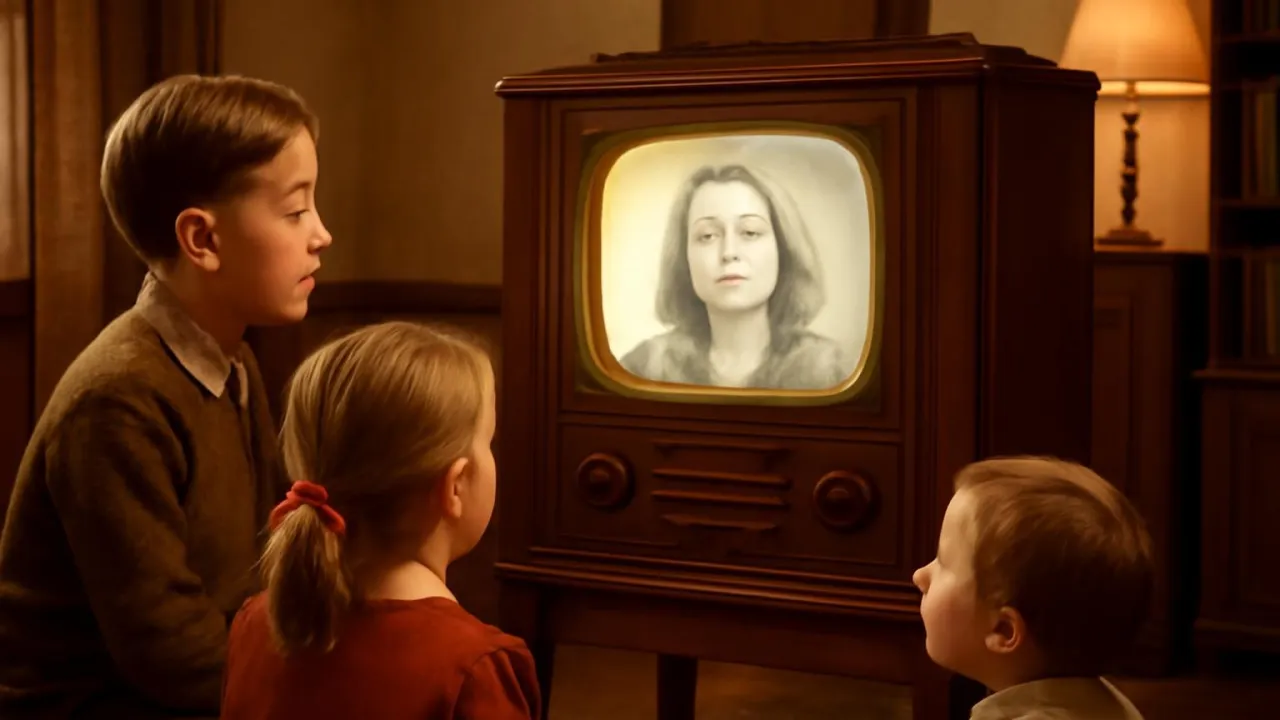
The first TV remote controls were connected by a wire!
✨ Word Sparks (Grade 2 Glossary)
Tap 🔊 to hear
signal
A message sent to the TV.
broadcast
Sending shows to many TVs.
antenna
A stick that catches TV signals.
🪝
Have you ever wondered how pictures move and talk inside a box?
1
A Window to the World
When you turn on a television, bright pictures appear and move. Sounds and voices come out with the pictures. Many people gather to watch their favorite shows together.
2
How Does It Work?
A television uses electric to make pictures move fast. These signals travel through wires or the air to your TV. The screen glows and shows cartoons, news, or sports.
3
Changing Channels
You can use a remote to pick different channels. Each channel has its own shows and stories. Watching TV is a fun way to learn and relax at home.
The first televised sports event was a baseball game in 1939!
✨ Word Sparks (Grade 3 Glossary)
Tap 🔊 to hear
cathode ray tube
Old TVs used this to show pictures.
broadcast
Sending shows to many TVs at once.
illusion
Something that tricks your eyes.
🪝
Can you imagine a world before people could see faraway places on a glowing screen?
1
From Dreams to Screens
Long ago, inventors wondered how to send moving images into homes. They created the first televisions using special tubes and spinning disks. The screen glowed as electric signals turned into pictures. Families gathered to watch the magic unfold each evening.
2
How TV Pictures Travel
Televisions work by changing images and sounds into electric signals. These signals travel through wires or the air using antennas. Inside the TV, a tube called a makes the screen light up. The fast-moving pictures create the of motion for your eyes.
3
Channels and Choices
A television can show many channels with different programs. You can use a remote control to switch between cartoons, news, and sports. Each channel is from a tall tower or sent by cable. This lets families choose what they want to watch together.
4
A World Connected
Television changed how people learn about the world. News, weather, and shows from far away became easy to see. TV helped people share ideas, music, and cultures. It became a window to places most people could only dream of visiting.
The first color TV broadcast in the U.S. happened in 1954!
✨ Word Sparks (Grade 4 Glossary)
Tap 🔊 to hear
pixel
A tiny dot that makes a picture.
frequency
A special wave that carries signals.
infrared
A type of invisible light used in remotes.
🪝
Imagine a time when seeing live news or distant lands meant crowding around a magical glowing box!
1
Inventing Moving Pictures
Early inventors like Philo Farnsworth and John Logie Baird experimented with ways to send moving images through the air. They combined spinning disks, glass tubes, and electricity to build the first working televisions. These early sets used cathode ray tubes, which fired electrons at the screen to create glowing images. Watching TV for the first time felt like science fiction come to life for many families.
2
How Television Transforms Signals
Television works by turning pictures and sounds into electronic signals. These signals are broadcast from tall towers or sent through cables to homes. Inside the TV, the cathode ray tube or modern flat screens use electricity to light up tiny dots called . When these pixels change color quickly, your eyes see moving images and hear matching sounds.
3
Channels, Remotes, and Choices
Each television channel is a special that carries different shows and news. The remote control uses light or radio waves to tell the TV to change channels. This lets families easily switch between cartoons, sports, and world news. Over time, television became a main source of information and entertainment for people everywhere.
4
Changing the World
Television helped people witness history, learn about science, and enjoy music or stories from other cultures. It made global events, like the moon landing, visible to millions at once. As technology improved, TVs became flatter, clearer, and even connected to the internet. Today, television continues to shape how we see and understand our world.
Over 1.7 billion households worldwide own at least one television set today.
✨ Word Sparks (Grade 5 Glossary)
Tap 🔊 to hear
phosphorescent
A material that glows when hit by energy.
OLED
A screen that makes light using special organic parts.
frequency
How often a wave repeats in a second.
🪝
What if you could witness a rocket launch, a world leader’s speech, or a distant rainforest—all from your living room?
1
Birth of a Revolutionary Invention
In the 1920s and 1930s, inventors like Philo T. Farnsworth in the United States and John Logie Baird in the United Kingdom raced to make moving pictures travel through the air. Farnsworth’s electronic television used a device called an image dissector to turn light into electrical signals, while Baird’s early mechanical television relied on spinning disks and neon lamps. By the late 1930s, electronic television became the standard, allowing clearer images and faster broadcasts than mechanical systems ever could.
2
How Television Turns Signals into Moving Images
Television works by transforming visual and audio information into electromagnetic signals, which are sent through the air as radio waves or through cables. Early TVs used cathode ray tubes, which fired streams of electrons onto a screen, lighting up thousands of tiny pixels to form images. Modern flat-panel televisions use liquid crystal displays (LCDs) or organic light-emitting diodes (), which manipulate light and color with remarkable precision. The rapid changing of images—at least 24 frames per second—creates the illusion of continuous motion for the human eye.
3
Channels, Frequencies, and Remote Controls
Each television channel is assigned a specific , allowing multiple programs to be broadcast simultaneously without interference. Remote controls, first invented in the 1950s, use infrared or radio signals to communicate with the television, enabling viewers to change channels, adjust volume, or even pause live broadcasts. Cable and satellite technology expanded the number of available channels, making it possible for families to access news, sports, science, and entertainment from around the globe.
4
Television’s Cultural and Global Impact
Television revolutionized how people receive information, experience world events, and understand different cultures. Historic broadcasts—like the 1969 moon landing—were watched by over 600 million people worldwide, creating shared moments in human history. TV has also been a powerful tool for education, public safety, and social change, allowing important messages and discoveries to reach millions instantly. Today, television continues to connect people everywhere, shaping opinions and inspiring curiosity.
5
The Future of Television Technology
Modern televisions are thinner, lighter, and smarter than ever, featuring ultra-high-definition screens and internet connectivity. Streaming services now deliver shows and movies on demand, while smart TVs can access educational apps, video calls, and interactive content. Engineers continue to push boundaries with technologies like 8K resolution, virtual reality integration, and energy-efficient displays. As television evolves, it remains a powerful window to the world, blending science, storytelling, and innovation in every pixel.