Microprocessor
The Tiny Chip That Changed the World
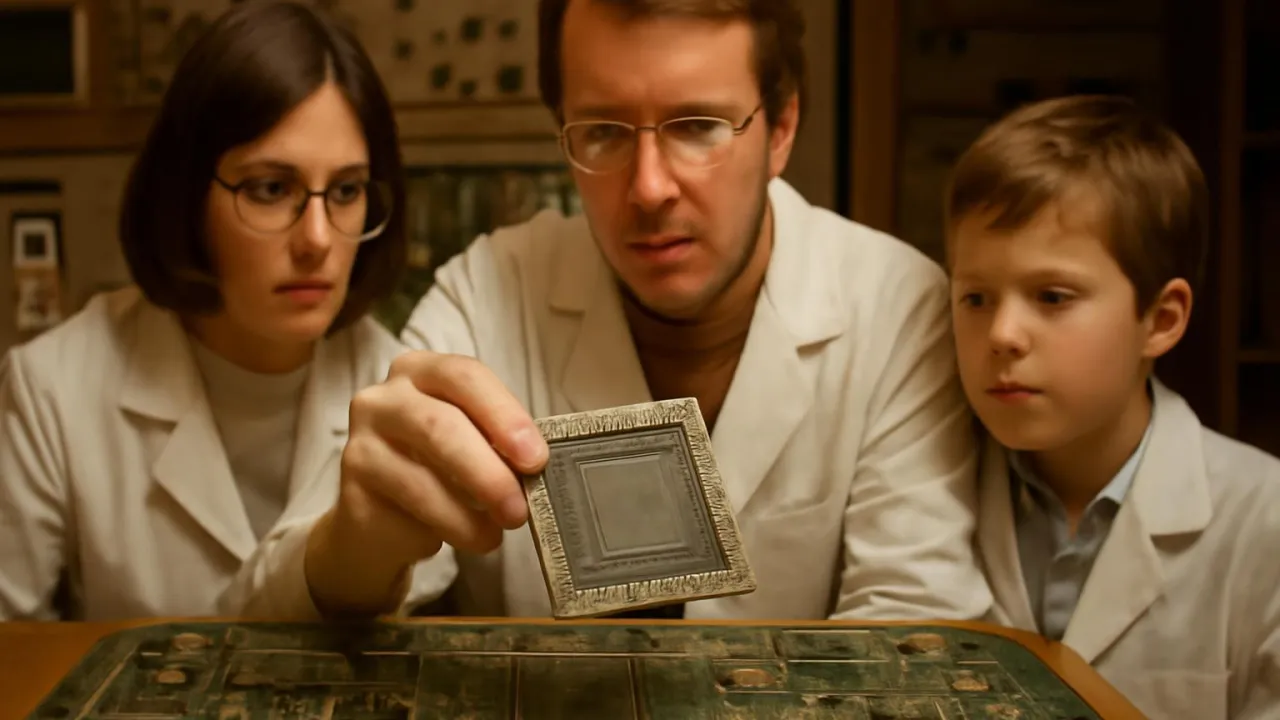
If you stacked today’s microprocessor transistors, they’d reach the moon and back over 1,000 times!
1 A Breakthrough in Miniaturization
In 1971, the Intel 4004 microprocessor was released, marking the dawn of the microchip era. Designed by Ted Hoff and Federico Faggin, this chip contained 2,300 transistors and performed 92,000 instructions per second, all on a piece of silicon measuring just 12 by 4 millimeters. The microprocessor’s invention allowed engineers to replace entire circuit boards with a single , making computers smaller, more reliable, and affordable for the first time in history.
2 Engineering the Digital Brain
A microprocessor operates by processing binary instructions, using millions to billions of transistors as electronic switches. These transistors form logic gates, which carry out arithmetic, data storage, and control operations at astonishing speeds. Modern microprocessors are built using , with features as tiny as 3 nanometers, allowing for more power and efficiency. The chip’s clock, measured in gigahertz, synchronizes all operations, enabling billions of calculations per second.
3 From Mainframes to Mobile Devices
Before microprocessors, computers filled entire rooms and consumed enormous amounts of electricity. The microprocessor’s arrival enabled the development of personal computers, laptops, smartphones, and tablets. Today, microprocessors are embedded in everything from medical equipment and vehicles to smartwatches and household appliances. Their versatility and speed have revolutionized every industry, from science and medicine to entertainment and transportation.
4 Global Impact and Future Innovation
The microprocessor ignited the Information Age, making advanced computing accessible to billions of people worldwide. It has powered the rise of the internet, artificial intelligence, robotics, and space exploration. Each year, over 15 billion microprocessors are manufactured, with new designs pushing the limits of speed, energy efficiency, and miniaturization. As scientists explore quantum computing and neuromorphic chips, the microprocessor’s continues to inspire future breakthroughs.
5 A World Transformed
Microprocessors have reshaped how people learn, communicate, and solve problems on a global scale. Their invention sparked waves of innovation in software, hardware, and digital networks, connecting cultures and economies in ways never before possible. As microprocessors become even more powerful, they promise to unlock new discoveries in science, medicine, and technology, shaping the world for generations to come.
1. How did microprocessors change the size and cost of computers?
2. What is one future technology inspired by microprocessors?