Microprocessor
The Tiny Chip That Changed the World
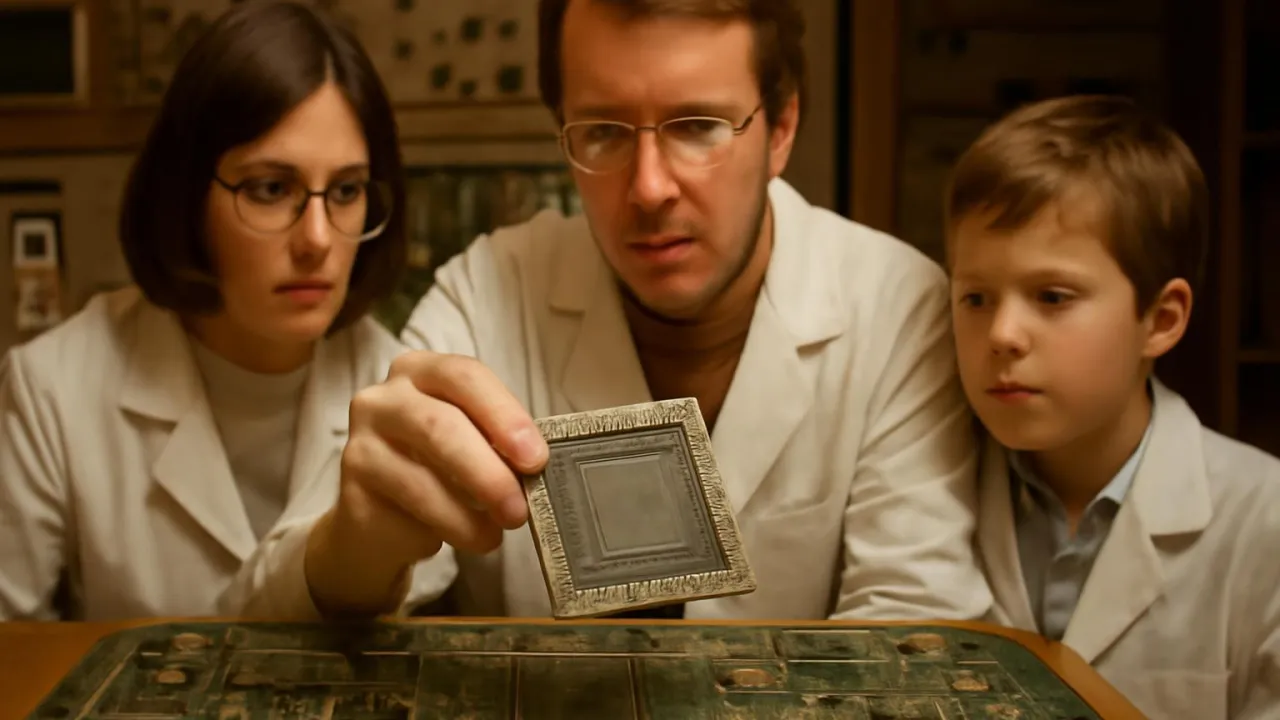
Modern microprocessors can contain over 50 billion transistors on a chip smaller than your fingernail!
1 Birth of the Microprocessor
In 1971, engineers at Intel, led by Ted Hoff, created the first commercial microprocessor, the Intel 4004. This invention marked a turning point in electronics history by combining thousands of transistors onto a single chip. Before this, computers were room-sized and used many separate parts. The microprocessor made it possible for computers to become smaller, cheaper, and more powerful.
2 How Microprocessors Work
A microprocessor is made up of millions or even billions of microscopic transistors. These transistors act as switches, turning on and off to process binary code, which is made of 1s and 0s. The chip follows a set of instructions, called a program, to perform calculations, store data, and control other devices. This process is known as digital computation, and it happens at incredible speeds measured in megahertz or .
3 The Heart of Modern Technology
Microprocessors are often called the 'brains' of computers because they make decisions and process information. They are found in almost every electronic device, from smartphones and tablets to cars and home appliances. Microprocessors have made possible the rise of smart technology, robotics, and the internet. Their small size and amazing speed have changed how people live, work, and communicate.
4 A Global Impact
The microprocessor sparked a technological that spread across the world. It enabled the creation of personal computers, video games, and advanced robots. Today, billions of microprocessors are produced each year, powering devices in every country. As microprocessors become even faster and smaller, they continue to shape the future of science, medicine, and communication.
1. What is a program in a microprocessor?
2. Why was the microprocessor important for computers?