Mars Rover
Robots Rolling Across the Red Planet
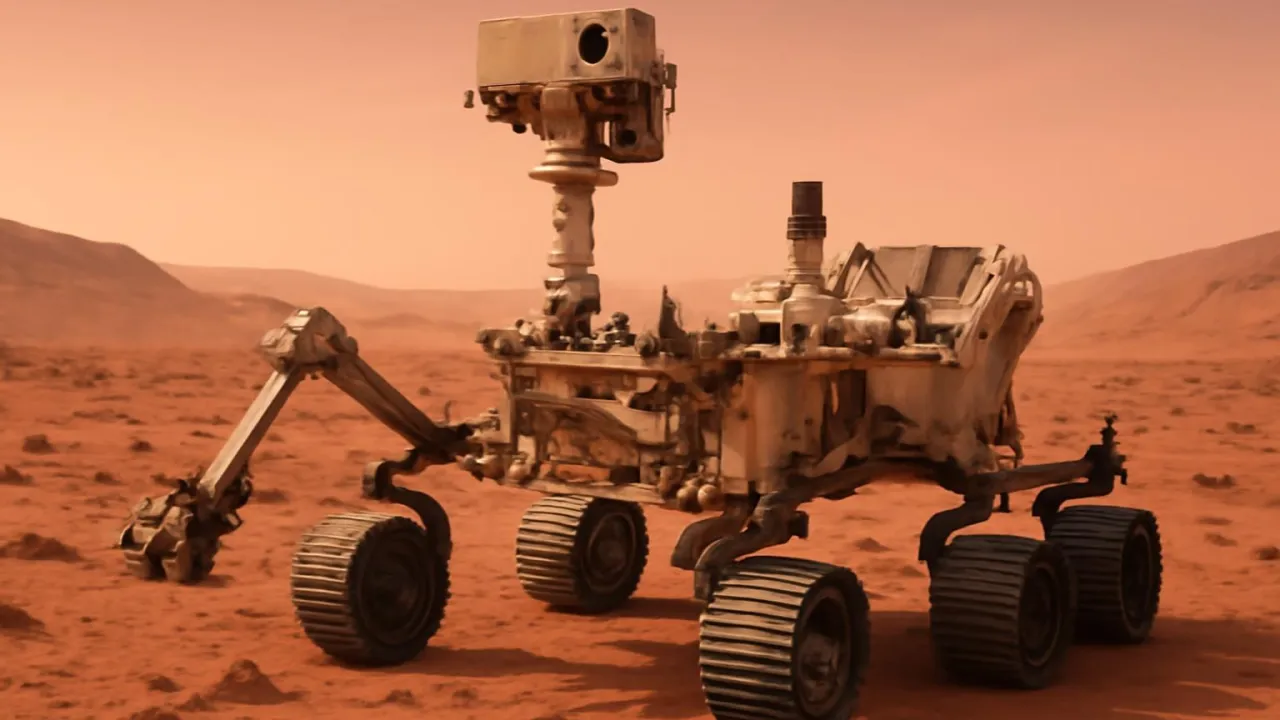
Perseverance rover’s first rock sample tube may one day return to Earth on a future mission, making it the first sample brought back from another planet!
1 Pioneers of the Red Planet
Picture a six-wheeled robot rolling across a barren, rust-colored landscape, its cameras scanning for scientific mysteries. Mars rovers, such as Sojourner, Spirit, Opportunity, Curiosity, and Perseverance, represent the pinnacle of robotic planetary exploration. Each rover is engineered to withstand Mars’ frigid temperatures, intense radiation, and abrasive dust storms, which can last for weeks. Scientists and engineers on Earth communicate with these rovers using complex radio signals that may take up to 24 minutes to travel one way. The rovers serve as humanity’s eyes and hands on Mars, exploring regions no human has yet visited.
2 Engineering and Mechanics
Mars rovers are marvels of mechanical and electrical engineering, combining , robust mobility, and advanced scientific payloads. The wheels are constructed with cleats and flexible titanium spokes to maximize traction and prevent slippage on soft terrain. Power systems vary: early rovers like Sojourner and Spirit relied on solar panels, while Curiosity and Perseverance use Multi-Mission Radioisotope Thermoelectric Generators () that convert heat from decaying plutonium into electricity. Each rover is equipped with a sophisticated robotic arm, high-gain antennas for direct communication, and hazard avoidance cameras to prevent collisions.
3 Scientific Instruments and Discoveries
Mars rovers function as mobile laboratories, carrying instruments like spectrometers, X-ray diffraction units, and ground-penetrating radars. These tools analyze soil and rock samples, searching for organic molecules and evidence of past water activity. Curiosity’s Sample Analysis at Mars (SAM) instrument can detect carbon compounds, while Perseverance’s SHERLOC uses ultraviolet lasers to identify potential . Rovers also monitor Martian weather, measure radiation levels, and record seismic vibrations using advanced sensors, providing a comprehensive view of the planet’s environment.
4 Impact on Science and Exploration
The data sent by Mars rovers has revolutionized our understanding of Mars’ geology, climate, and potential for life. Discoveries of ancient riverbeds, clay minerals, and organic molecules suggest that Mars was once much wetter and possibly habitable. These findings inform the design of future missions, including plans to return Martian soil samples to Earth and eventually send astronauts to the Red Planet. Rovers like Perseverance also test new technologies, such as oxygen production from carbon dioxide and the Ingenuity helicopter’s powered flight.
5 A Legacy for the Future
Mars rover missions inspire global audiences, foster international collaboration, and drive advances in robotics, computer science, and engineering. Each rover builds on the successes and lessons of its predecessors, pushing the boundaries of autonomous exploration and remote science. The challenges overcome by these missions—extreme distance, communication delays, and harsh Martian conditions—demonstrate the ingenuity and persistence of human curiosity. As we look to the future, Mars rovers lay the groundwork for human exploration, resource utilization, and the search for life beyond Earth.
1. Why do Mars rovers use MMRTGs instead of only solar panels?
2. How do Mars rovers help future astronauts?