Mars Rover
Robots Rolling Across the Red Planet
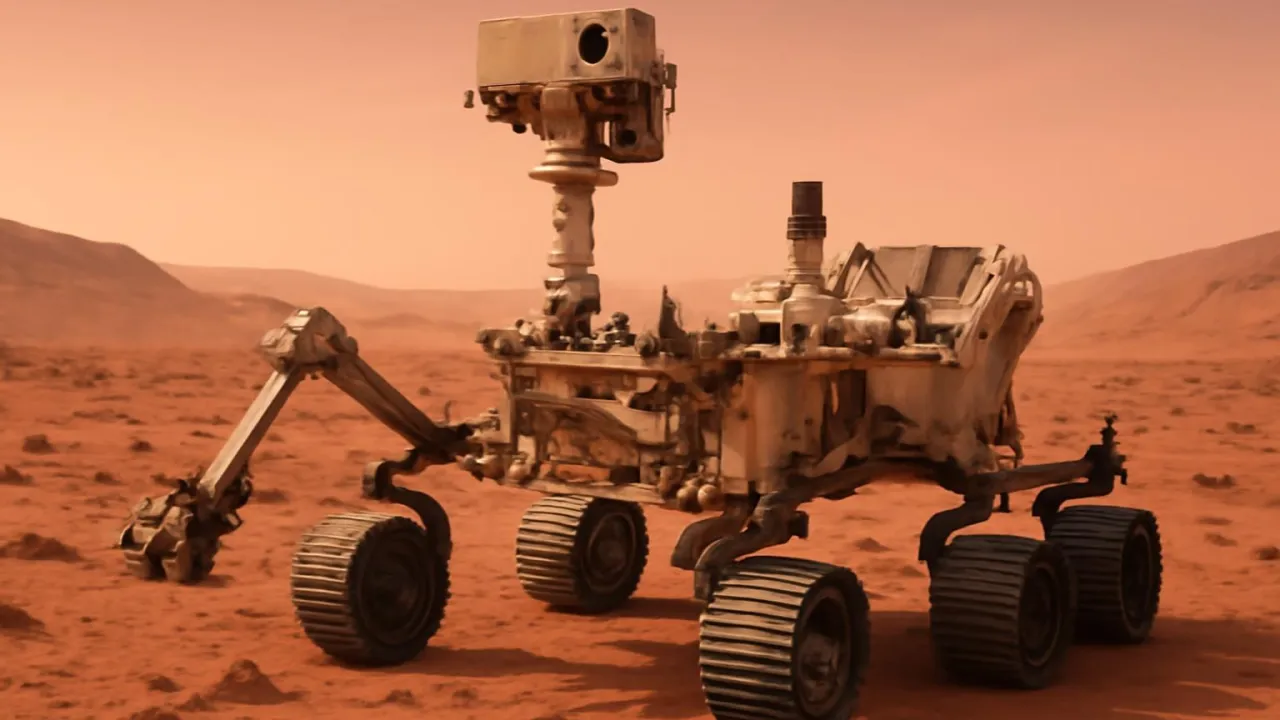
The Perseverance rover carried a tiny helicopter, Ingenuity, which made the first powered flight on another planet!
1 Robots on a Distant World
Imagine the crunch of metal wheels on Martian gravel as a rover explores the silent red landscape. Mars rovers are robotic explorers designed to survive harsh temperatures, dust storms, and rocky . They are controlled by teams of NASA engineers who send commands from millions of miles away. Each rover is packed with scientific instruments, cameras, and a robotic arm to investigate the planet.
2 Engineering Marvels
The engineering behind a Mars rover is remarkable, as every part must withstand extreme cold and dust erosion. Rovers like Curiosity and Perseverance use nuclear-powered generators called RTGs, while earlier ones like Spirit used solar panels. Their six wheels are specially designed for traction, allowing them to climb over rocks and avoid getting stuck in sand. Robotic arms carry tools to drill, scoop, and analyze Martian soil and rocks.
3 Science on the Move
Rovers act as mobile laboratories, using sensors and to study Mars’ geology and search for signs of water. They take high-resolution images, measure atmospheric conditions, and even listen for vibrations in the ground. By examining erosion patterns and chemical clues, scientists learn about Mars’ climate history and whether it could once have supported life. Each mission brings new discoveries that reshape our understanding of the Red Planet.
4 Global Impact and Future Dreams
Mars rover missions have inspired people around the world and advanced robotics and engineering. The data they send back helps scientists plan for future human missions to Mars. Each new rover features more advanced technology and greater , allowing it to make some decisions on its own. As we continue exploring, these robotic pioneers pave the way for humans to one day set foot on Mars.
1. What helps Mars rovers avoid getting stuck in sand?
2. Why do scientists study erosion patterns on Mars?