Mars Rover
Robots Rolling Across the Red Planet
The Mars rover has driven farther than a marathon runner!
What would you hear if you rode a robot on Mars?
1 Rolling on Red Rocks
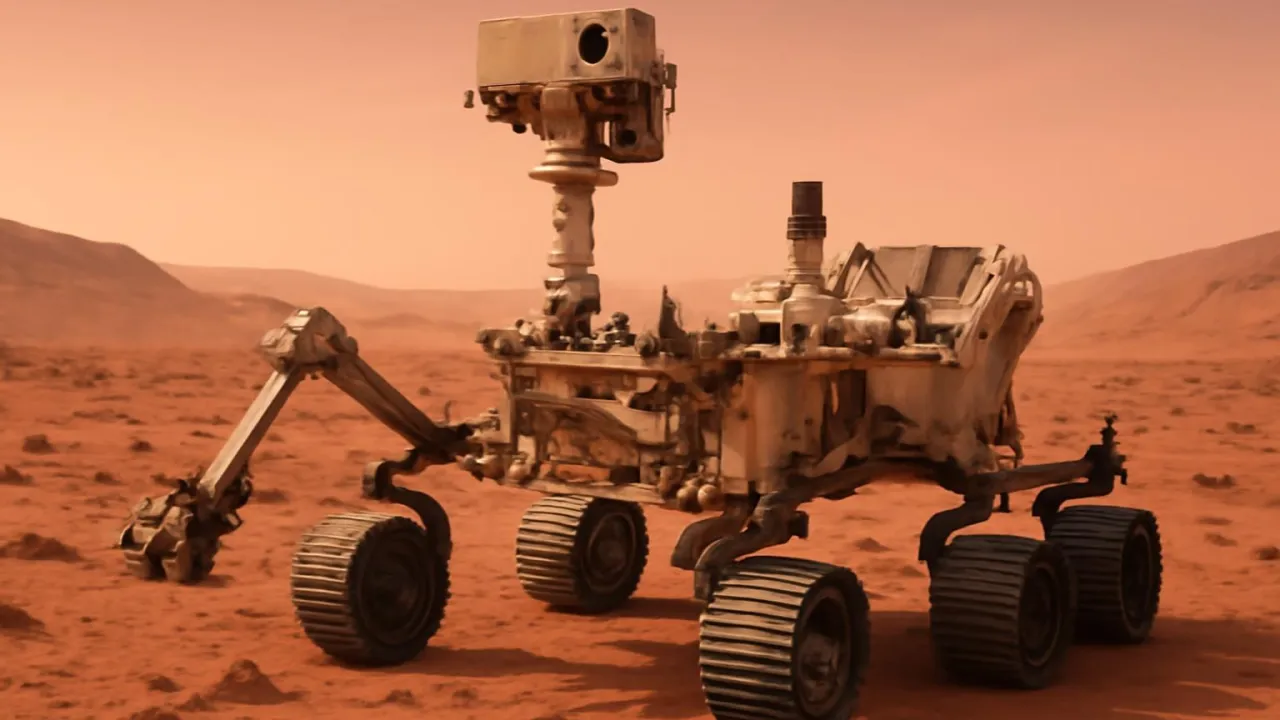
The rolls over red rocks. Its wheels crunch on Martian dust. It moves slowly across the ground.
2 Robot Eyes and Arms
The has eyes like cameras. It can see far and near. Its arm can touch and dig.
3 Exploring Far Away
No people ride the . It sends pictures back to Earth. Scientists watch and learn new things.
1. What color is the ground on Mars?
2. What does the rover use to see?
Some Mars rovers use solar panels to get their power from sunlight!
Imagine hearing robot wheels crunching on dusty Mars!
1 A Robot Explorer
Mars rovers are special robots that the red planet. They drive over rocks and sand, using strong wheels. No people ride on them, but control them from Earth.
2 Eyes, Arms, and Science Tools
Rovers have cameras for eyes and a robot arm for digging. They can take pictures and collect Martian dirt. Their tools help learn what Mars is made of.
3 Sending Back Discoveries
The rover sends photos and facts back across space. use these to study Mars and plan for future trips. Each rover helps us learn more about our neighbor planet.
1. What helps the rover move on Mars?
2. Who controls the Mars rover?
The Curiosity rover landed on Mars by being lowered from a rocket-powered sky crane!
What mysteries could a robot discover on a silent, dusty world?
1 Meet the Mars Rover
Imagine a robot car with six tough wheels rolling over red Martian rocks. This is a Mars rover, built to explore where humans cannot yet go. Its body is covered in cameras and to study the planet. Each rover is controlled by engineers far away on Earth.
2 How It Works
The roverโs wheels are designed to grip the sandy ground and climb over stones. Solar panels or nuclear batteries give it power to move and run science tools. Its robotic arm can dig, scoop, and examine rocks up close. Data travels back to Earth using a special and radio waves.
3 Discoveries and Science
Rovers collect soil samples and search for signs of water or life. They use vibration tools to break open rocks and study what is inside. Their cameras take detailed photos that show the landโs and surface patterns. Every discovery helps scientists understand Marsโ history and weather.
4 Changing Our View of Mars
Before rovers, people only saw Mars through telescopes. Now, rovers send thousands of pictures and facts from the ground. Each new rover has improved technology and more advanced science instruments. Their journeys inspire kids and adults to dream of exploring space.
1. What powers some Mars rovers besides solar panels?
2. Why do Mars rovers have cameras and sensors?
The Perseverance rover carried a tiny helicopter, Ingenuity, which made the first powered flight on another planet!
If you could ride a rover, what would you see on Mars?
1 Robots on a Distant World
Imagine the crunch of metal wheels on Martian gravel as a rover explores the silent red landscape. Mars rovers are robotic explorers designed to survive harsh temperatures, dust storms, and rocky . They are controlled by teams of NASA engineers who send commands from millions of miles away. Each rover is packed with scientific instruments, cameras, and a robotic arm to investigate the planet.
2 Engineering Marvels
The engineering behind a Mars rover is remarkable, as every part must withstand extreme cold and dust erosion. Rovers like Curiosity and Perseverance use nuclear-powered generators called RTGs, while earlier ones like Spirit used solar panels. Their six wheels are specially designed for traction, allowing them to climb over rocks and avoid getting stuck in sand. Robotic arms carry tools to drill, scoop, and analyze Martian soil and rocks.
3 Science on the Move
Rovers act as mobile laboratories, using sensors and to study Marsโ geology and search for signs of water. They take high-resolution images, measure atmospheric conditions, and even listen for vibrations in the ground. By examining erosion patterns and chemical clues, scientists learn about Marsโ climate history and whether it could once have supported life. Each mission brings new discoveries that reshape our understanding of the Red Planet.
4 Global Impact and Future Dreams
Mars rover missions have inspired people around the world and advanced robotics and engineering. The data they send back helps scientists plan for future human missions to Mars. Each new rover features more advanced technology and greater , allowing it to make some decisions on its own. As we continue exploring, these robotic pioneers pave the way for humans to one day set foot on Mars.
1. What helps Mars rovers avoid getting stuck in sand?
2. Why do scientists study erosion patterns on Mars?
Perseverance roverโs first rock sample tube may one day return to Earth on a future mission, making it the first sample brought back from another planet!
What would it feel like to operate a robot explorer millions of miles from home?
1 Pioneers of the Red Planet
Picture a six-wheeled robot rolling across a barren, rust-colored landscape, its cameras scanning for scientific mysteries. Mars rovers, such as Sojourner, Spirit, Opportunity, Curiosity, and Perseverance, represent the pinnacle of robotic planetary exploration. Each rover is engineered to withstand Marsโ frigid temperatures, intense radiation, and abrasive dust storms, which can last for weeks. Scientists and engineers on Earth communicate with these rovers using complex radio signals that may take up to 24 minutes to travel one way. The rovers serve as humanityโs eyes and hands on Mars, exploring regions no human has yet visited.
2 Engineering and Mechanics
Mars rovers are marvels of mechanical and electrical engineering, combining , robust mobility, and advanced scientific payloads. The wheels are constructed with cleats and flexible titanium spokes to maximize traction and prevent slippage on soft terrain. Power systems vary: early rovers like Sojourner and Spirit relied on solar panels, while Curiosity and Perseverance use Multi-Mission Radioisotope Thermoelectric Generators () that convert heat from decaying plutonium into electricity. Each rover is equipped with a sophisticated robotic arm, high-gain antennas for direct communication, and hazard avoidance cameras to prevent collisions.
3 Scientific Instruments and Discoveries
Mars rovers function as mobile laboratories, carrying instruments like spectrometers, X-ray diffraction units, and ground-penetrating radars. These tools analyze soil and rock samples, searching for organic molecules and evidence of past water activity. Curiosityโs Sample Analysis at Mars (SAM) instrument can detect carbon compounds, while Perseveranceโs SHERLOC uses ultraviolet lasers to identify potential . Rovers also monitor Martian weather, measure radiation levels, and record seismic vibrations using advanced sensors, providing a comprehensive view of the planetโs environment.
4 Impact on Science and Exploration
The data sent by Mars rovers has revolutionized our understanding of Marsโ geology, climate, and potential for life. Discoveries of ancient riverbeds, clay minerals, and organic molecules suggest that Mars was once much wetter and possibly habitable. These findings inform the design of future missions, including plans to return Martian soil samples to Earth and eventually send astronauts to the Red Planet. Rovers like Perseverance also test new technologies, such as oxygen production from carbon dioxide and the Ingenuity helicopterโs powered flight.
5 A Legacy for the Future
Mars rover missions inspire global audiences, foster international collaboration, and drive advances in robotics, computer science, and engineering. Each rover builds on the successes and lessons of its predecessors, pushing the boundaries of autonomous exploration and remote science. The challenges overcome by these missionsโextreme distance, communication delays, and harsh Martian conditionsโdemonstrate the ingenuity and persistence of human curiosity. As we look to the future, Mars rovers lay the groundwork for human exploration, resource utilization, and the search for life beyond Earth.
1. Why do Mars rovers use MMRTGs instead of only solar panels?
2. How do Mars rovers help future astronauts?