Incandescent Light Bulb
How a Tiny Glow Lit Up the World
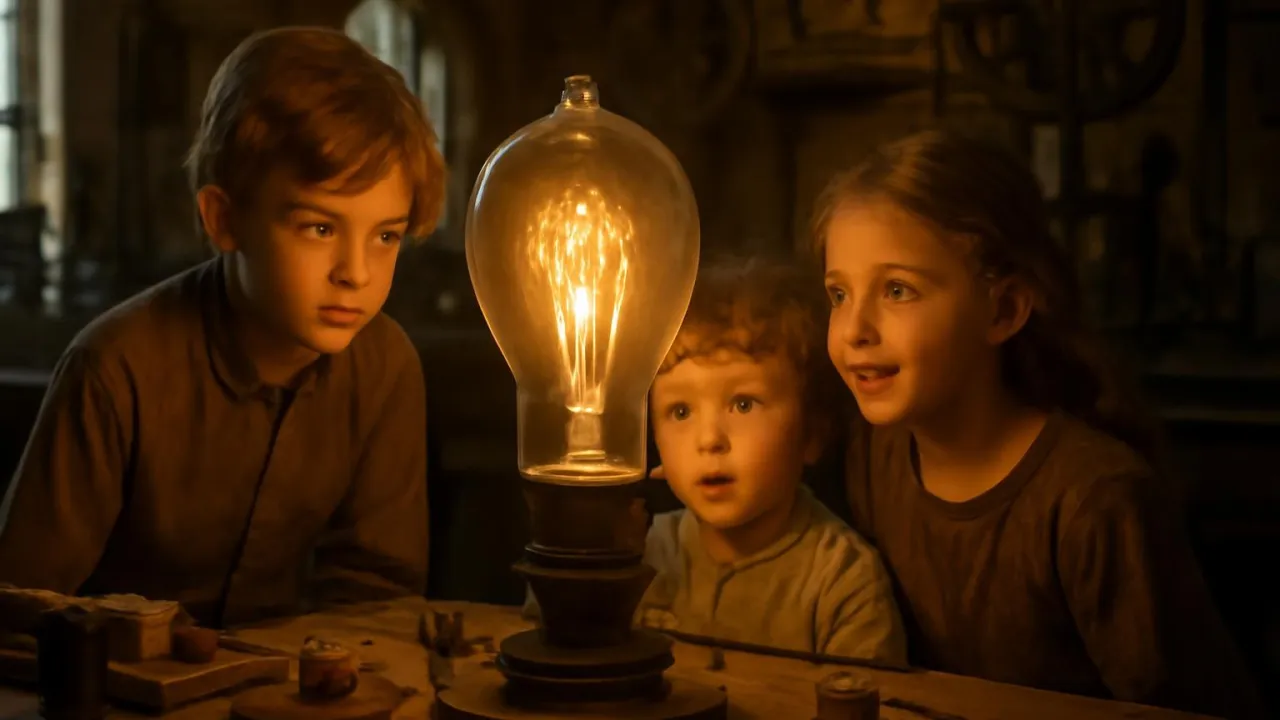
The world’s longest-burning light bulb, in California, has glowed for over 120 years!
1 From Flickering Flames to Steady Light
For centuries, people depended on fire, candles, and oil lamps for illumination, but these sources were dim, smoky, and often hazardous. The arrival of the incandescent light bulb in 1879, invented by Thomas Edison and his team in Menlo Park, marked a turning point in history. Edison's approach built on earlier work by inventors like Sir Joseph Swan, but his design made electric lighting practical and affordable for everyday use. Suddenly, homes, streets, and workplaces could be brightly lit, extending productive hours far beyond sunset.
2 Engineering the Glow: Physics and Materials
The incandescent bulb’s core innovation is its filament—a slender wire, originally carbonized bamboo but later tungsten, chosen for its exceptional melting point of 3,422°C (6,192°F). When electric current passes through the filament, resistance causes it to heat up and emit visible light, a phenomenon called incandescence. The glass bulb is evacuated or filled with , such as argon, to prevent oxygen from reaching the hot filament and causing rapid . This engineering allowed bulbs to last hundreds to thousands of hours while producing a warm, inviting glow.
3 Inventors, Patents, and Global Impact
Edison’s team tested over 6,000 materials for filaments, eventually patenting a design that balanced durability, brightness, and cost. Their success led to the rapid spread of electric lighting, transforming cities, industries, and daily routines worldwide. Factories could operate around the clock, students could study after dark, and public spaces became safer and more welcoming. The incandescent bulb became a symbol of progress and innovation, inspiring countless new inventions in electrical engineering.
4 Evolution and Legacy of the Light Bulb
Although the incandescent bulb dominated lighting for over a century, it is not very energy efficient—about 90% of its energy is lost as heat rather than light. This limitation led to the invention of fluorescent, halogen, and LED bulbs, which use different principles to produce light more efficiently. Still, the incandescent bulb’s simple design and warm light remain iconic, and its invention is remembered as one of humanity’s greatest engineering achievements. Museums and science centers often display Edison's original bulbs, some of which still glow today.
5 Quantitative Specs and Enduring Influence
A standard household incandescent bulb typically uses 40 to 100 watts of power and produces about 450 to 1,600 of light. The tungsten filament inside can reach temperatures up to 4,500°F (2,500°C) during operation. While modern lighting technologies have surpassed it in efficiency, the incandescent bulb’s impact on society, culture, and technology is immeasurable. Its invention electrified the world, illuminating everything from classrooms to city skylines and paving the way for a future powered by innovation.
1. Why did Edison choose tungsten for the filament in later bulbs?
2. What is one reason incandescent bulbs are being replaced by LEDs?