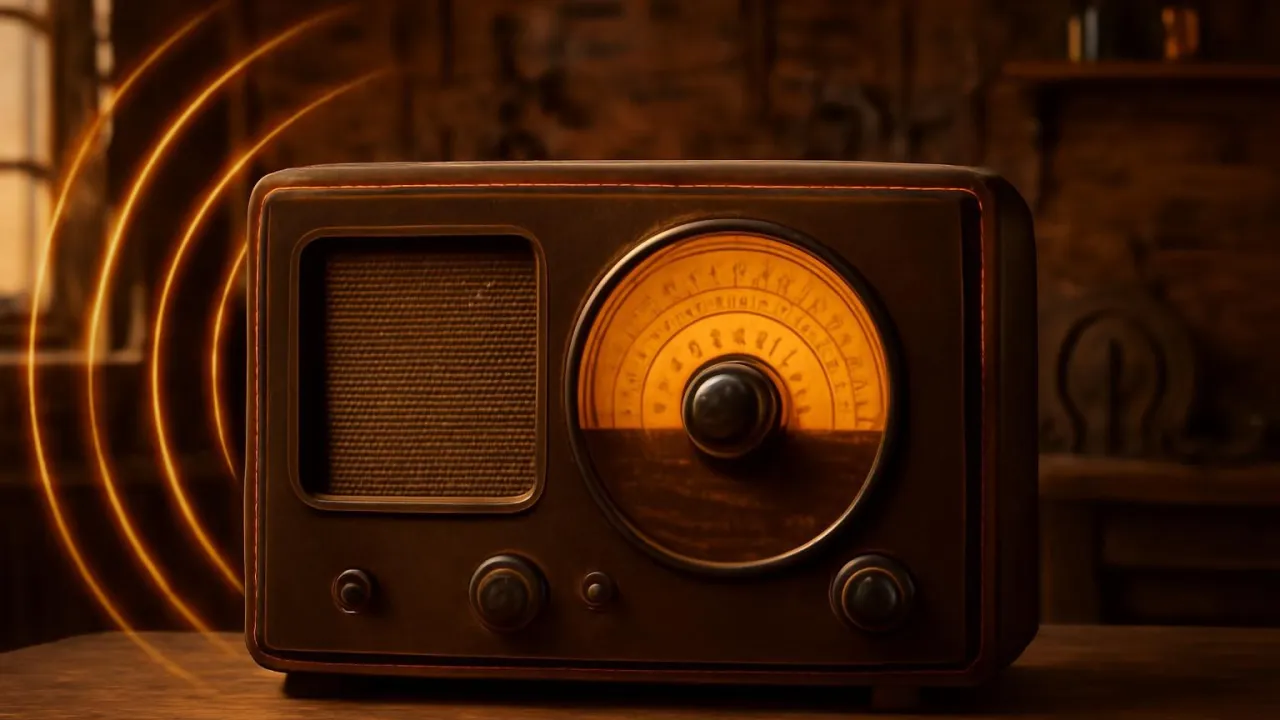
AM/FM Radio Receiver
Tuning Into Invisible Waves of Sound
Radios can play music from places very far away!
What if you could hear music from far away?
1 Turn the Knob, Hear the Song!
Spin the radio . A song plays out loud. Voices fill the room. The box makes sounds travel.
2 Waves in the Air
Radio are invisible. They float through the air. The radio catches them. It turns waves into music.
3 Fun for Everyone
People listen at home. Some dance to the beat. Others hear news. Radios bring fun to all.
1. What happens when you turn the radio knob?
2. Where do radio waves travel?
AM radio signals can travel hundreds of miles after dark!
Can you imagine hearing a concert with no band in the room?
1 Magic Music Box
A radio lets you hear music and voices from far away. When you turn the dial, you can find a new . Each station plays different songs or talks about the news. Radios make homes feel lively and fun.
2 Invisible Waves
Radios work by catching invisible waves in the air called radio waves. These waves carry sounds from a to your radio. The receiver inside changes the waves into music or talking. You can listen to shows from many miles away.
3 AM and FM Choices
There are two types of radio waves: AM and FM. AM can travel very far, even at night, but FM sounds much clearer. People pick their favorite by turning the knob to AM or FM.
1. What does a radio receiver do?
2. Why do people turn the radio dial?
FM radio was invented to reduce static and make music sound crystal clear!
What secret messages might be floating in the air right now?
1 Tuning Into the Air
When you twist a radioâs tuning knob, youâre searching for invisible signals all around you. These signals, called radio waves, move through the air at the speed of light. The radio receiverâs grabs the waves and sends them to special circuits. Suddenly, music or news fills the room as the receiver turns signals into sound.
2 How AM and FM Work
AM stands for Amplitude and FM means Frequency Modulation. In AM, the waveâs height changes to carry sound, while in FM, the waveâs speed changes instead. FM usually gives clearer sound, but AM can travel farther, especially at night. Both types use vibration and to make the speaker move and create sound you can hear.
3 Inventors and History
Reginald Fessenden sent the first voice by radio in 1900. Later, Edwin Armstrong invented FM radio in 1933, making music sound much better. Radios became very popular, letting families hear news, sports, and stories from far away. The invention of radio changed how people shared information all over the world.
4 Radios Everywhere
Today, you can find radios in cars, phones, and even alarm clocks. Radios help people listen to weather alerts, music, and important news. Some people still build their own radios as a science project. The radio receiver is a great example of how science and engineering connect people everywhere.
1. Who invented FM radio?
2. What does the antenna do in a radio?
Some AM radio signals can bounce off the atmosphere and travel over 1,000 miles!
Have you ever wondered how a tiny box can fill a room with music from miles away?
1 Catching Invisible Signals
When you tune a radio, youâre actually selecting a from a sea of invisible waves. These waves are broadcast by radio stations and picked up by your radioâs antenna, which is designed to resonate with certain frequencies. The receiverâs circuits filter out unwanted signals, isolating just the station you want to hear. This process lets you listen to music, news, or even weather alerts from faraway places.
2 AM and FM: Two Ways to Send Sound
AM (Amplitude Modulation) and FM ( Modulation) are two different ways of encoding sound onto radio waves. AM changes the height, or amplitude, of the wave to carry information, allowing signals to travel long distances, especially at night. FM changes the waveâs frequency, making it less prone to static and better for music. The radioâs circuits these changes and send them to the speaker, which vibrates to create sound.
3 The Inventors Behind the Waves
Reginald Fessenden made history in 1900 by sending the first voice transmission over radio waves. Edwin Armstrongâs invention of FM radio in 1933 made broadcasts clearer and less noisy. Radios quickly became a part of daily life around the world, connecting people to important events and entertainment. The invention of the radio receiver sparked a global communication revolution.
4 Radios in Our World Today
Modern radios are found in cars, smartphones, and emergency kits, using advanced digital circuits for even better sound. Radio receivers still use the same basic physicsâcatching, filtering, and decoding waves. They help spread information quickly during emergencies and bring people together through shared music and stories. Even with the internet, radio remains a powerful tool for connecting communities worldwide.
1. Why does FM radio sound clearer than AM?
2. What does a radioâs speaker do?
The worldâs most powerful AM radio station, WLW in Ohio, once broadcast at 500,000 wattsâenough to light a small town!
Imagine if every song, story, or emergency alert youâve ever heard on the radio began as an invisible wave, racing through the airâhow does a radio receiver unlock these hidden messages?
1 The Science of Tuning In
When you adjust a radioâs tuning dial, youâre selecting a precise frequency from a spectrum filled with hundreds of electromagnetic signals. The radioâs antenna, often a metal rod or coil, is engineered to resonate at specific frequencies, maximizing the capture of desired radio waves while minimizing interference from others. Inside, the receiverâs circuits use filters and amplifiers to isolate and strengthen the chosen signal, preparing it for . This entire process relies on the physics of resonance and electromagnetic wave propagation, which allows information to travel vast distances at nearly the speed of light.
2 AM and FM: Modulation Methods Explained
Amplitude Modulation (AM) encodes sound by varying the amplitude, or height, of the carrier wave, making it robust for long-distance transmission but susceptible to static from electrical storms. Frequency Modulation (FM), invented by Edwin Armstrong in 1933, encodes information by changing the frequency of the wave, greatly reducing noise and improving sound . The radioâs demodulator circuit interprets these changes, converting the encoded electromagnetic energy into electrical signals that can drive a speaker.
3 From Prototype to Global Phenomenon
Reginald Fessendenâs pioneering voice transmission in 1900 marked the dawn of radio broadcasting, while Armstrongâs FM breakthrough revolutionized audio quality. Early radios were large, powered by batteries or hand-cranks, and required careful tuning. As and later transistors were introduced, radios became smaller, more reliable, and affordable for millions of people. The rapid spread of radio receivers transformed society by making real-time news, educational programs, and entertainment accessible to nearly everyone.
4 Impact on Society and Modern Innovations
Radio receivers have played vital roles in emergencies, wars, and everyday life, providing instant communication across continents. Todayâs radios use advanced digital signal processing, allowing for crystal-clear audio, automatic tuning, and even internet streaming. Despite competition from new technologies, AM and FM radio remain essential, especially in remote areas and during disasters. The radio receiverâs evolution showcases the intersection of physics, engineering, and social change.
5 The Future of Radio Reception
Modern radio receivers integrate with smartphones, satellites, and the internet, blending analog and digital technologies. Engineers continue to develop new ways to filter noise, increase sensitivity, and miniaturize components, making radios more powerful and portable than ever. Digital radio standards, such as HD Radio and DAB, offer more channels and higher sound quality, ensuring radioâs relevance for future generations. The humble AM/FM radio receiver remains a testament to human curiosity and our desire to connect across any distance.
1. Why did FM radio become popular for music?
2. How do modern radios improve on early designs?