3D Printer
Machines That Build Objects Layer by Layer
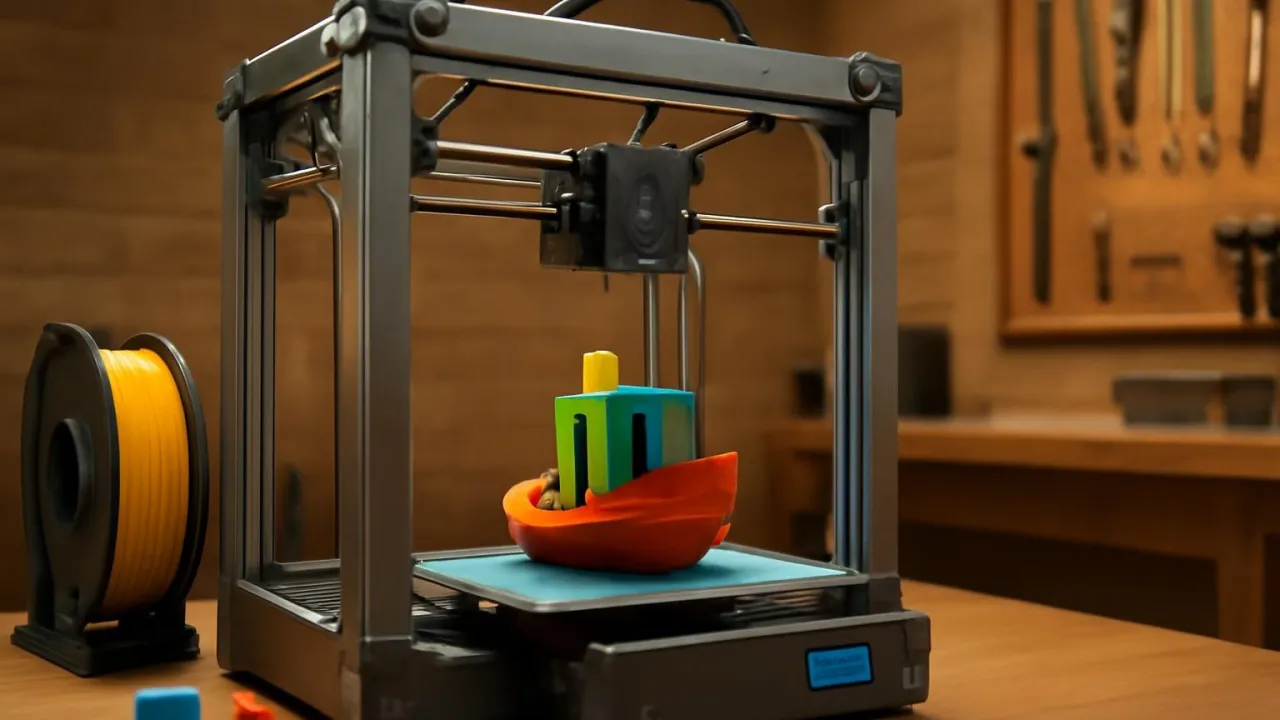
Scientists have 3D-printed a working human heart model using real cells for medical research!
1 The Science of Additive Manufacturing
3D printing, or additive manufacturing, constructs objects by depositing material in ultra-thin layers, each precisely shaped by a digital blueprint. The process begins with a computer-aided design (CAD) file, which is sliced into hundreds or thousands of cross-sectional layers. The printer’s nozzle, heated to temperatures between 180°C and 250°C for plastics, extrudes melted filament or resin onto a build platform. As each layer cools and solidifies, it fuses to the previous one, gradually forming a detailed three-dimensional object. This method allows for complex internal structures and geometries that traditional manufacturing cannot achieve.
2 From Concept to Reality: The Engineering Journey
Chuck Hull’s 1984 invention of stereolithography marked the first time digital designs could be transformed into physical prototypes using light-cured resin. Since then, techniques like (FDM) and (SLS) have expanded the range of printable materials to include plastics, metals, ceramics, and even living cells. Engineers use 3D printers to rapidly prototype new inventions, test aerodynamics, and create custom parts for everything from cars to spacecraft. The ability to iterate quickly shortens development cycles and encourages creative problem-solving.
3 Precision, Complexity, and Material Science
Modern 3D printers can achieve layer thicknesses as fine as 0.05 millimeters, enabling the creation of intricate details and lightweight . The choice of material—whether thermoplastic, photopolymer resin, or metal powder—affects the object’s strength, flexibility, and durability. Some advanced printers use multiple nozzles to combine materials or colors in a single print. This flexibility makes 3D printing ideal for producing medical implants, architectural models, and even functional machine parts.
4 Global Impact and Future Horizons
3D printing is revolutionizing industries worldwide by making manufacturing more accessible, sustainable, and customizable. In medicine, doctors print patient-specific implants, prosthetics, and even tissue scaffolds. In aerospace, engineers fabricate lightweight, fuel-efficient parts that would be impossible to machine. The technology is also empowering students, artists, and inventors to bring their ideas to life without expensive factories. As 3D printing evolves, it promises to democratize production and inspire new ways of thinking about design and engineering.
5 Challenges and Next Frontiers
Despite its advantages, 3D printing faces challenges such as slow build speeds for large objects, limited material choices, and the need for precise environmental controls. Researchers are developing faster printers, recyclable materials, and even bioprinters that can create living tissues. The future may bring 3D-printed houses, food, and medical organs, expanding the boundaries of what is possible. As additive manufacturing technology matures, it will continue to shape the way we solve problems and innovate across the globe.
1. Why can 3D printers make shapes traditional factories cannot?
2. What is one challenge 3D printing still faces today?