3D Printer
Machines That Build Objects Layer by Layer
The world’s largest 3D-printed building is a two-story house in Dubai!
1 Building Objects from the Ground Up
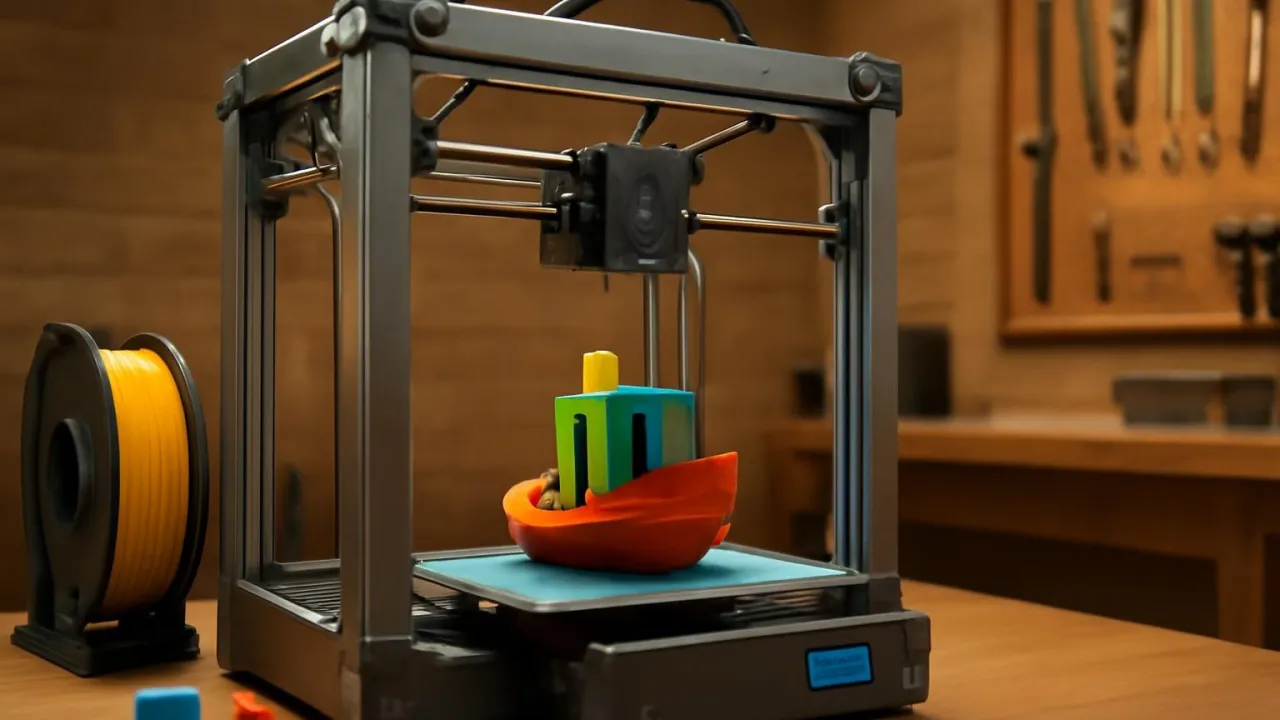
A 3D printer operates by heating plastic filament or resin until it melts, then precisely depositing it in thin, flat layers. Each layer is shaped by a computer-aided design (CAD) file, which provides exact instructions for the printer’s nozzle. As each layer cools and hardens, it bonds to the one beneath, gradually forming a solid, three-dimensional object. This process is known as additive manufacturing, because it builds up material rather than carving it away.
2 The Invention That Changed Making
Chuck Hull invented the first working 3D printer in 1984, calling his method . He used ultraviolet light to harden liquid resin, creating detailed for engineers. Over time, other inventors developed new techniques, like fused deposition modeling (FDM), which uses melted plastic filament. These inventions have made it possible for people everywhere to turn digital designs into real-world objects.
3 How 3D Printers Work
The printer’s nozzle moves in three directions—left and right, forward and back, and up and down. It follows the pattern set by the , laying down each layer with great accuracy. The layers are often less than half a millimeter thick, allowing for intricate details and strong structures. This technology allows for rapid prototyping, meaning inventors can test and improve their ideas quickly.
4 A World of Possibilities
3D printers are now used in medicine, aerospace, education, and even art studios. Doctors print custom implants and prosthetics, while engineers create airplane parts and astronauts make tools in space. The technology is revolutionizing manufacturing, making it easier for people to invent, repair, and customize objects everywhere. As 3D printing advances, it will continue to shape the way we build and create.
1. What does a 3D printer use to know what shape to make?
2. Why is rapid prototyping important for inventors?