Washing Machine
The Spinning Drum That Changed Laundry Forever
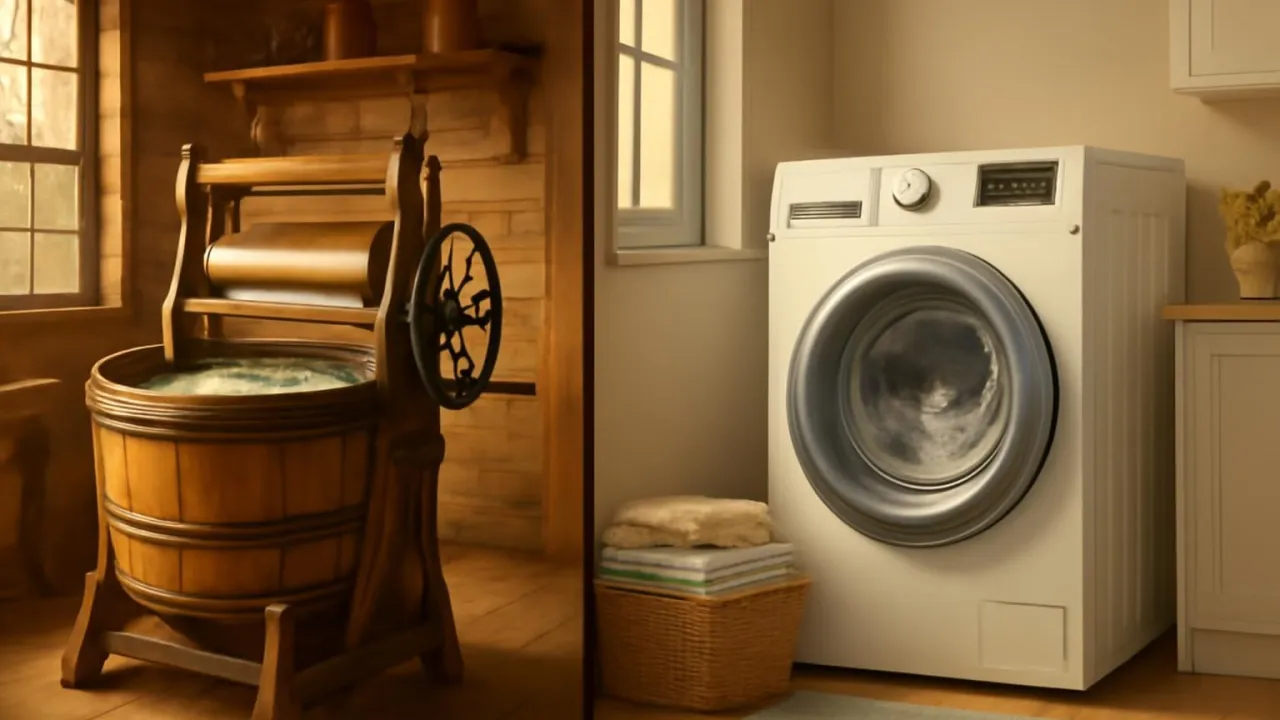
Some experimental washing machines can clean clothes using only a cup of water and sound waves!
1 Unraveling the Washing Machine’s Engineering
A modern washing machine is a marvel of mechanical and electrical engineering, combining rotating drums, motors, sensors, and control systems. The inner drum, typically made of stainless steel, spins inside a watertight outer tub, allowing water and detergent to flow through clothes. An electric motor, often using a belt or direct drive, powers the drum’s rotation and agitation cycles. During washing, the drum moves back and forth, creating friction and vibration to loosen dirt from fabric. The spin cycle accelerates the drum to high speeds—sometimes over 1,600 revolutions per minute—using to extract water efficiently. Advanced machines use to control timing, temperature, and water usage for optimal cleaning.
2 From Scrubbing Boards to Smart Machines
Before washing machines, laundry was a labor-intensive process involving soaking, scrubbing, and wringing clothes by hand, often taking entire days. James King’s 1851 patent introduced the first drum-based washing machine, and by 1908, the Hurley Machine Company launched the first electric-powered model. The 20th century saw the development of fully automatic machines, which could wash, rinse, and spin without manual intervention. Today’s machines feature programmable cycles, digital displays, and even Wi-Fi connectivity, allowing remote control and diagnostics. The evolution of washing machines reflects advances in materials science, automation, and user safety.
3 Physics and Chemistry at Work
Washing machines rely on principles of physics and chemistry to clean clothes effectively. The agitation and tumbling action increases the surface area of fabric exposed to water and detergent, enabling chemical reactions that break down stains and oils. The spin cycle’s rapid rotation generates , which pushes water out through tiny holes in the drum. Sensors monitor load size, water temperature, and rinse clarity, adjusting cycles for maximum efficiency. Some machines use inverter motors for quieter operation and reduced energy consumption, while others feature steam or ozone cycles for deep sanitization.
4 Global Impact and Sustainability
The washing machine revolutionized domestic life, especially for women, by drastically reducing the time and effort required for laundry. It contributed to better hygiene, public health, and increased productivity worldwide. In many countries, laundromats provide access to washing machines for people without home appliances, supporting entire communities. Modern machines are increasingly designed for , using less water, biodegradable detergents, and energy-efficient motors to reduce environmental impact. Innovations like greywater recycling and smart sensors continue to make laundry more eco-friendly.
5 Looking to the Future
Engineers and scientists are developing next-generation washing machines that use ultrasonic waves, nanotechnology, or even robotic arms to clean clothes with minimal resources. Some prototypes aim to recycle water within the machine, while others use artificial intelligence to detect fabric types and stains automatically. As the world’s population grows and resources become scarcer, the need for sustainable laundry solutions becomes more urgent. The story of the washing machine shows how human ingenuity can solve everyday challenges and improve lives. Perhaps one day, you might help invent the next big leap in laundry technology!
1. Why do modern washing machines use sensors and microprocessors?
2. How might future washing machines help the environment?