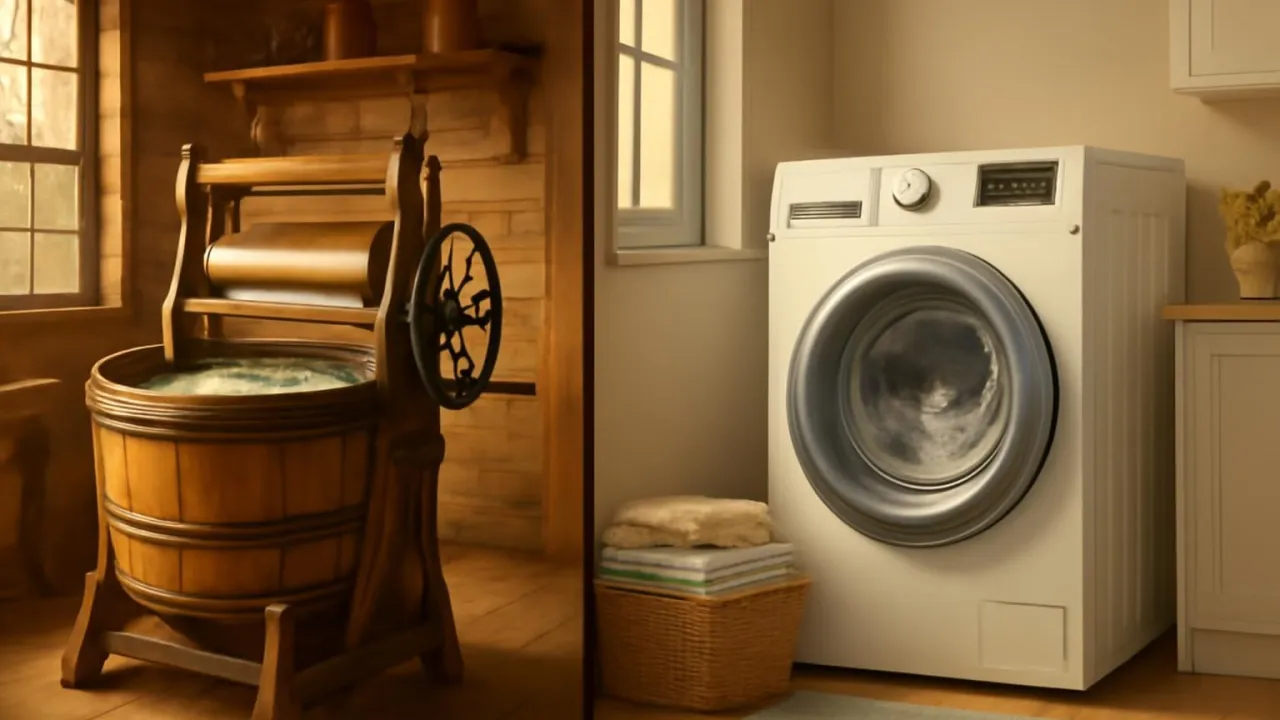
The first electric washing machines were invented over 100 years ago!
✨ Word Sparks (Grade 2 Glossary)
Tap 🔊 to hear
scrub
To rub hard to clean
drum
The spinning part inside the machine
gentle
Soft and careful, not rough
🪝
What if your socks could dance in a bubbly machine?
1
The Spinning Helper
A washing machine spins clothes in soapy water, making them clean and fresh. People put dirty laundry inside, close the door, and push a button. The inside turns fast, mixing water and soap together. Soon, the clothes are ready to dry or fold.
2
From Scrubbing to Spinning
Long ago, families washed clothes by hand with a board. It took lots of time and made arms tired, but machines made it easier. Now, families can wash many clothes at once without getting wet. Washing machines save time for fun and play.
3
Cool Machine Tricks
Some machines have special buttons for extra dirty clothes or washing. You can watch through the window as clothes tumble in circles. The machine beeps when it is done, and the laundry smells nice. It is fun to see how fast the can spin.
Some modern machines can sense how dirty your clothes are and adjust the wash!
✨ Word Sparks (Grade 3 Glossary)
Tap 🔊 to hear
vibration
A fast shaking movement
patent
A special right for inventors
sensor
A part that can measure things
🪝
Have you ever wondered how a washing machine spins so fast without splashing water everywhere?
1
The Spinning Drum Mystery
Inside every washing machine is a drum that spins quickly to clean clothes. When you press the start button, water and soap fill the drum to make bubbles. As the drum turns, clothes tumble and rub together, scrubbing away dirt. The spinning motion uses to shake out stains and rinse away soap.
2
From Hand Scrubbing to Invention
Before washing machines, people scrubbed clothes with washboards and lots of elbow grease. In 1851, James King patented a machine with a hand-turned drum. Later, inventors added electric motors, making washing much easier and faster for families.
3
How Does It Work?
Modern machines use a motor to spin the drum at different speeds. Fast spinning helps squeeze water out of clothes, while gentle cycles protect delicate fabrics. Special measure water levels and adjust the wash for each load. The door locks tightly so water stays inside, even during the fastest spin.
4
A World of Clean Clothes
Washing machines changed daily life by saving time and energy. Now, people around the world use them to keep clothes fresh and clean. Some machines use less water and energy to help the planet. Thanks to this invention, laundry day is much easier for everyone.
1. What does the drum do inside a washing machine?
2. How did washing machines help families?
🤯 Mind-Blowing Fact • Grade 4
The fastest washing machines can spin their drums over 1,600 times per minute!
✨ Word Sparks (Grade 4 Glossary)
Tap 🔊 to hear
centrifugal force
A force that pushes things outward when spinning
detergent
A special soap for cleaning clothes
automatic
Works by itself with little help
🪝
Imagine hearing the deep whir and swoosh of a washing machine—how does it clean so many clothes at once?
1
The Science of Spinning Clean
A washing machine uses a rotating drum and water mixed with to clean clothes efficiently. The motor turns the drum, creating both agitation and vibration, which help remove dirt and stains from fabric fibers. During the spin cycle, the drum rotates at high speed, using to pull water out of the clothes. This process means laundry can dry much faster after washing.
2
From Washboards to Modern Marvels
Before machines, people spent hours scrubbing clothes on washboards, which was hard on hands and fabric. In 1851, James King patented one of the first drum-based washing machines, and by the early 1900s, electric models were available in homes. Over time, inventors improved designs with controls, timers, and safety features. Today, washing machines are found in homes all over the world, making laundry day much easier.
3
How It Works: Engineering Inside
Modern machines use sensors to measure water levels and detect the size of each load. The drum can spin at different speeds, with some machines reaching over 1,200 revolutions per minute. The door locks tightly to prevent leaks, and special cycles care for different fabrics or extra dirty clothes. Some advanced machines even use less water and energy to help protect the environment.
4
Changing Life Around the Globe
The washing machine has had a huge impact on daily life and culture worldwide. It freed people from hours of manual labor, allowing more time for work, school, and family. In many places, laundromats with rows of machines help whole neighborhoods stay clean. By making laundry easier, this invention has helped improve health and hygiene for millions of people.
1. Why does the drum spin very fast during the spin cycle?
2. How did washing machines change daily life?
🤯 Mind-Blowing Fact • Grade 5
Some experimental washing machines can clean clothes using only a cup of water and sound waves!
✨ Word Sparks (Grade 5 Glossary)
Tap 🔊 to hear
centrifugal force
A force that pushes things outward as they spin
microprocessor
A tiny computer that controls the machine
sustainability
Using resources wisely to protect the planet
🪝
What if you could design a machine that washes, rinses, and spins your clothes—how would it work inside?
1
Unraveling the Washing Machine’s Engineering
A modern washing machine is a marvel of mechanical and electrical engineering, combining rotating drums, motors, sensors, and control systems. The inner drum, typically made of stainless steel, spins inside a watertight outer tub, allowing water and detergent to flow through clothes. An electric motor, often using a belt or direct drive, powers the drum’s rotation and agitation cycles. During washing, the drum moves back and forth, creating friction and vibration to loosen dirt from fabric. The spin cycle accelerates the drum to high speeds—sometimes over 1,600 revolutions per minute—using to extract water efficiently. Advanced machines use to control timing, temperature, and water usage for optimal cleaning.
2
From Scrubbing Boards to Smart Machines
Before washing machines, laundry was a labor-intensive process involving soaking, scrubbing, and wringing clothes by hand, often taking entire days. James King’s 1851 patent introduced the first drum-based washing machine, and by 1908, the Hurley Machine Company launched the first electric-powered model. The 20th century saw the development of fully automatic machines, which could wash, rinse, and spin without manual intervention. Today’s machines feature programmable cycles, digital displays, and even Wi-Fi connectivity, allowing remote control and diagnostics. The evolution of washing machines reflects advances in materials science, automation, and user safety.
3
Physics and Chemistry at Work
Washing machines rely on principles of physics and chemistry to clean clothes effectively. The agitation and tumbling action increases the surface area of fabric exposed to water and detergent, enabling chemical reactions that break down stains and oils. The spin cycle’s rapid rotation generates , which pushes water out through tiny holes in the drum. Sensors monitor load size, water temperature, and rinse clarity, adjusting cycles for maximum efficiency. Some machines use inverter motors for quieter operation and reduced energy consumption, while others feature steam or ozone cycles for deep sanitization.
4
Global Impact and Sustainability
The washing machine revolutionized domestic life, especially for women, by drastically reducing the time and effort required for laundry. It contributed to better hygiene, public health, and increased productivity worldwide. In many countries, laundromats provide access to washing machines for people without home appliances, supporting entire communities. Modern machines are increasingly designed for , using less water, biodegradable detergents, and energy-efficient motors to reduce environmental impact. Innovations like greywater recycling and smart sensors continue to make laundry more eco-friendly.
5
Looking to the Future
Engineers and scientists are developing next-generation washing machines that use ultrasonic waves, nanotechnology, or even robotic arms to clean clothes with minimal resources. Some prototypes aim to recycle water within the machine, while others use artificial intelligence to detect fabric types and stains automatically. As the world’s population grows and resources become scarcer, the need for sustainable laundry solutions becomes more urgent. The story of the washing machine shows how human ingenuity can solve everyday challenges and improve lives. Perhaps one day, you might help invent the next big leap in laundry technology!