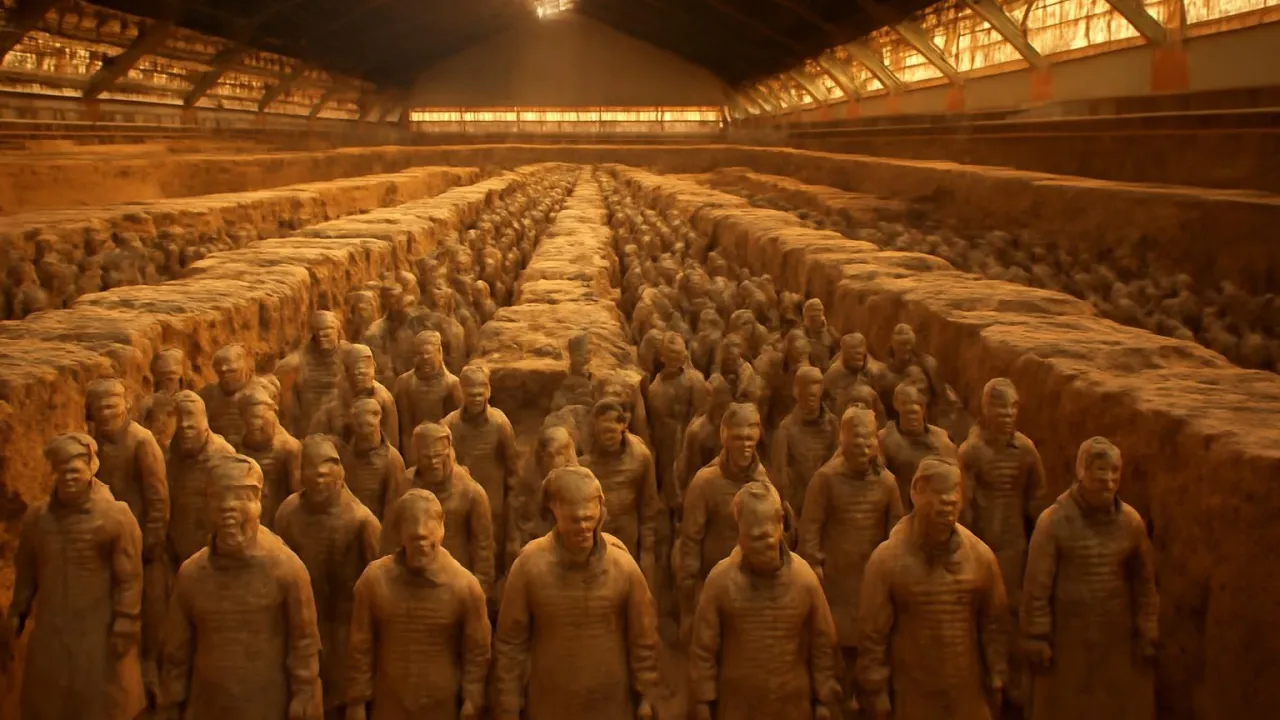
Terracotta Army of Xi'an
Chinaโs Silent Soldiers Guarding an Ancient Secret
There are more than 8,000 clay soldiers in the army!
What if you found a secret army under your feet?
1 Clay Soldiers in the Ground
Long ago, people dug up men. They found rows of silent soldiers. The soldiers stand very still.
2 Each One Looks Different
Each face is not the same. Some look happy, some look strong. They all wear suits.
3 A Place to Visit
People come to see the army. The soldiers stand in big . It feels like a quiet, secret world.
1. What are the soldiers made from?
2. Why do people visit the Terracotta Army?
No two terracotta soldiers have the same face or hair!
Can you imagine discovering thousands of buried soldiers underground?
1 Hidden for Centuries
Farmers found the Terracotta Army while digging a well. The clay soldiers had been hidden for over 2,000 years. Each soldier stands in a long row, waiting quietly. Visitors come from all over the world to see them.
2 All Different Faces
Every clay soldier has a different face and hairstyle. Some look serious, and some look brave or calm. The soldiers wear armor and carry clay weapons. They look ready to protect their forever.
3 A Giant Underground Army
There are more than 8,000 soldiers in the pits. Horses and stand with them, made from clay too. The army was built to guard the โs . Today, people can walk above the pits and look down at the soldiers.
1. Who were the clay soldiers made to protect?
2. What else is found with the soldiers?
Some warriors still have traces of their original bright paint after 2,000 years!
What secrets would you uncover if you dug deep into ancient Chinaโs earth?
1 A Surprising Discovery
In 1974, farmers digging a well found pieces of clay figures. These pieces led to the discovery of thousands of life-sized terracotta warriors. The soldiers had been hidden underground for over 2,200 years. They were created to guard the tomb of Chinaโs first emperor, Qin Shi Huang.
2 Unique Faces and Armor
Each terracotta warrior has a different face, hairstyle, and uniform. Some look young, while others appear older or more serious. The artists used molds and hand-carving to make every detail unique. Their armor and weapons show the styles of the Qin Dynasty army.
3 How Were They Built?
The soldiers were made from clay, shaped in parts, and fired in . Arms, legs, heads, and bodies were made separately and then joined together. After assembly, the warriors were painted in bright colors, though most paint has faded over time. The army stands in large underground pits, arranged in battle .
4 A Monumental Site
The Terracotta Army is now a famous monument and UNESCO World Heritage Site. Visitors can see rows of soldiers, horses, and chariots in huge museum halls. The site teaches us about ancient Chinese history, art, and military technology. continue to study the site and discover new secrets every year.
1. How did artists make each warrior unique?
2. What do archaeologists learn from the Terracotta Army?
Some warriors even have clay mustaches, topknots, and armor plates modeled after real soldiers!
Imagine hearing the echo of footsteps in a vast underground hall filled with silent clay guardians.
1 A Lost Army Unearthed
In 1974, farmers in Xi'an uncovered fragments of clay while digging, leading to the astonishing discovery of the Terracotta Army. This massive collection of life-sized soldiers, horses, and chariots had remained hidden for over two thousand years, guarding the tomb of Emperor Qin Shi Huang. The army was designed as a form of afterlife protection, ensuring the emperorโs safety in the next world. Today, the site is one of the most important archaeological finds of the twentieth century.
2 Engineering a Clay Army
Craftsmen used local clay to sculpt each warriorโs body, head, and limbs separately before joining them together. The figures were then fired in large kilns to harden the clay, making them strong enough to survive centuries underground. Artists hand-carved unique facial features and armor details, so no two soldiers are exactly alike. Originally, the warriors were painted in vivid colors, but most of the has faded due to exposure and .
3 A Glimpse into Ancient China
The Terracotta Army reveals much about the military, culture, and technology of the Qin Dynasty. The soldiers are arranged in precise battle formations, reflecting real army tactics from over two thousand years ago. Chariots and horses add to the realism, showing the importance of cavalry in ancient warfare. Each detail, from weapons to hairstyles, helps historians understand life during the emperorโs reign.
4 A Global Wonder
Recognized as a UNESCO World Heritage Site, the Terracotta Army attracts millions of visitors and scholars from around the world. Ongoing excavations continue to reveal new warriors and artifacts, deepening our understanding of this ancient civilization. The site is a symbol of Chinaโs rich history and artistic achievement. Its discovery has inspired new interest in archaeology and the of cultural heritage.
1. Why did the emperor want a clay army in his tomb?
2. What helps historians learn about ancient China from the Terracotta Army?
The Terracotta Armyโs bronze weapons were coated with chromium, making them surprisingly rust-resistant for over 2,000 years.
What would it feel like to step into the echoing corridors of an ancient underground army, each clay soldier silently watching you?
1 Discovery Beneath the Fields
In 1974, while digging a well in Xi'anโs Lintong District, local farmers unearthed fragments of pottery that would lead to one of the greatest archaeological discoveries in history. Archaeologists soon uncovered vast underground pits filled with over 8,000 life-sized terracotta soldiers, 520 horses, and 130 chariots, all created to guard the tomb of Chinaโs first emperor, Qin Shi Huang. The burial complex, constructed between 246 and 208 BCE, stretches over 20 square miles, reflecting the immense power and ambition of the Qin Dynasty. The Terracotta Army remained hidden for more than two millennia, perfectly preserved beneath layers of earth.
2 Engineering Marvels of the Qin Dynasty
Crafting the Terracotta Army required extraordinary engineering, artistic skill, and organization. Artisans used local yellow clay, shaping each warriorโs torso, limbs, and head separately before assembling them with a clay slip. After assembly, the figures were fired at temperatures exceeding 1,000ยฐC in massive kilns, a process that gave the clay its durable, stone-like hardness. Artists hand-carved facial expressions, hairstyles, and armor, ensuring that no two soldiers were identical. The original warriors were painted with bright mineral pigments, but exposure to air caused most colors to fade rapidly after excavation.
3 Military Realism and Formation
The Terracotta Army is arranged in precise military formations, mirroring real Qin Dynasty battle tactics. Infantry, archers, cavalry, and charioteers are positioned according to rank and function, with commanding officers distinguishable by their elaborate armor and headgear. Each warrior holds a unique weaponโbronze swords, spears, or crossbowsโdemonstrating advanced metallurgical techniques for the era. The horses and chariots further illustrate the importance of cavalry and mobility in ancient Chinese warfare. This attention to detail provides historians with invaluable insight into the military organization and technology of the time.
4 Historical and Cultural Significance
The Terracotta Army was constructed as a form of , intended to protect Emperor Qin Shi Huang in the afterlife and demonstrate his absolute authority. The site offers a window into the social hierarchy, craftsmanship, and beliefs of the Qin Dynasty, which unified China under a centralized government. Archaeological studies of the site have revealed not only the scale of the emperorโs ambitions but also the labor and resources requiredโthousands of workers, complex logistics, and advanced kiln technology. The discovery has revolutionized our understanding of ancient Chinese civilization and its global influence.
5 A Living Legacy
Today, the Terracotta Army is recognized as a UNESCO World Heritage Site and attracts millions of visitors annually. Ongoing excavations continue to yield new warriors, weapons, and artifacts, deepening our knowledge of ancient engineering and artistry. scientists use advanced techniques to preserve the delicate pigments and repair damaged figures, ensuring the armyโs survival for future generations. The site stands as a testament to human ingenuity, cultural heritage, and the enduring mysteries of the past. Its discovery has inspired a global appreciation for archaeology and the preservation of world wonders.
1. How did the Terracotta Armyโs weapons remain rust-free for so long?
2. What does the arrangement of the army teach us about the Qin Dynasty?