Terracotta Army of Xi'an
China’s Silent Soldiers Guarding an Ancient Secret
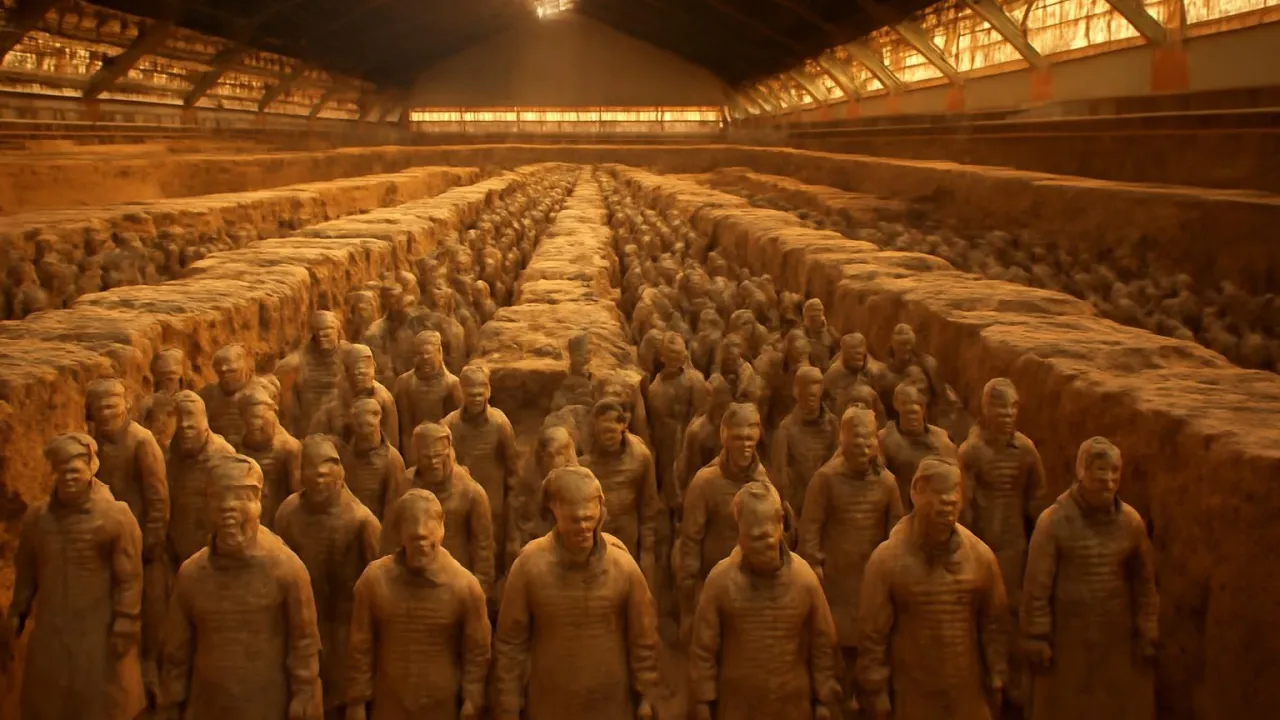
Some warriors even have clay mustaches, topknots, and armor plates modeled after real soldiers!
1 A Lost Army Unearthed
In 1974, farmers in Xi'an uncovered fragments of clay while digging, leading to the astonishing discovery of the Terracotta Army. This massive collection of life-sized soldiers, horses, and chariots had remained hidden for over two thousand years, guarding the tomb of Emperor Qin Shi Huang. The army was designed as a form of afterlife protection, ensuring the emperor’s safety in the next world. Today, the site is one of the most important archaeological finds of the twentieth century.
2 Engineering a Clay Army
Craftsmen used local clay to sculpt each warrior’s body, head, and limbs separately before joining them together. The figures were then fired in large kilns to harden the clay, making them strong enough to survive centuries underground. Artists hand-carved unique facial features and armor details, so no two soldiers are exactly alike. Originally, the warriors were painted in vivid colors, but most of the has faded due to exposure and .
3 A Glimpse into Ancient China
The Terracotta Army reveals much about the military, culture, and technology of the Qin Dynasty. The soldiers are arranged in precise battle formations, reflecting real army tactics from over two thousand years ago. Chariots and horses add to the realism, showing the importance of cavalry in ancient warfare. Each detail, from weapons to hairstyles, helps historians understand life during the emperor’s reign.
4 A Global Wonder
Recognized as a UNESCO World Heritage Site, the Terracotta Army attracts millions of visitors and scholars from around the world. Ongoing excavations continue to reveal new warriors and artifacts, deepening our understanding of this ancient civilization. The site is a symbol of China’s rich history and artistic achievement. Its discovery has inspired new interest in archaeology and the of cultural heritage.
1. Why did the emperor want a clay army in his tomb?
2. What helps historians learn about ancient China from the Terracotta Army?