The Colosseum’s underground tunnels were once used to surprise the crowd with wild animals!
✨ Word Sparks (Grade 2 Glossary)
Tap 🔊 to hear
stadium
A big place for sports or shows
ancient
Very, very old
symbol
A sign that means something special
🪝
What would it feel like to walk through a giant stone stadium?
1
A Huge Ancient Stadium
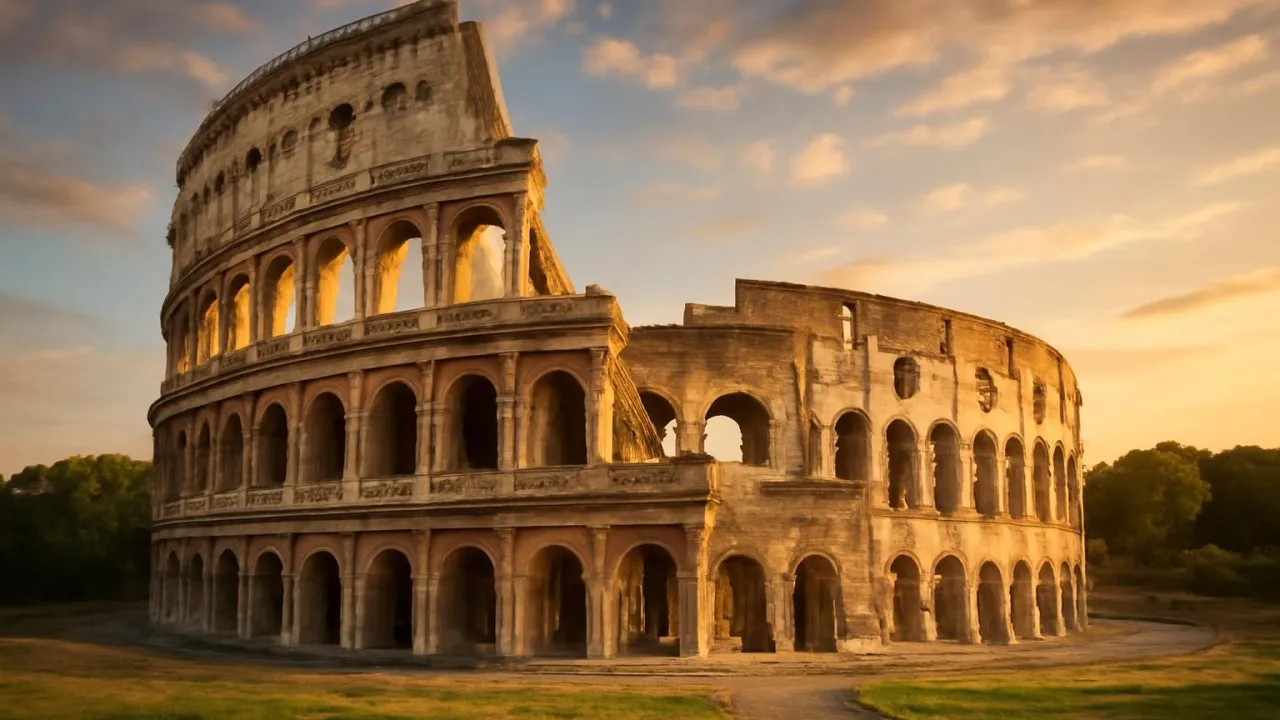
The Colosseum stands tall in Rome, Italy. It was built almost two thousand years ago. People came to watch exciting shows and games. Today, visitors walk where crowds once cheered.
2
Arches and Secret Tunnels
The Colosseum has many tall arches and stone steps. Under the arena, tunnels hid animals and people before shows. The open roof let in sunlight and fresh air.
3
A Place Full of History
Now, people visit to see the old walls and tunnels. They take photos and imagine the sounds of the past. The Colosseum is a famous of Rome.
The Colosseum once had a huge fabric roof called the velarium to shade the crowd!
✨ Word Sparks (Grade 3 Glossary)
Tap 🔊 to hear
gladiator
A fighter in ancient Rome
hypogeum
The underground tunnels and rooms
vibrate
To shake and make sound move
🪝
Can you imagine the roar of 50,000 people echoing off ancient stone walls?
1
The Heart of Ancient Rome
Long ago, the Colosseum was the busiest place in Rome. Crowds gathered to watch games and wild animal shows. The stone arena could seat more than 50,000 people at once. Today, visitors walk through its broken arches and imagine the noise and excitement.
2
Building with Arches and Stone
Roman engineers used arches to make the Colosseum strong and tall. These arches spread the heavy weight and kept the walls from falling. The builders used limestone and concrete to create a sturdy structure. The arena’s design helped sound and echo through the crowd.
3
Tunnels and Surprises Below
Under the arena floor, there were secret tunnels and rooms. People and animals waited there before entering the show. Lifts and trapdoors let surprises appear in the middle of the arena. The underground area was called the .
4
A Wonder for the World
The Colosseum is now a UNESCO World Heritage site. People from all over the world visit to learn about Roman history. The monument has survived earthquakes and weather erosion for centuries. Its arches and tunnels still inspire engineers and architects today.
The Colosseum’s design allowed everyone inside to exit in less than 10 minutes!
✨ Word Sparks (Grade 4 Glossary)
Tap 🔊 to hear
vault
A curved ceiling or roof
resonance
How sound bounces and echoes
durability
How long something can last
🪝
What secrets hide in the shadows of the Colosseum’s ancient arches and tunnels?
1
A Marvel of Roman Engineering
The Colosseum, built during the Flavian dynasty, was the largest amphitheater ever constructed in ancient Rome. Its oval shape measures about 620 feet long and 513 feet wide, rising to 157 feet tall. Roman engineers used a complex system of stone arches and to support the massive structure. The design allowed for quick crowd movement and excellent acoustic , so every cheer echoed across the arena.
2
Life Inside the Arena
The arena floor once covered a labyrinth of underground passages called the hypogeum. These tunnels stored animals, gladiators, and stage props, with elevators and trapdoors for dramatic entrances. Spectators sat according to their social rank, and the Colosseum could seat over 50,000 people at a time. A giant canvas awning, the velarium, shaded the audience from the hot Roman sun.
3
Surviving Centuries of Change
Over the centuries, earthquakes and erosion damaged much of the Colosseum’s outer walls. Despite this, its strong Roman concrete and clever engineering have kept it standing for nearly two thousand years. Today, visitors can walk through the ancient arches and explore the hypogeum’s remains. The Colosseum’s survival is a testament to the of Roman construction techniques.
4
A Symbol Across the World
Now a UNESCO World Heritage site, the Colosseum is a symbol of Roman culture and creativity. It attracts millions of tourists each year, inspiring architects and engineers with its design. The monument has appeared in countless books, films, and artworks, representing the power and imagination of ancient Rome. Its legacy continues to shape stadiums and arenas around the world.
1. How did the Colosseum’s design help crowds leave quickly?
2. Why is the Colosseum important today?
🤯 Mind-Blowing Fact • Grade 5
The Colosseum’s hypogeum had 36 trapdoors and over 60 lifts for dramatic stage effects!
✨ Word Sparks (Grade 5 Glossary)
Tap 🔊 to hear
vomitoria
Special exits for fast crowd movement
travertine
A strong, pale stone from Italy
conservation
Protecting and saving old places or things
🪝
What if you could map the echoes of every cheer and footstep ever heard in the Colosseum?
1
Engineering the Ancient Arena
Constructed between 70 and 80 CE under Emperors Vespasian and Titus, the Roman Colosseum remains the largest amphitheater ever built. Its elliptical footprint spans approximately 620 by 513 feet, with the outer wall soaring to 157 feet and encompassing four levels. Roman engineers mastered the use of limestone, tuff, and concrete, employing over 240 exterior arches to distribute weight and resist seismic shocks. The Colosseum’s innovative design included a complex network of barrel and groin vaults, which supported both the seating and the immense crowds.
2
Acoustics, Architecture, and Crowd Control
The Colosseum’s oval shape and tiered seating were engineered for optimal acoustic resonance, allowing sound to travel efficiently throughout the arena. The structure featured 80 numbered entrances, known as , enabling over 50,000 spectators to enter or exit within minutes. These passageways, combined with a radial stair system, set a new standard for crowd management in public venues. The velarium, a massive retractable canvas awning, was operated by sailors to shade the audience and enhance comfort during events.
3
Beneath the Arena: The Hypogeum
Beneath the wooden arena floor lay the hypogeum, a two-level subterranean network of tunnels, cages, and mechanical lifts. This underground labyrinth allowed organizers to stage elaborate spectacles, releasing gladiators, wild animals, and scenery through trapdoors with dramatic precision. The hypogeum’s design showcased Roman expertise in both engineering and stagecraft, using pulleys, winches, and counterweights to create unforgettable surprises for the audience above.
4
Survival, Restoration, and Global Impact
Despite suffering damage from earthquakes, stone robbers, and centuries of neglect, the Colosseum’s core structure remains remarkably intact due to the durability of Roman concrete and the strength of its arches. Restoration efforts began as early as the 18th century and continue today, preserving the monument for future generations. The Colosseum’s influence can be seen in the design of modern stadiums and arenas worldwide, serving as a model for efficient crowd flow, sightlines, and multi-use spaces.
5
Legacy of a World Wonder
Today, the Colosseum stands as a UNESCO World Heritage site and one of the New Seven Wonders of the World, attracting over six million visitors annually. It symbolizes not only the grandeur of ancient Rome but also the enduring power of human ingenuity and architectural innovation. The monument’s history is woven into the cultural identity of Italy and inspires ongoing research in archaeology, engineering, and . Its arches, tunnels, and echoes continue to spark curiosity and awe in people of all ages.