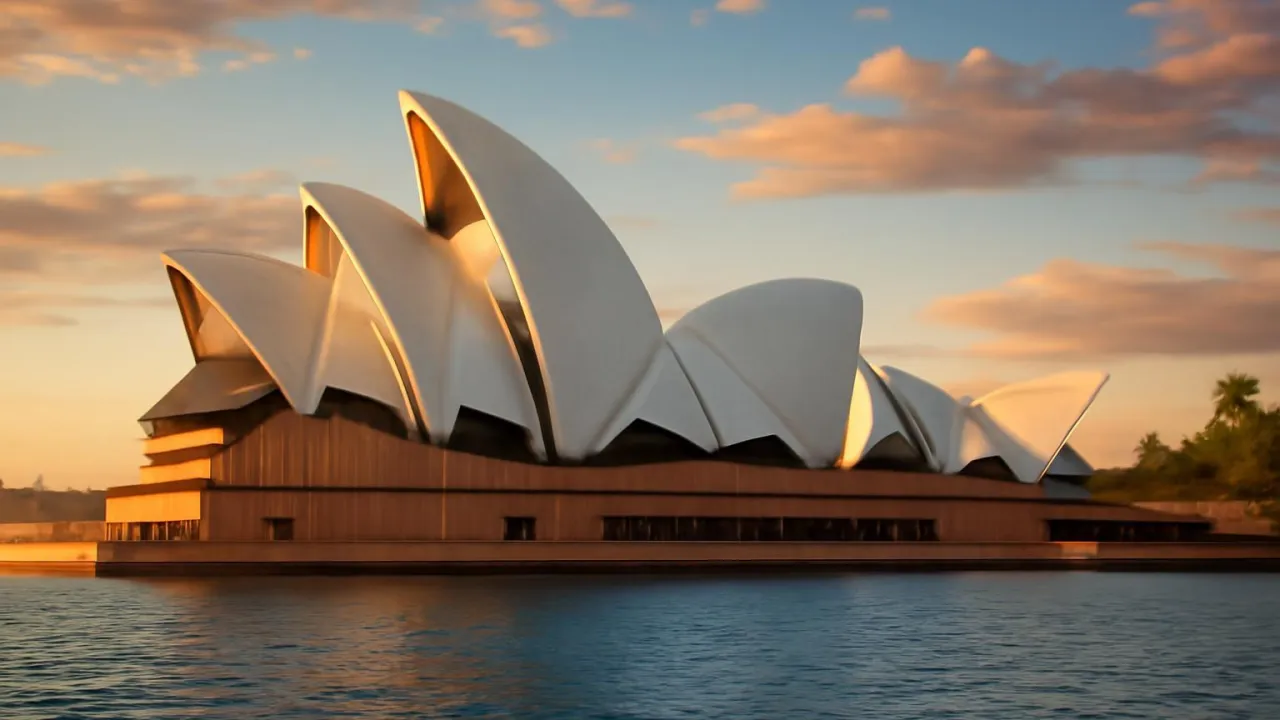
The Opera House roof is made from more than 1,000,000 tiles!
✨ Word Sparks (Grade 2 Glossary)
Tap 🔊 to hear
echo
A sound that bounces back
curved
Bending smoothly, not straight
concert
A show with music
🪝
Have you ever heard music echo across the water?
1
A Building Like No Other
The Sydney Opera House looks like giant white sails. It sits right on the sparkling blue harbor. People from all over come to see its special shape.
2
Music Fills the Air
Inside, music and singing sound extra beautiful. The roofs help the sound travel and bounce around. Many famous shows and happen here every year.
3
A Place to Explore
Visitors can walk outside or take a boat ride nearby. Some people take tours to see the big stage and seats. Others just enjoy the view and snap photos.
The Opera House’s largest hall can seat over 2,600 people at once!
✨ Word Sparks (Grade 3 Glossary)
Tap 🔊 to hear
acoustics
How sound moves in a space
erosion
Wearing away by wind or water
monument
A famous building or statue
🪝
Can you imagine hearing a piano play under giant white sails?
1
A Modern Marvel
The Sydney Opera House stands out with its tall, shell-like roofs. These roofs were designed to look like sails floating on the harbor. The building took 14 years to finish and became a symbol of Australia. People visit from all over the world to see its unique shape.
2
How Sound Travels
The Opera House is famous for its amazing . The curved shells help sound waves vibrate and bounce around the concert halls. This makes music and singing sound clear and powerful. Musicians love performing here because every note can be heard.
3
Building the Dream
Engineers used special tiles to cover the roof. These tiles reflect sunlight and keep the building cool. The Opera House sits on a platform above the water, protecting it from waves and . Its strong base holds up the heavy roof shells.
4
A Place for Everyone
The Opera House hosts concerts, plays, and ballet for people of all ages. Visitors can tour the inside to see the grand stage and backstage areas. Outside, the wide steps are a favorite spot for photos. The Opera House is a true to art and engineering.
The Opera House roof shells were built using 2,194 pre-cast concrete sections!
✨ Word Sparks (Grade 4 Glossary)
Tap 🔊 to hear
resonance
When sound vibrates and grows stronger
pre-cast
Made in a mold before building
ceramic
A hard, shiny material like pottery
🪝
What if a building could turn music into magic with its shape?
1
An Iconic Creation
The Sydney Opera House is one of the world’s most recognizable landmarks, thanks to its soaring, sail-like shells. Designed by architect Jørn Utzon, the building took from 1957 to 1973 to complete, overcoming many construction challenges. Its unique form was inspired by the sails of boats gliding across Sydney Harbor. Today, the Opera House is a symbol of creativity and modern engineering.
2
Acoustic Wonders
Inside, the Opera House is famous for its exceptional acoustic design, which makes music and voices sound vibrant and clear. The curved concrete shells reflect and amplify sound waves, creating throughout the concert halls. Engineers carefully studied how vibration and reflection would affect every note. This attention to acoustic detail helps performers and audiences enjoy every performance.
3
Engineering Feats
Building the Opera House required new engineering solutions, including the use of over one million tiles on the roof. The shells are supported by a strong base built to resist erosion from the harbor’s waves. Special materials and construction methods were used to ensure the structure would last for generations. Its innovative design continues to inspire architects worldwide.
4
A Global Stage
The Sydney Opera House is more than a concert hall; it is a cultural hub for Australia and the world. It hosts thousands of events every year, including operas, ballets, and plays. Millions of visitors tour the building, take photos on its steps, and enjoy its harbor views. Its global impact as a monument to art, music, and engineering is truly remarkable.
The Sydney Opera House’s pipe organ has 10,244 pipes and took ten years to build!
✨ Word Sparks (Grade 5 Glossary)
Tap 🔊 to hear
expressionist
A style that shows strong feelings or ideas
modular
Made from separate parts that fit together
tracker-action
A system linking organ keys to pipes
🪝
Imagine standing beneath sweeping white shells as music vibrates all around you—how does architecture create this magic?
1
A Vision Takes Shape
The Sydney Opera House, designed by Danish architect Jørn Utzon, stands as a masterpiece of modern architecture. Construction began in 1957 after Utzon’s innovative design won an international competition, but the project faced enormous engineering and political challenges for 16 years. Its iconic roof shells, inspired by the segments of an orange and the sails of Sydney Harbor’s boats, required engineers to invent new construction methods. Today, the Opera House is not only a symbol of Australia but also a global icon of creative design.
2
Engineering the Impossible
The Opera House’s roof consists of 14 massive concrete shells, each made from 2,194 pre-cast sections. These shells rise as high as 221 feet (67.4 meters) and span up to 410 feet (125 meters), supported by a complex system of steel cables and concrete ribs. Over one million glossy, self-cleaning ceramic tiles cover the shells, reflecting sunlight and giving the building its shimmering appearance. Engineers developed custom cranes and lifting equipment to assemble the shells safely above the harbor’s edge.
3
Acoustics by Design
Inside, the Opera House is renowned for its world-class acoustics, achieved through careful study of sound resonance and vibration. The concert halls’ walls and ceilings are angled and curved to direct sound waves toward the audience, creating clarity and warmth for orchestras, opera singers, and speakers. Special acoustic panels and hardwood floors further enhance sound quality, making every performance a memorable experience. The main Concert Hall seats 2,679 people and houses the largest mechanical pipe organ in the world.
4
Enduring Impact and Innovation
The Opera House’s construction revolutionized architectural engineering, influencing the use of pre-cast concrete and complex geometry in buildings worldwide. Its location on Bennelong Point required innovative foundations to resist erosion and withstand the harbor’s tides. The building is now a UNESCO World Heritage Site, recognized for its cultural and architectural significance. It continues to inspire architects, engineers, and artists with its blend of beauty, function, and daring design.
5
A Living Landmark
Today, the Sydney Opera House hosts more than 1,500 performances annually, ranging from grand opera to Indigenous Australian storytelling. Millions of visitors tour its stages and public spaces, learning about its history and engineering marvels. The building’s energy-efficient upgrades and restoration projects ensure its preservation for future generations. As a living monument, it stands at the intersection of art, science, and community, celebrating human creativity on a global stage.