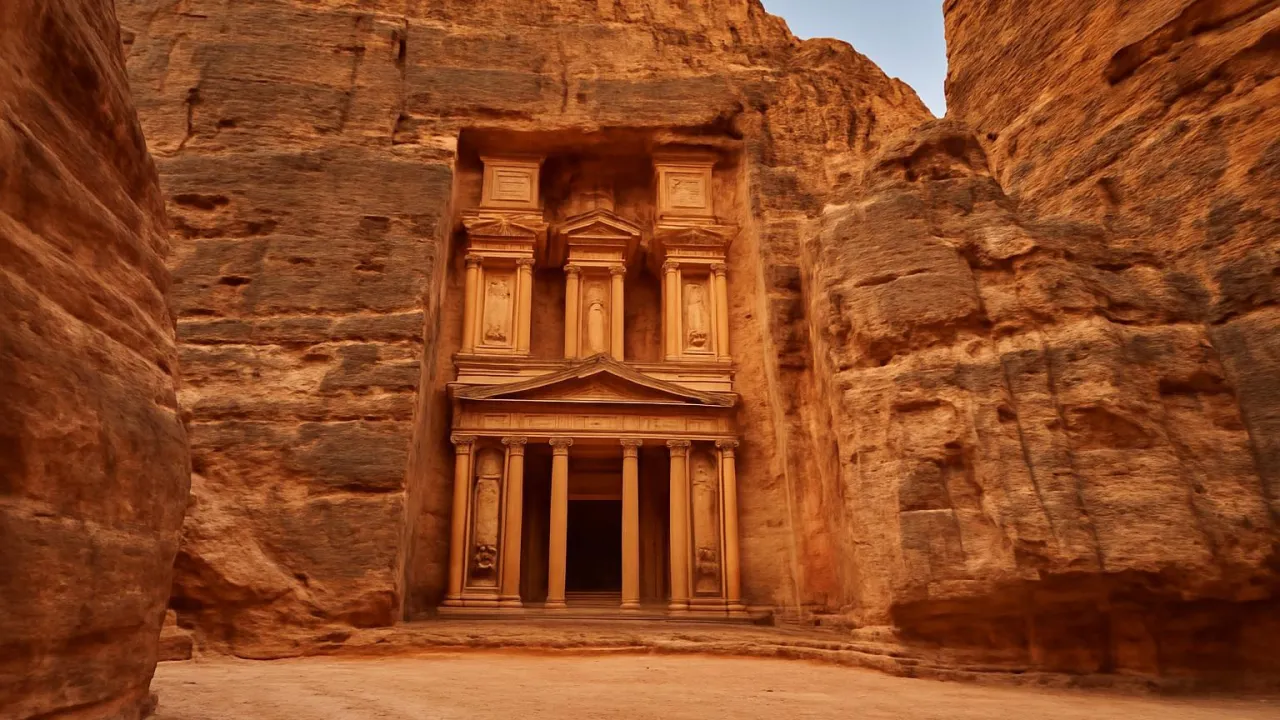
Petra (Al-Khazneh)
The Rose-Red City Carved in Stone
Petraโs Al-Khazneh was carved from one huge cliff over 2,000 years ago!
What if you found a pink palace hidden in the rocks?
1 Stone Surprise
Petra looks pink in the sun. It is into tall rocks. People walk through a narrow path.
2 Big Door, Tall Walls
The front has tall . The door is very big. It looks like a giantโs house.
3 A Place to Explore
Visitors take pictures and smile. They feel small by the door. The rocks feel cool and smooth.
1. What color does Petra look like in the sun?
2. How do people get to Petra?
Al-Khaznehโs name means โThe Treasury,โ but it was probably a royal tomb.
Can you imagine walking through a secret canyon to find a pink palace?
1 Hidden in the Rocks
Petraโs Al-Khazneh stands tall inside red cliffs. Visitors walk through a winding to reach it. The sunlight makes the stone glow pink and orange.
2 A Giant Stone Door
The front shows tall columns and a huge doorway. The whole building was carved by hand. It looks like a from a storybook.
3 People Visit Every Day
People travel from all over to see Petra. They take photos and touch the cool, smooth stone. Petra is a special place to explore and learn.
1. What does the sunlight do to Petraโs stone?
2. What was Al-Khazneh probably used for?
Petraโs Siq canyon is over 0.7 miles (1.2 km) long and twists like a maze!
What would you hear echoing if you clapped inside Petraโs stone canyon?
1 A City Carved from Stone
Petraโs Al-Khazneh rises from pink cliffs in the Jordan desert. Ancient Nabataeans carved the entire straight into the rock face. The stone glows rosy gold, especially at sunrise and sunset. Visitors enter through a narrow canyon called the Siq.
2 Columns and Statues
The has six tall columns and detailed carvings of figures and shapes. The entrance is so large that people feel tiny in front of it. The stoneโs smooth surface shows marks from ancient tools. The whole monument was carved without using modern machines.
3 How Did They Build It?
Builders started at the top and worked downward, carving rooms and decorations. They used chisels and hammers to shape the soft . The rockโs layers made carving easier, but also made it fragile. Wind and rain slowly cause , changing the monumentโs look over time.
4 A Place to Discover
Today, people from around the world visit Petra to learn its secrets. The canyonโs walls echo with footsteps and voices. Al-Khazneh is a symbol of Jordan and a UNESCO World Heritage Site. It teaches us about ancient engineering and the power of nature.
1. Why did builders start carving from the top?
2. What tool did ancient builders use?
Petraโs builders used wooden scaffolds and iron tools to carve the entire faรงade from one cliff!
Can you picture the echo of ancient footsteps in Petraโs winding stone canyon?
1 The Hidden Cityโs Grand Entrance
Al-Khazneh, also known as The Treasury, greets visitors with a breathtaking rose-red faรงade carved directly into the sandstone cliffs of Petra. The , a skilled ancient people, began construction in the 1st century CE. The monument stands 131 feet tall and 82 feet wide, with intricate columns and statues. Sunlight striking the faรงade creates shifting shades of pink, gold, and orange throughout the day.
2 Engineering a Stone Wonder
Nabataean builders started at the top of the cliff, carefully carving downward to avoid damaging finished sections. They used iron chisels, hammers, and wooden to shape the soft sandstone. The faรงadeโs columns and sculptures were designed to impress travelers and show the cityโs wealth. Over centuries, wind and rain have caused , slowly wearing away some of the details.
3 A Place of Mystery and History
Although called The Treasury, Al-Khazneh was likely built as a royal tomb for an important Nabataean king. Legends about hidden treasure added to its mystery, but archaeologists have found no gold inside. The monumentโs blend of Greek, Roman, and local styles shows Petraโs importance as a crossroads of ancient trade. Its echoing canyon, the Siq, protected the city from invaders and sandstorms.
4 Global Wonder and Lasting Legacy
Today, Petra is a UNESCO World Heritage Site and one of the New Seven Wonders of the World. Thousands of visitors from every continent walk through the Siq to marvel at Al-Khaznehโs beauty. The monument inspires artists, historians, and engineers with its blend of natural and human-made wonders. Preserving Petra is a challenge, as and tourism threaten its fragile stone. Learning about Petra helps us understand ancient engineering and the importance of protecting world heritage.
1. Why did Nabataean builders carve from the top down?
2. What styles influenced Petraโs architecture?
Petraโs sophisticated water system included over 200 carved cisterns and channels to capture every drop of rain in the desert.
Imagine sunlight pouring through a narrow canyon, illuminating a rose-red monument carved by ancient handsโhow did Petraโs Al-Khazneh survive for two thousand years?
1 A Monumental Carving in the Desert
Al-Khazneh, Petraโs most iconic structure, greets visitors with a dazzling 131-foot-tall faรงade intricately carved into pink sandstone cliffs. The Nabataeans, a wealthy Arab trading civilization, constructed this monumental tomb in the early 1st century CE. Approaching through the Siqโa winding, 0.7-mile-long gorgeโyou emerge to see the Treasuryโs towering columns, ornate capitals, and sculpted figures glowing in shifting sunlight. The monumentโs name, meaning 'The Treasury,' comes from local legends, though archaeological evidence suggests it served as a royal .
2 Mastering Stone: Nabataean Engineering
Nabataean engineers employed a top-down carving method, starting at the cliffโs summit and progressing downward to prevent debris from damaging completed sections. Craftsmen used iron chisels, hammers, and wooden scaffolding to meticulously shape the soft, layered sandstone. The faรงade features a blend of Hellenistic, Roman, and indigenous Nabataean architectural elements, including , friezes, and sculpted eagles. Petraโs builders also engineered complex water channels and cisterns to manage flash floods and supply the cityโs population.
3 Erosion, Preservation, and Geological Forces
Sandstone, while easy to carve, is highly susceptible to erosion from wind, rain, and temperature changes. Over centuries, the faรงadeโs intricate details have been softened or lost due to natural weathering and occasional earthquakes. Modern conservation efforts use chemical treatments, drainage improvements, and visitor management to slow erosion and preserve the monumentโs fragile beauty. Scientists study the mineral composition of Petraโs sandstone to better understand its vulnerability and devise new preservation techniques.
4 Petraโs Cultural and Historical Legacy
Petra flourished as a major trading hub, connecting Arabia, Egypt, Greece, and Rome through the Incense Route. Al-Khaznehโs architecture reflects this cosmopolitan heritage, combining artistic influences from many cultures. The city declined after trade routes shifted and earthquakes damaged its infrastructure, but its rediscovery in 1812 by Swiss explorer Johann Ludwig Burckhardt brought global attention. Today, Petra is a UNESCO World Heritage Site and one of the New Seven Wonders of the World, symbolizing both ancient ingenuity and the need for heritage protection.
5 Exploring Petra Today
Modern visitors traverse the Siq to experience the dramatic reveal of Al-Khazneh, often described as stepping into a lost world. The canyonโs amplify footsteps and voices, creating a sense of awe and mystery. Archaeologists continue to uncover tombs, temples, and water systems, revealing new insights into Nabataean society. Tourism brings economic benefits but also challenges, as increased foot traffic accelerates erosion and threatens the siteโs preservation. By studying Petraโs engineering and geology, we learn valuable lessons about sustainability, resilience, and the enduring power of human creativity.
1. How did Nabataean engineers protect their work during construction?
2. Why is Petraโs sandstone both helpful and risky for builders?