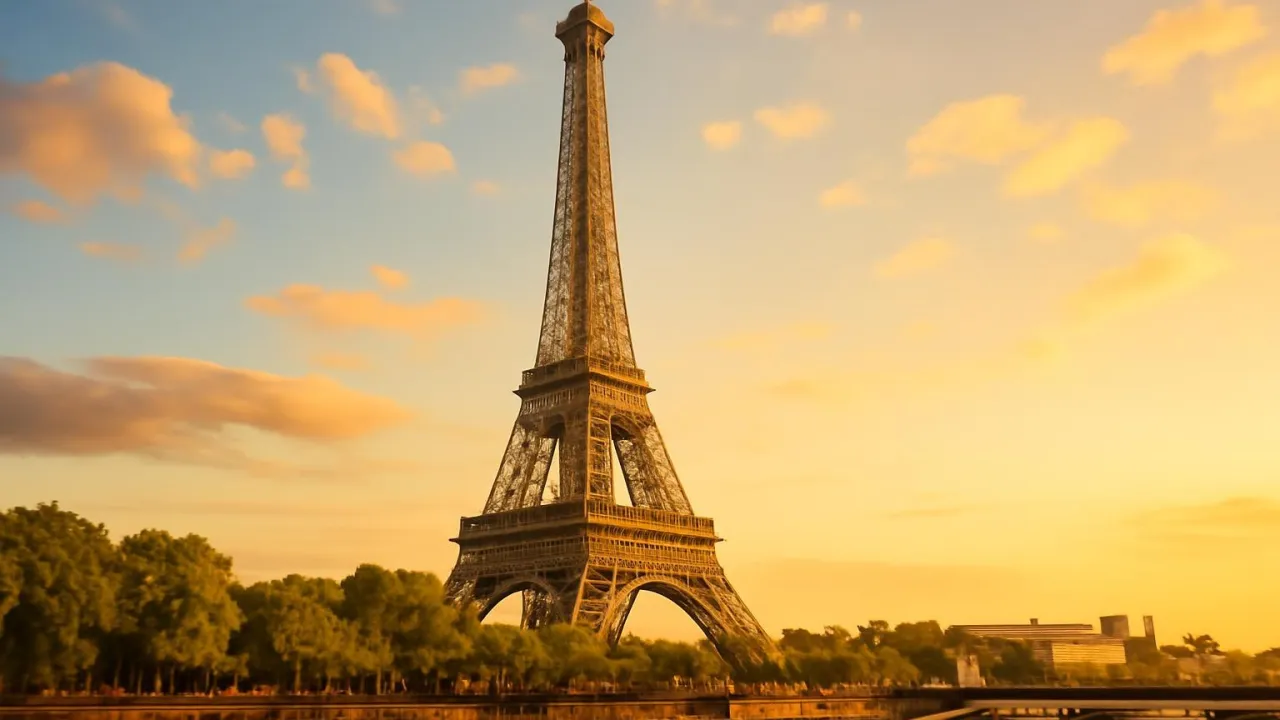
The Eiffel Tower was once the tallest building on Earth!
✨ Word Sparks (Grade 2 Glossary)
Tap 🔊 to hear
France
A country in Europe
lights
Things that make places bright
legs
Parts that help things stand
🪝
Have you ever seen a tower that sparkles at night?
1
A Paris Wonder
The Eiffel Tower stands tall in Paris, . It shines with every evening and makes people smile. Visitors come from all over the world to see it.
2
Building the Iron Giant
Many workers used strong iron to build the tower quickly. It has four wide that help it stand up straight. The tower was finished in just two years.
3
Up, Up, Up!
People can ride a lift to the top and look out over Paris. The city looks tiny from so high up in the sky. Sometimes, you can even see clouds floating by!
1. How long did it take to build the Eiffel Tower?
2. What do people see from the top of the tower?
🤯 Mind-Blowing Fact • Grade 3
The Eiffel Tower weighs about 10,100 tons—almost as much as 1,500 elephants!
✨ Word Sparks (Grade 3 Glossary)
Tap 🔊 to hear
lattice
A crisscross pattern of metal bars
vibration
A quick, tiny shaking movement
monument
A special building that honors something
🪝
Can you imagine standing on a tower above all of Paris?
1
A Tower of Iron and Imagination
The Eiffel Tower stretches high above the city, sparkling with thousands of lights at night. Designed by engineer Gustave Eiffel, it became a symbol of Paris and modern invention. The tower was built for the 1889 World's Fair to show off France's engineering skills. Today, millions of people visit it every year.
2
How Was It Built?
Workers used 18,038 pieces of iron to create the tower's strong structure. Huge bolts and rivets hold the metal together, forming a stable frame that resists wind and . The four wide legs spread the tower's weight across the ground. It took just over two years to finish this amazing .
3
Riding to the Top
Visitors ride elevators, called lifts, to reach the highest viewing deck. From there, you can see the River Seine, tiny cars, and even distant hills. The tower's open lets wind pass through, so it sways gently but stays safe. Sometimes, the metal expands in the summer sun, making the tower even taller.
4
A Symbol for the World
The Eiffel Tower is more than just a building; it's a to creativity. Its unique shape and engineering have inspired bridges, towers, and art everywhere. The tower even has special lights that sparkle every hour at night. People from all over the world come to Paris just to see its beauty.
1. Why does the Eiffel Tower have a lattice structure?
2. Who designed the Eiffel Tower?
🤯 Mind-Blowing Fact • Grade 4
Every seven years, the Eiffel Tower is repainted by hand using 60 tons of paint!
✨ Word Sparks (Grade 4 Glossary)
Tap 🔊 to hear
rivets
Metal pins that hold things together
erosion
Wearing away by wind or water
innovation
A new idea or invention
🪝
What secrets does the Eiffel Tower hold high above Paris’s rooftops?
1
The Birth of a Paris Icon
When the Eiffel Tower first rose over Paris in 1889, it amazed people with its daring height and design. Built for the World’s Fair, it was meant to celebrate the 100th anniversary of the French Revolution. Engineer Gustave Eiffel and his team used new techniques to assemble 18,038 iron pieces with more than 2.5 million . At first, some Parisians disliked its unusual shape, but it soon became a beloved symbol.
2
Engineering Marvels and Mechanics
The Eiffel Tower’s lattice structure is both beautiful and practical, allowing wind to pass through and reducing pressure on the frame. Its four massive legs anchor the tower deeply into the ground, spreading out the enormous weight. Special elevators, or lifts, glide up curved tracks, carrying visitors to three viewing platforms. In hot weather, the iron expands, making the tower grow up to six inches taller.
3
A Tower That Sways but Stands Strong
Although the Eiffel Tower sways slightly in strong winds, its design prevents dangerous vibration and keeps it stable. The open lattice reduces wind resistance, a key reason the tower has stood for over 130 years. Engineers regularly inspect and repaint the iron to protect it from rust and caused by rain and pollution. The tower’s nightly light shows use over 20,000 bulbs to create sparkling displays.
4
A Global Landmark and Inspiration
The Eiffel Tower is not only a French treasure but also a world-famous monument visited by millions each year. Its unique silhouette has inspired artists, architects, and engineers around the globe. The tower’s design has influenced bridges and towers far beyond Paris. Today, it stands as a symbol of creativity, resilience, and the spirit of .
1. Why does the Eiffel Tower need to be repainted so often?
2. How does the tower’s design help it survive strong winds?
🤯 Mind-Blowing Fact • Grade 5
The Eiffel Tower was almost dismantled in 1909, but it was saved by becoming a giant radio antenna!
✨ Word Sparks (Grade 5 Glossary)
Tap 🔊 to hear
corrosion
When metal breaks down from water or air
lattice
A crisscross pattern that adds strength
fatigue
Weakness from repeated stress or bending
🪝
What would you discover if you climbed every step of the Eiffel Tower?
1
A Monument Born of Ambition
In the late 1800s, Paris wanted to showcase its modern spirit for the 1889 Exposition Universelle, celebrating the French Revolution’s centennial. Gustave Eiffel’s engineering firm won the competition to design a temporary monument that would surpass anything built before. Constructed from 18,038 prefabricated wrought iron parts and over 2.5 million rivets, the Eiffel Tower soared to 1,083 feet (330 meters), making it the tallest man-made structure in the world for 41 years.
2
Structural Genius: Lattice and Load
The tower’s framework is a masterpiece of physics and engineering, distributing its 10,100-ton weight across four massive piers anchored in concrete. The open iron web reduces wind resistance, allowing gusts to pass through rather than push against solid walls. This design minimizes dangerous vibration and prevents structural , a principle now used in many modern bridges and towers. The tower’s stability is further ensured by its wide base, which is 410 feet (125 meters) on each side.
3
Mechanical Marvels and Seasonal Change
The Eiffel Tower’s elevators were a marvel in their time, using hydraulic power and curved tracks to ascend the sloping legs. Today, visitors can ride to three observation decks or climb 1,665 steps to the top. In summer, the iron expands from heat, making the tower up to six inches (15 centimeters) taller, while in winter, it contracts. Regular maintenance includes repainting every seven years with 60 tons of paint to prevent from rain, wind, and pollution.
4
Cultural Impact and Global Legacy
Initially criticized by artists and writers, the Eiffel Tower gradually became an enduring symbol of Paris and French ingenuity. Its silhouette appears in countless artworks, films, and logos worldwide. The tower has inspired the design of radio towers, skyscrapers, and even bridges, demonstrating the lasting influence of its innovative engineering. It also played a role in scientific experiments, such as radio transmission tests and wind resistance studies.
5
A Living Landmark for the Future
Today, the Eiffel Tower welcomes over seven million visitors annually, making it one of the world’s most-visited paid landmarks. Its nightly illuminations use 20,000 light bulbs to create sparkling displays visible across Paris. The tower remains a site for scientific research, art exhibitions, and cultural celebrations. As both a historical monument and a living laboratory, the Eiffel Tower continues to inspire engineers, artists, and dreamers around the globe.