DNA Sequencing Machine
Unlocking the Secret Code of Life
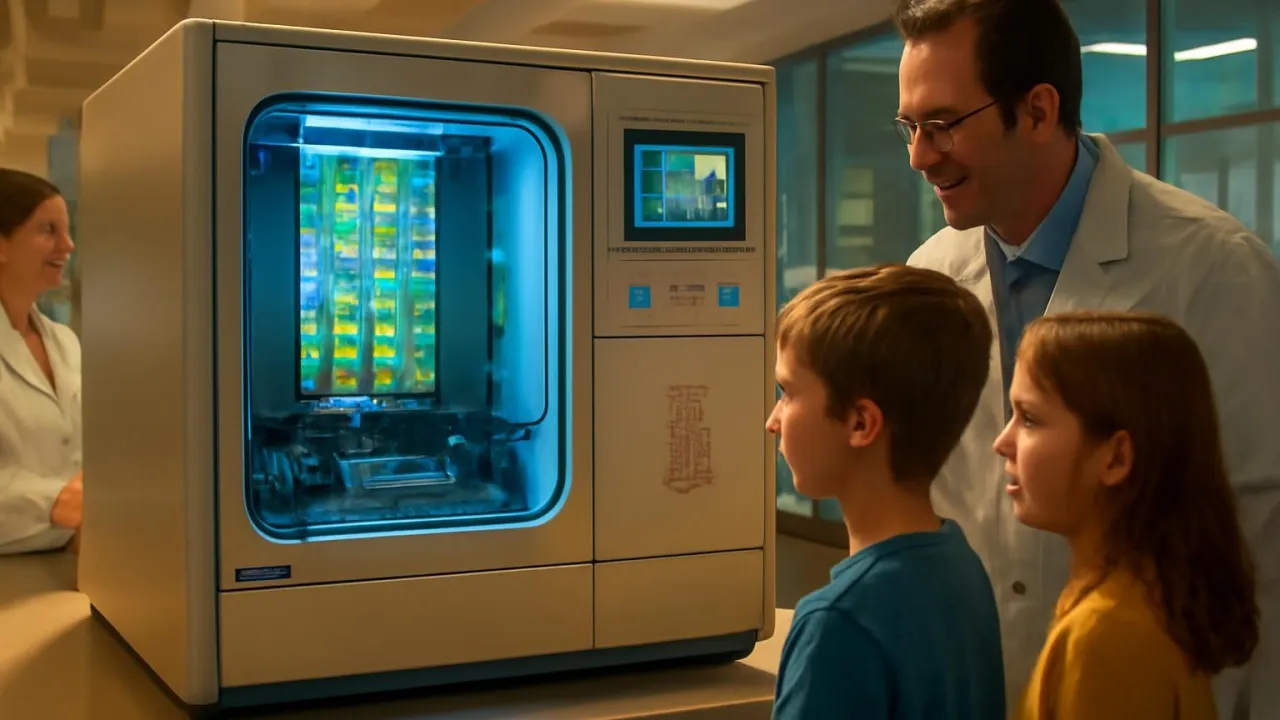
The amount of DNA sequenced worldwide each year now exceeds the information stored in all the world’s libraries combined!
1 From Beeps to Blueprints: The Birth of Sequencing
Step into a modern genomics lab and you’ll hear the gentle hum of DNA sequencing machines, each one a marvel of engineering. The first true DNA sequencer was developed by Frederick Sanger in 1977, using a process called chain-termination to read the order of bases. Early machines were large, slow, and required scientists to analyze radioactive gels by hand. Over the decades, advances in chemistry, optics, and computing transformed sequencing machines into sleek, automated devices capable of reading billions of DNA bases in hours. Today’s sequencers can fit on a desktop and are used by researchers worldwide.
2 How Sequencing Machines Decode DNA
Modern sequencing machines use high-throughput methods, such as sequencing by synthesis, to read DNA. Scientists prepare DNA by breaking it into fragments and attaching markers to each base—adenine, thymine, cytosine, and guanine. As the machine copies the DNA, lasers excite the markers, causing them to emit colored light that is detected by sensitive cameras. Each flash of color represents a specific base, and powerful computers assemble these flashes into the complete DNA sequence. This process can decode an entire human genome—over three billion bases—in less than a day.
3 Revolutionizing Medicine and Science
The impact of DNA sequencing extends far beyond the laboratory. Medical professionals use sequencing to diagnose rare genetic disorders, identify cancer mutations, and guide personalized treatments. Epidemiologists track disease outbreaks by sequencing the DNA of viruses and bacteria, helping to prevent global pandemics. In agriculture, scientists use sequencing to breed crops that are more nutritious and resistant to pests. Sequencing has even been used to solve ancient mysteries, such as identifying the remains of historical figures and extinct animals.
4 The Global Reach and Future of Sequencing
The cost of sequencing a human genome has plummeted from nearly $3 billion during the Human Genome Project to less than $1,000 today. This dramatic drop has made sequencing accessible to scientists, doctors, and even curious individuals around the world. With portable sequencers now available, DNA can be analyzed in remote jungles, on ships, or in classrooms. As technology advances, scientists hope to unlock new medical cures, understand evolution in greater detail, and protect endangered species using DNA data.
5 Engineering Challenges and Next Frontiers
Building a sequencing machine requires expertise in engineering, chemistry, optics, and computer science. Machines must precisely control temperature, fluid flow, and light detection to avoid errors in reading DNA. Newer technologies, like sequencing, allow DNA to be read directly as it passes through a tiny pore, producing results in real time. The next frontier includes sequencing single cells, exploring ancient DNA, and using artificial intelligence to interpret complex genetic information. DNA sequencing machines continue to push the boundaries of what we can know about life on Earth.
1. Which technology allows DNA to be read directly as it passes through a tiny hole?
2. How has DNA sequencing changed the world of medicine?