Digital Camera Sensor (CCD/CMOS)
How Tiny Chips Capture the World in Photos
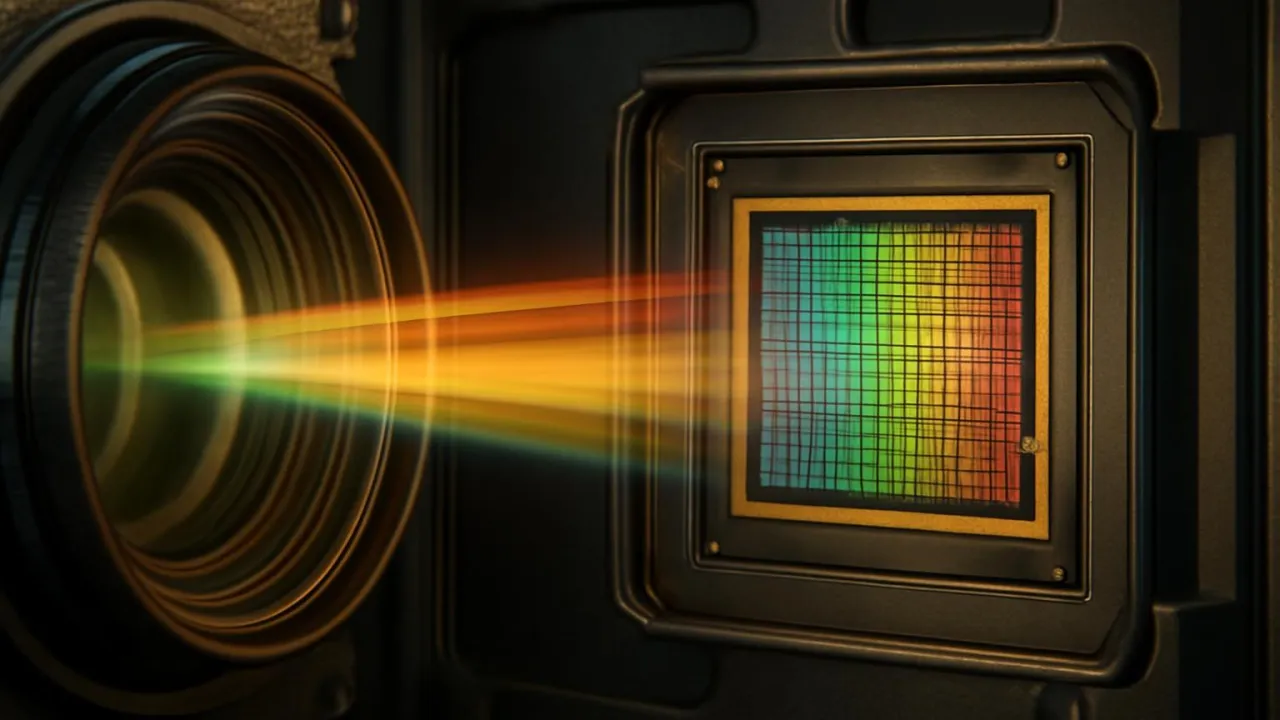
The Vera C. Rubin Observatory’s digital sensor can capture a 3,200-megapixel image of the night sky in a single shot.
1 The Physics of Capturing Light
When you take a digital photo, the camera’s lens focuses incoming photons onto a rectangular sensor chip, typically a CCD (Charge-Coupled Device) or CMOS (Complementary Metal-Oxide-) sensor. Each sensor is composed of millions of microscopic , which are semiconductor devices that convert light energy into electrical signals. The process relies on the : when photons strike a photodiode, they release electrons, generating a measurable electric charge. The arrangement of these photodiodes in a precise grid pattern allows the sensor to record the intensity and color of light at each point, forming the foundation of digital imaging.
2 CCD and CMOS: Engineering the Digital Eye
CCD sensors, invented by Willard Boyle and George E. Smith in 1969, transfer electrical charges across the chip in a controlled sequence until they reach a readout corner, ensuring extremely low noise and high image quality. However, this process consumes more power and limits speed. CMOS sensors, advanced by Eric Fossum in 1993, integrate amplifiers and signal processing directly at each pixel, allowing for parallel readout, lower energy use, and faster image capture. CMOS technology also enables on-chip features like autofocus, face detection, and video, making it the dominant choice in today’s cameras and smartphones.
3 Pixels, Megapixels, and Resolution
Each pixel on the sensor acts as an independent detector, measuring the brightness and color of light in its tiny area. The total number of pixels—often measured in megapixels—determines the sensor’s resolution, affecting how much detail a photo can display. For example, a 12-megapixel sensor has twelve million pixels, each contributing a data point to the final image. High-resolution sensors enable scientists to capture detailed images of distant galaxies, doctors to examine cells, and artists to create stunning, large-scale photographs.
4 From Film to Digital: A Global Transformation
Before digital sensors, cameras relied on light-sensitive film, which required chemical development and physical storage. The invention of the digital camera sensor revolutionized photography by making it instant, reusable, and easily shareable. Today, billions of digital photos are taken daily, transforming journalism, science, medicine, and personal storytelling. Digital sensors are used in everything from telescopes and satellites to microscopes and medical scanners, shaping how humanity observes and understands the universe.
5 The Future and Impact of Digital Sensors
Modern sensors continue to evolve, with innovations like backside illumination, stacked sensor architecture, and quantum dot technology pushing the boundaries of sensitivity and speed. The world’s largest digital camera sensor, used in the Vera C. Rubin Observatory, contains 3.2 billion pixels and will help astronomers map the night sky in unprecedented detail. As digital sensors become smaller and more powerful, they will continue to influence fields from robotics and artificial intelligence to art and education, ensuring that the ability to capture and share images remains a vital part of our global society.
1. How does a photodiode help capture an image?
2. Why are CMOS sensors common in smartphones?