Wright Flyer Airplane
The First Powered Flight That Changed the Sky
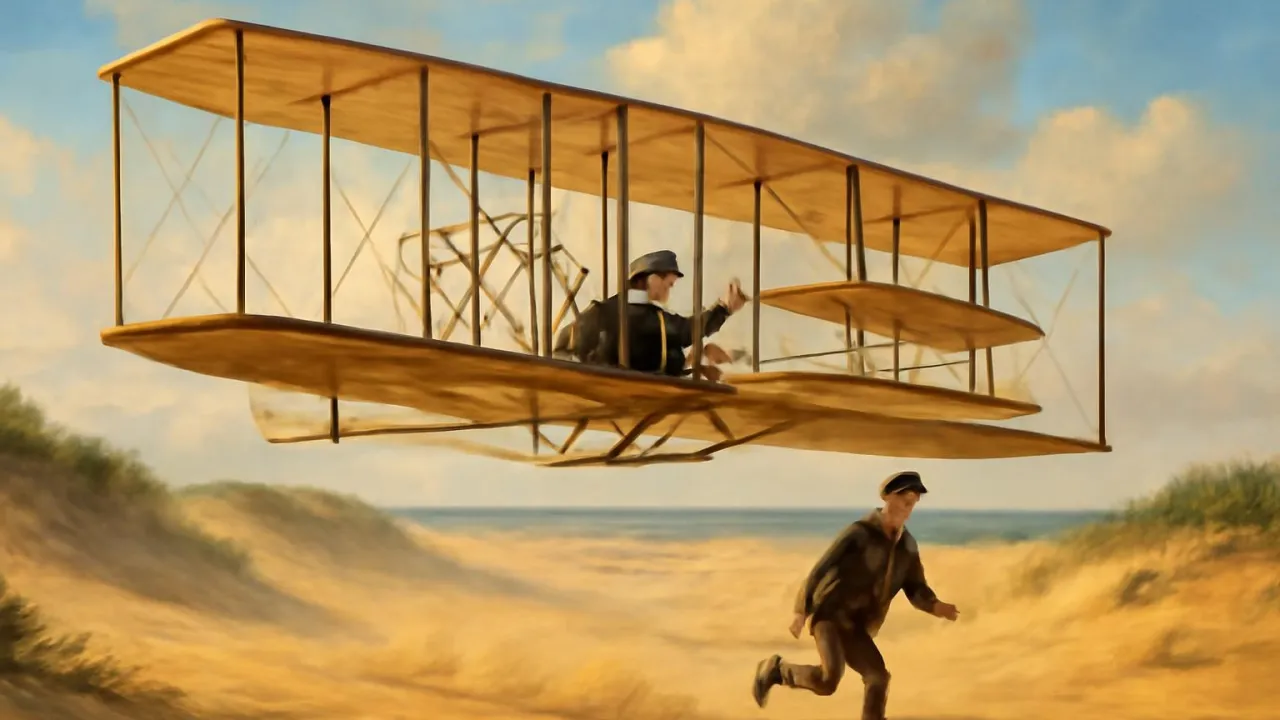
The Flyer’s engine weighed only 180 pounds but could lift the whole plane!
1 A New Era Takes Flight
On a cold December morning in 1903, the Wright Flyer’s engine sputtered and buzzed as it prepared for takeoff at Kitty Hawk, North Carolina. Orville Wright, lying flat on the lower wing, gripped the controls while Wilbur steadied the plane’s wingtip. The Flyer’s fabric-covered wings stretched 40 feet wide, and its wooden frame vibrated with each engine pulse. As the propellers spun, the Flyer lifted off, marking the first powered, controlled flight in history.
2 Engineering the Impossible
The Wright Flyer’s design was a marvel of early engineering, combining a lightweight spruce frame, muslin fabric, and a custom-built 12-horsepower engine. Twin propellers, driven by bicycle chains, pushed air backward to generate . The wings’ curved shape created lift by making air move faster over the top than underneath, a key aerodynamic principle. Wing-warping cables allowed the pilot to twist the wings for balance and steering, a breakthrough in flight control.
3 The Brothers’ Journey
Orville and Wilbur Wright were self-taught engineers and bicycle makers who spent years studying gliders and wind tunnels. They built and tested many prototypes, learning how to balance lift, , and control. Their hard work paid off when the Flyer soared for 12 seconds, traveling 120 feet. The brothers’ for their control system helped set the standard for future airplanes.
4 Aviation’s Ripple Effect
The Flyer’s short but historic flight sparked a wave of innovation around the world, inspiring inventors to pursue powered flight. Within a decade, airplanes were used for mail, exploration, and even early air shows. The Wright Flyer’s success marked the dawn of modern aviation, forever changing how people travel, connect, and dream about the sky.
1. What made the Flyer’s control system special?
2. Why did the Flyer’s flight matter to the world?