Space Shuttle
The Reusable Rocket That Changed Space Travel
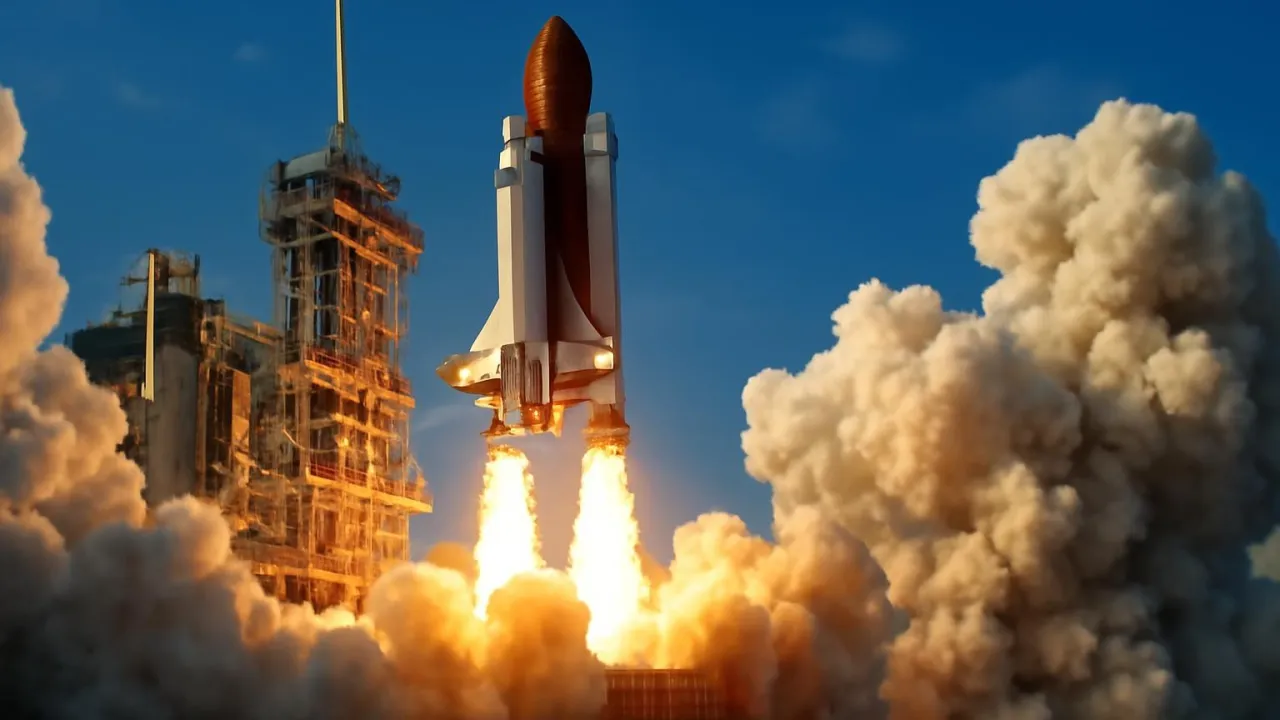
The shuttle orbiter could circle the entire Earth in just 90 minutes!
1 A New Kind of Spacecraft
When the space shuttle launched, it created a thunderous vibration that could be felt for miles around. Its design was unique, combining rocket boosters, a fuel tank, and an with wings. The shuttle’s main engines and solid rocket boosters worked together to lift it into orbit. Once in space, the orbiter separated and circled the Earth at speeds over 17,000 miles per hour.
2 Engineering Marvels
The shuttle’s heat-resistant tiles, covering its belly and nose, protected it from temperatures hotter than molten lava during re-entry. Its cargo bay could carry satellites, telescopes, or even parts for the International Space Station. After completing its mission, the shuttle glided through the atmosphere, using its shape and wings to land on a runway. This reusability set it apart from earlier spacecraft, which could only be used once.
3 Life and Work in Orbit
Astronauts aboard the shuttle performed experiments in , from growing crystals to studying fluid behavior. They also repaired satellites, such as the famous Hubble Space Telescope, and helped build the space station. The shuttle’s cabin supported up to seven crew members with air, food, and special sleeping quarters. Missions could last from a few days to over two weeks, depending on the job.
4 A Legacy of Discovery
From 1981 to 2011, five shuttles completed 135 missions, changing how we explore space. The shuttle program made launching satellites and building space stations faster and more affordable. It inspired new spacecraft designs and international teamwork in space science. Even after its retirement, the shuttle’s impact continues to shape our journey beyond Earth.
1. Why were the shuttle’s tiles so important?
2. How did the shuttle change space travel?