Sonar System
Listening to the Deep: Sound’s Secret Explorer
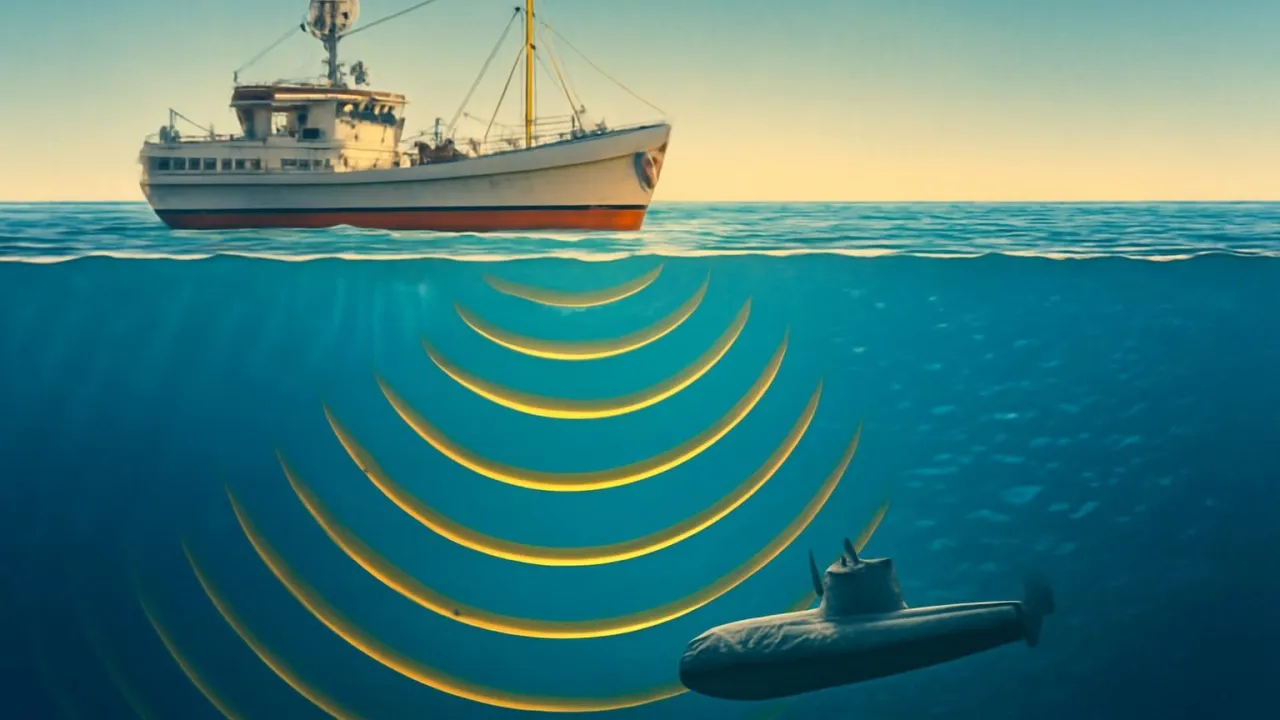
The deepest part of the ocean, the Mariana Trench, was mapped using sonar technology!
1 A Ping in the Deep
On a quiet ship, a sharp 'ping' is sent into the ocean, traveling swiftly through the water. This sound wave, or , spreads outward until it strikes something solid, like a submarine or the seafloor. The wave then bounces back as an echo, which is picked up by the sonar receiver. By measuring the time it takes for the echo to return, scientists can calculate how far away the object is.
2 How Sonar Reveals Hidden Worlds
Sonar stands for Sound Navigation and Ranging, and it uses principles to explore underwater environments. Since light cannot travel far through water, sonar relies on the speed and clarity of sound waves. These waves can reveal the shape, size, and even the texture of objects beneath the surface. Sonar images help create detailed maps of underwater landscapes.
3 From Submarines to Science
The first practical sonar system was developed by Paul Langevin and Constantin Chilowsky during World War I to detect enemy submarines. Over time, sonar technology became essential for naval navigation, fishing, and scientific research. Modern sonar systems use advanced electronics to detect shipwrecks, underwater volcanoes, and schools of fish with remarkable accuracy.
4 Sonar’s Global Impact
Sonar has changed how humans interact with the ocean, making underwater exploration much safer and more precise. It has helped scientists discover new marine species and map the deepest parts of the sea. Even some animals, like dolphins and whales, use natural sonar, called , to find food and navigate in dark waters.
1. Why is sonar better than light for underwater exploration?
2. What else uses echolocation like sonar?