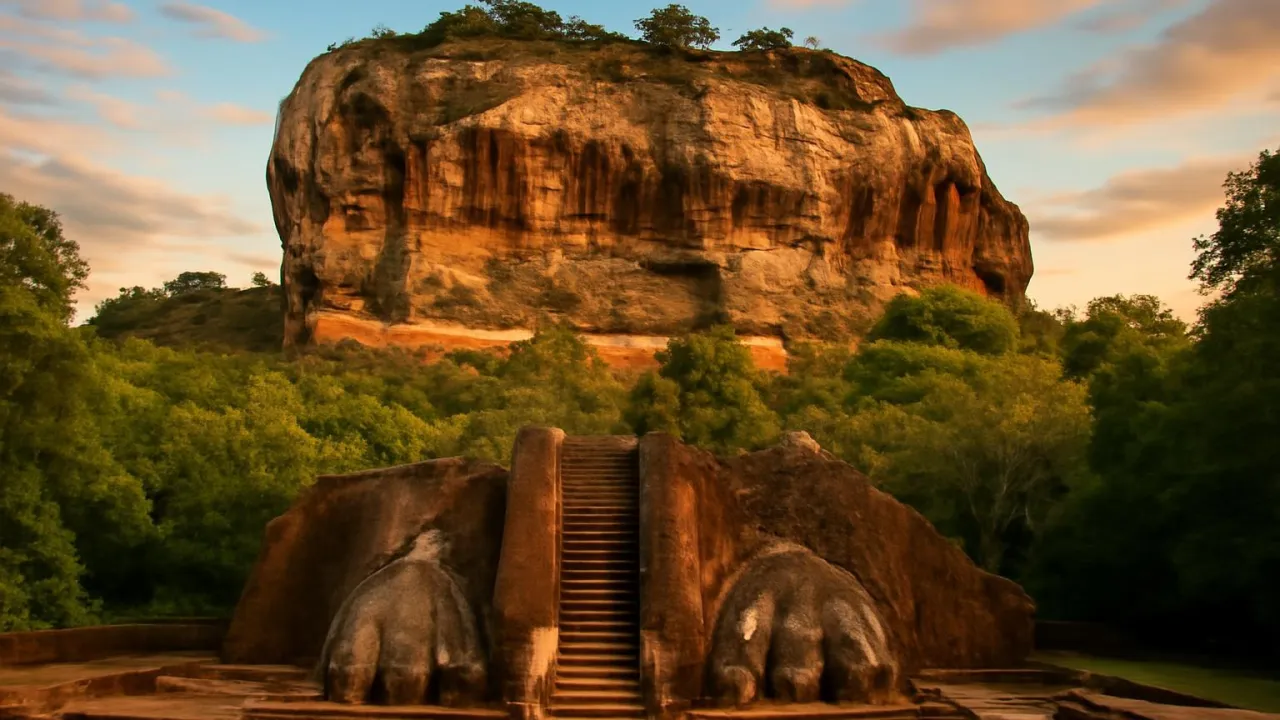
Sigiriya Lion Rock Fortress
Sri Lankaโs Ancient Sky Palace on a Giant Rock
People call Sigiriya the Eighth Wonder of the World!
What if you found a palace on a giant rock?
1 A Rock Like a Mountain
Sigiriya is a giant rock. It stands high in green trees. Birds fly all around it.
2 Steps to the Sky
Stone climb up the rock. You walk past old lion paws. The wind feels cool and strong.
3 A Palace on Top
A king built his home here. The walls shine in the sun. You can see far and wide.
1. What do you see at the top of Sigiriya?
2. What animal do the big stone paws belong to?
The palace once had colorful wall paintings called frescoes.
Can you imagine climbing stone stairs up a giant rock?
1 The Giant Lion Rock
Sigiriya rises high above the green . The rock looks like a huge mountain. Birds and monkeys play near its base.
2 The Lionโs Gate
Long ago, builders made a grand entrance with giant lion paws. Visitors walk between the paws to start their climb. The paws are all that remain of a big lion .
3 A Kingโs Hidden Palace
A king built his palace on top of Sigiriya. People can see old walls and water pools. The view from the top is wide and beautiful.
1. What do visitors walk between at Sigiriya?
2. What can you find on top of the rock?
Sigiriyaโs ancient gardens are among the oldest landscaped gardens in the world.
What secrets would you discover if you explored a stone fortress in the clouds?
1 Sigiriya: The Lion Rock
Sigiriya rises 590 feet above the jungle, shaped like a giant stone lion. The ancient was built by King Kashyapa in the 5th century CE. Visitors see huge lion paws carved into the entrance. The rock glows orange and gold at sunrise.
2 Climbing to the Sky Palace
Steep stone stairs zigzag up the rockโs side. Halfway up, explorers find bright painted on the cave walls. These frescoes show women with jewelry and flowers, still bright after 1,500 years. At the top, the palace ruins and pools overlook the green land below.
3 Engineering Wonders
Builders carved water channels and gardens at Sigiriyaโs base. The used to move water up to the palace pools. Strong stone walls protected the king from enemies. The rockโs shape helped keep the palace cool and safe.
4 A Monument of Mystery
Sigiriya is a UNESCO World Heritage site today. Scientists study its architecture and ancient paintings to learn about Sri Lankaโs history. The shows how people used engineering and art long ago. Many call Sigiriya the Eighth Wonder of the World.
1. Why did the king build stone walls around Sigiriya?
2. What do the frescoes at Sigiriya show?
Sigiriyaโs water gardens are over 1,500 years old and still work today after heavy rains.
What would it feel like to stand atop a fortress carved into a giant rock, looking out over the jungle?
1 The Rise of Sigiriya
Sigiriya towers above the Sri Lankan jungle, standing nearly 600 feet tall and visible for miles. King Kashyapa built his royal palace and fortress here in the late 5th century, choosing the rock for its height and natural . The siteโs name means 'Lion Rock,' inspired by the enormous lionโs paws that guard the main stairway. Even today, the orange stone glows at sunrise, welcoming visitors from around the world.
2 Engineering Feats of the Ancient Builders
Sigiriyaโs architects designed advanced water gardens, fountains, and pools that still work during Sri Lankaโs rainy season. Using gravity, they channeled water up the rock to fill palace pools and supply the gardens below. The fortress walls were built with massive stone blocks, and the main entrance once featured a huge lionโs head. These engineering marvels protected the king and made Sigiriya a wonder of its time.
3 Art and Culture in the Sky
Halfway up the rock, vibrant frescoes decorate a sheltered gallery, showing women with elaborate jewelry and flowing robes. These paintings, called frescoes, have survived for over 1,500 years due to the rockโs natural shelter and careful ancient techniques. The Mirror Wall, once polished to a shine, contains ancient left by visitors over centuries. Sigiriyaโs art reveals much about the people and culture of ancient Sri Lanka.
4 Sigiriyaโs Legacy
Today, Sigiriya is a UNESCO World Heritage Site and a symbol of Sri Lankan ingenuity. Archaeologists study its ruins, gardens, and paintings to understand ancient engineering and daily life. The fortress attracts travelers, scientists, and artists from every continent. Sigiriyaโs story continues to inspire wonder, showing how creativity and engineering can shape history.
1. How did Sigiriyaโs builders get water to the palace pools?
2. What does the Mirror Wall have on it?
Sigiriyaโs ancient hydraulic system includes fountains that still spray water during Sri Lankaโs rainy seasonโover 1,500 years after they were built.
Imagine hearing the echo of your footsteps as you climb a stone stairway carved into a colossal rockโwhat secrets might Sigiriya reveal?
1 Sigiriyaโs Dramatic Setting and Origins
Sigiriya, known as the Lion Rock Fortress, rises 590 feet (180 meters) above the lush plains of central Sri Lanka, forming a dramatic . Constructed between 477 and 495 CE during the reign of King Kashyapa, Sigiriya was chosen for its natural defensive advantages and commanding views. The siteโs name comes from the massive lionโs paws sculpted at the main entrance, which once led through a gigantic lionโs mouth carved into the rock. Today, only the paws remain, but they still impress visitors with their scale and artistry. The fortressโs position allowed the king to monitor the surrounding land and deter potential invaders.
2 Engineering and Architectural Marvels
Sigiriyaโs builders demonstrated advanced engineering by designing an intricate system of water gardens, moats, and fountains that remain functional over 1,500 years later. The water management system relied on gravity-fed channels, underground conduits, and sophisticated principles to supply the summit palace and irrigate the terraced gardens below. The outer walls, constructed from massive stone blocks, were reinforced with brick and plaster, providing both defense and insulation. The palace atop the rock featured bathing pools, audience halls, and a sophisticated drainage system, all engineered to withstand monsoon rains and intense sun.
3 Artistry: Frescoes and the Mirror Wall
Midway up Sigiriya, a spiral staircase leads to a rock gallery adorned with vibrant frescoesโover 20 remain todayโdepicting celestial maidens, or apsaras, with intricate jewelry and flowing garments. These frescoes were painted using natural pigments on wet plaster, a technique that has preserved their colors for centuries. The nearby Mirror Wall, originally polished to a glassy sheen, contains hundreds of ancient inscriptions and poems etched by visitors from as early as the 8th century. These writings provide valuable insights into early Sinhalese language, poetry, and social customs.
4 Sigiriyaโs Historical and Cultural Impact
After King Kashyapaโs reign, Sigiriya briefly served as a Buddhist monastery before being abandoned and reclaimed by the jungle. Rediscovered by British explorers in the 19th century, the site quickly became a focus for archaeological study and restoration. Sigiriya is now recognized as a UNESCO World Heritage Site, celebrated for its unique blend of , landscape architecture, and artistic achievement. The fortress continues to inspire engineers, artists, and historians worldwide, offering a window into Sri Lankaโs ancient civilization and its enduring creativity.
5 Legacy and Ongoing Mysteries
Modern archaeologists continue to study Sigiriyaโs construction methods, water systems, and symbolic meanings, seeking to unravel mysteries such as the true purpose of the frescoes and the full extent of the original palace. The siteโs sophisticated , including axial symmetry and precise alignment with cardinal directions, suggests advanced mathematical and astronomical knowledge. Sigiriyaโs enduring gardens, still functioning after centuries, highlight early expertise in sustainable landscape design. As both a national symbol and a global landmark, Sigiriya challenges us to imagine what ancient builders could achieve with creativity, science, and determination.
1. What engineering principle helped Sigiriyaโs water gardens and fountains work for centuries?
2. Why is the Mirror Wall at Sigiriya important to historians?