Sigiriya Lion Rock Fortress
Sri Lanka’s Ancient Sky Palace on a Giant Rock
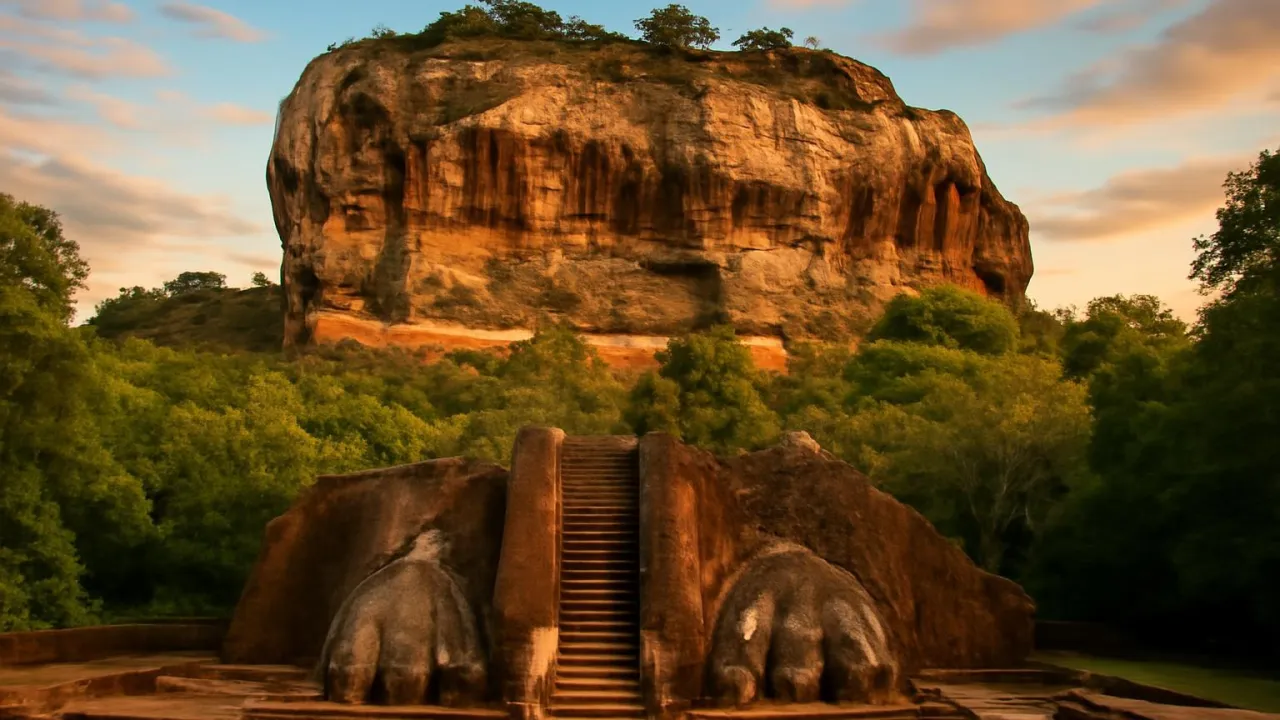
Sigiriya’s ancient hydraulic system includes fountains that still spray water during Sri Lanka’s rainy season—over 1,500 years after they were built.
1 Sigiriya’s Dramatic Setting and Origins
Sigiriya, known as the Lion Rock Fortress, rises 590 feet (180 meters) above the lush plains of central Sri Lanka, forming a dramatic . Constructed between 477 and 495 CE during the reign of King Kashyapa, Sigiriya was chosen for its natural defensive advantages and commanding views. The site’s name comes from the massive lion’s paws sculpted at the main entrance, which once led through a gigantic lion’s mouth carved into the rock. Today, only the paws remain, but they still impress visitors with their scale and artistry. The fortress’s position allowed the king to monitor the surrounding land and deter potential invaders.
2 Engineering and Architectural Marvels
Sigiriya’s builders demonstrated advanced engineering by designing an intricate system of water gardens, moats, and fountains that remain functional over 1,500 years later. The water management system relied on gravity-fed channels, underground conduits, and sophisticated principles to supply the summit palace and irrigate the terraced gardens below. The outer walls, constructed from massive stone blocks, were reinforced with brick and plaster, providing both defense and insulation. The palace atop the rock featured bathing pools, audience halls, and a sophisticated drainage system, all engineered to withstand monsoon rains and intense sun.
3 Artistry: Frescoes and the Mirror Wall
Midway up Sigiriya, a spiral staircase leads to a rock gallery adorned with vibrant frescoes—over 20 remain today—depicting celestial maidens, or apsaras, with intricate jewelry and flowing garments. These frescoes were painted using natural pigments on wet plaster, a technique that has preserved their colors for centuries. The nearby Mirror Wall, originally polished to a glassy sheen, contains hundreds of ancient inscriptions and poems etched by visitors from as early as the 8th century. These writings provide valuable insights into early Sinhalese language, poetry, and social customs.
4 Sigiriya’s Historical and Cultural Impact
After King Kashyapa’s reign, Sigiriya briefly served as a Buddhist monastery before being abandoned and reclaimed by the jungle. Rediscovered by British explorers in the 19th century, the site quickly became a focus for archaeological study and restoration. Sigiriya is now recognized as a UNESCO World Heritage Site, celebrated for its unique blend of , landscape architecture, and artistic achievement. The fortress continues to inspire engineers, artists, and historians worldwide, offering a window into Sri Lanka’s ancient civilization and its enduring creativity.
5 Legacy and Ongoing Mysteries
Modern archaeologists continue to study Sigiriya’s construction methods, water systems, and symbolic meanings, seeking to unravel mysteries such as the true purpose of the frescoes and the full extent of the original palace. The site’s sophisticated , including axial symmetry and precise alignment with cardinal directions, suggests advanced mathematical and astronomical knowledge. Sigiriya’s enduring gardens, still functioning after centuries, highlight early expertise in sustainable landscape design. As both a national symbol and a global landmark, Sigiriya challenges us to imagine what ancient builders could achieve with creativity, science, and determination.
1. What engineering principle helped Sigiriya’s water gardens and fountains work for centuries?
2. Why is the Mirror Wall at Sigiriya important to historians?