Great Wall of China
Stone Dragons Across Mountains and Time
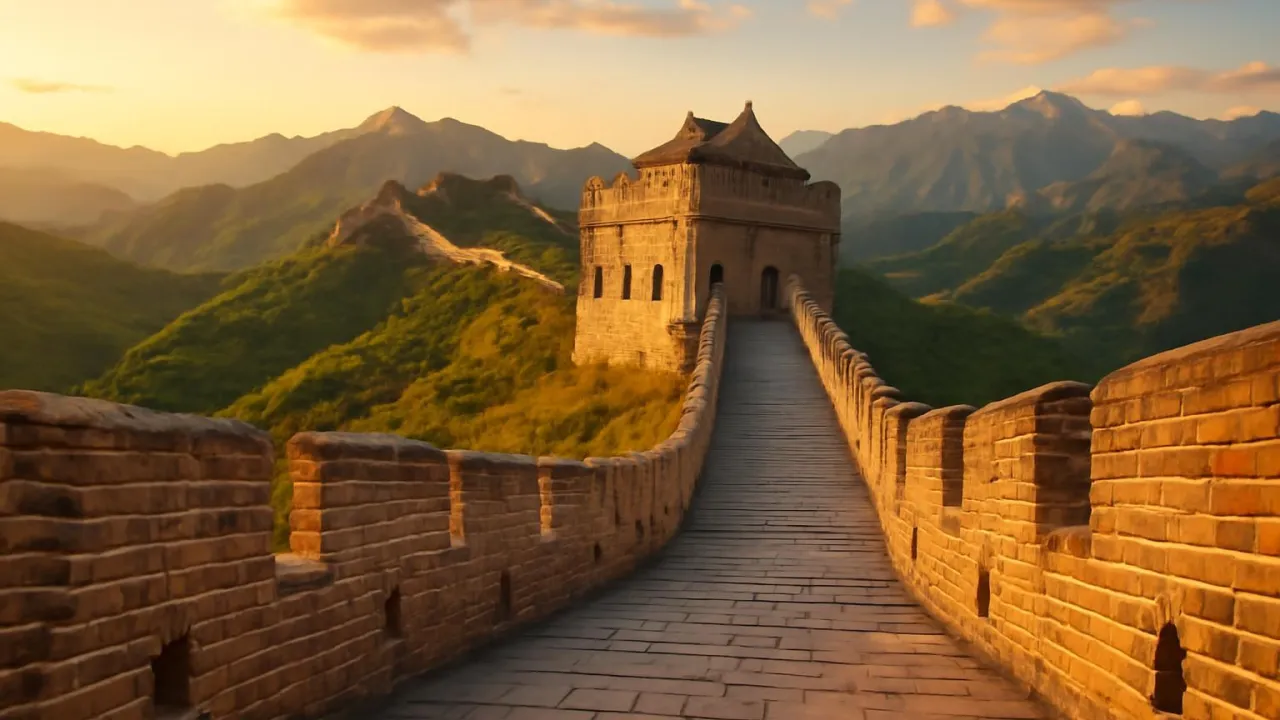
Engineers estimate that the Great Wall’s total mass is over 116 million tons—about 320,000 jumbo jets!
1 A Monumental Feat of Human Ingenuity
The Great Wall of China stands as one of the most ambitious engineering projects in human history, stretching over 13,000 miles across northern China. Its construction began as early as the 7th century BCE, with the most extensive and enduring segments built during the Ming Dynasty (1368–1644 CE). The wall traverses a diverse landscape, including deserts, river valleys, and steep mountain ridges, adapting its structure to each region’s unique challenges. This monumental barrier was not a single continuous wall, but rather a complex network of walls, trenches, and built and rebuilt over centuries. Today, the Great Wall is recognized as a UNESCO World Heritage site, symbolizing both the unity and determination of the Chinese people.
2 Architectural Marvels and Defensive Strategies
Engineers and laborers used a variety of materials—ranging from tamped earth and wood in early sections to bricks and cut stone in later periods—to construct the wall. The Ming Dynasty’s brickwork sections are especially renowned for their durability, featuring walls up to 26 feet (8 meters) high and 16–20 feet (5–6 meters) wide at the base. Watchtowers, signal , and fortified gates were strategically placed at regular intervals to allow rapid communication and defense. The wall’s design incorporated advanced engineering principles, such as arches for strength and drainage systems to prevent water damage. These innovations helped the wall withstand natural erosion, earthquakes, and centuries of harsh weather.
3 Historical Context and Cultural Significance
The primary purpose of the Great Wall was to defend ancient Chinese states from invasions by nomadic tribes, especially from the north. Soldiers stationed in watchtowers used smoke signals and fire to relay messages across vast distances, creating an early form of long-range communication. The wall also served to regulate trade and migration along the Silk Road, influencing the economic and cultural development of China and neighboring regions. Over time, the Great Wall became a symbol of national pride, resilience, and the enduring spirit of the Chinese people. Its story is deeply woven into Chinese folklore, literature, and art.
4 Preservation and Modern Exploration
Today, millions of tourists from around the world visit the Great Wall each year, hiking along restored sections like Badaling and Mutianyu near Beijing. However, many remote portions of the wall remain in ruins, threatened by erosion, plant growth, and human activity. efforts led by Chinese authorities and international organizations focus on preserving the wall’s structure and historical value for future generations. The Great Wall’s vast scale and rugged terrain make preservation a challenging and ongoing process, requiring both scientific expertise and public awareness.
5 A Lasting Legacy Across Continents
The Great Wall’s influence extends far beyond China’s borders, inspiring countless studies in engineering, history, and archaeology worldwide. Its construction required the labor of millions, including soldiers, peasants, and prisoners, reflecting both the achievements and hardships of ancient societies. Quantitatively, the wall’s total length—including all branches and trenches—exceeds 13,000 miles (21,196 kilometers), making it the longest human-made structure on Earth. The Great Wall remains a powerful symbol of human perseverance, ingenuity, and the desire to connect and protect civilizations across time. Its story continues to captivate and educate people of all ages, reminding us of the extraordinary things humanity can build together.
1. How did the Great Wall help ancient Chinese armies communicate quickly across long distances?
2. Why is preserving the Great Wall a difficult challenge today?