Machu Picchu
Lost City in the Clouds of Peru
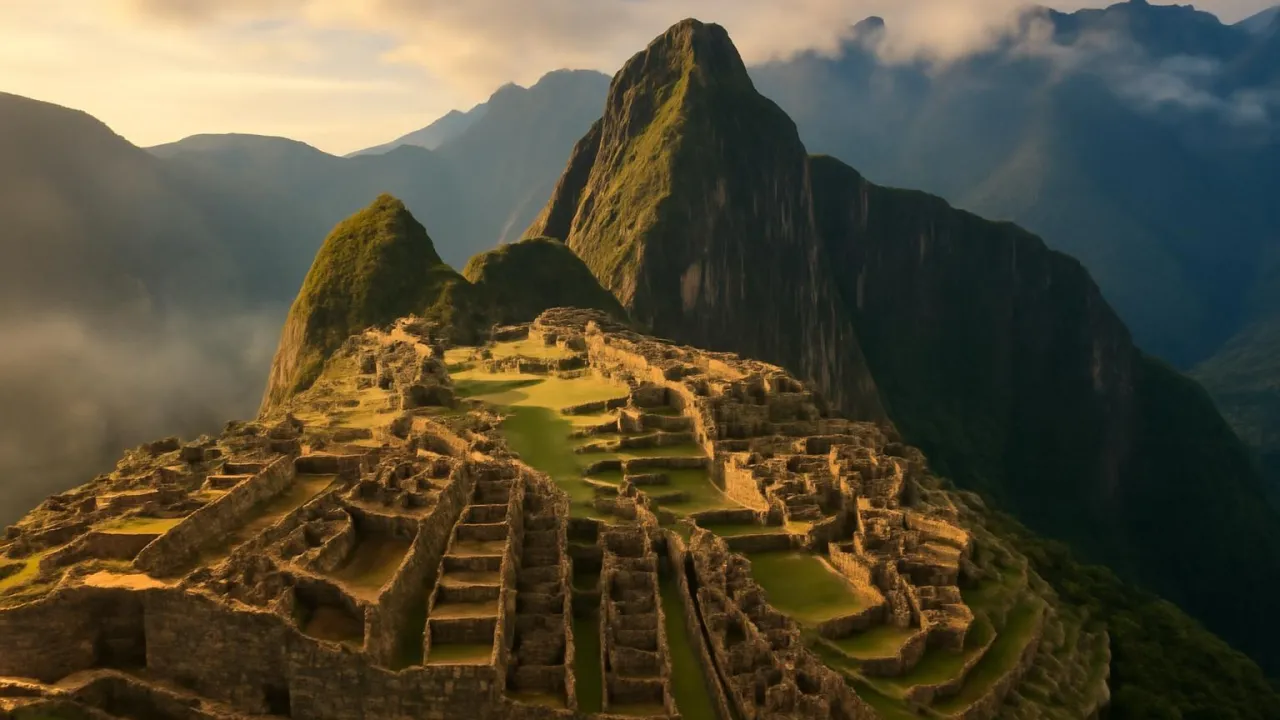
Machu Picchu’s terraces stretch for over 1.6 kilometers (1 mile) along the mountain slopes.
1 A Masterpiece Above the Clouds
Rising 7,970 feet (2,430 meters) above sea level, Machu Picchu commands a panoramic view of Peru’s lush Urubamba River valley. Early morning sunlight illuminates its intricate network of stone structures, terraces, and ceremonial plazas, while drifting mist often shrouds the site in mystery. Constructed by the Inca around 1450 CE, this mountaintop remained unknown to the outside world until its scientific rediscovery in 1911 by Hiram Bingham. Its remote location and natural defenses helped preserve its remarkable architecture for centuries.
2 Precision Stonework and Seismic Brilliance
Machu Picchu’s builders employed advanced ashlar masonry, shaping granite blocks so precisely that even a razor blade cannot fit between them. This technique, which used no mortar, made the city’s walls extraordinarily resilient to frequent activity in the Andes. The terraces, numbering over 3,000 steps, served multiple purposes: they stabilized steep slopes, prevented catastrophic erosion, and created for agriculture. An elaborate drainage system, including underground channels and fountains, efficiently managed heavy rainfall and protected the site from landslides.
3 Social, Religious, and Astronomical Design
The city’s layout reflects the Inca’s sophisticated understanding of astronomy, engineering, and society. The Temple of the Sun, with its curved walls and precisely aligned windows, was used for solar observations and religious ceremonies. The Intihuatana stone, carved to track the sun’s movement, functioned as both a ritual artifact and an astronomical instrument. Residential, agricultural, and ceremonial zones were carefully separated, demonstrating intentional urban planning and social organization.
4 Rediscovery, Preservation, and Global Significance
After its rediscovery, Machu Picchu became a symbol of Inca ingenuity and resilience. Archaeologists have uncovered evidence of sophisticated irrigation, storage, and communication systems that supported a thriving community. Today, Machu Picchu is a UNESCO World Heritage site, drawing over a million visitors annually and fueling ongoing research into Inca civilization. Conservation efforts focus on balancing tourism with preservation, as erosion and climate change threaten the site’s delicate structures.
5 Legacy of the Inca and Modern Inspiration
Machu Picchu’s enduring legacy lies in its blend of natural beauty, engineering mastery, and cultural significance. Its construction without metal tools, wheels, or draft animals remains an extraordinary technological achievement. The site inspires architects, engineers, and historians to study ancient methods of sustainability and resistance. As one of the New Seven Wonders of the World, Machu Picchu continues to spark curiosity and awe, reminding us of humanity’s ability to create lasting wonders even in the most challenging environments.
1. How did Machu Picchu’s terraces help with both farming and safety?
2. What was the purpose of the Intihuatana stone?