Radar System
The Invisible Eyes That See Far
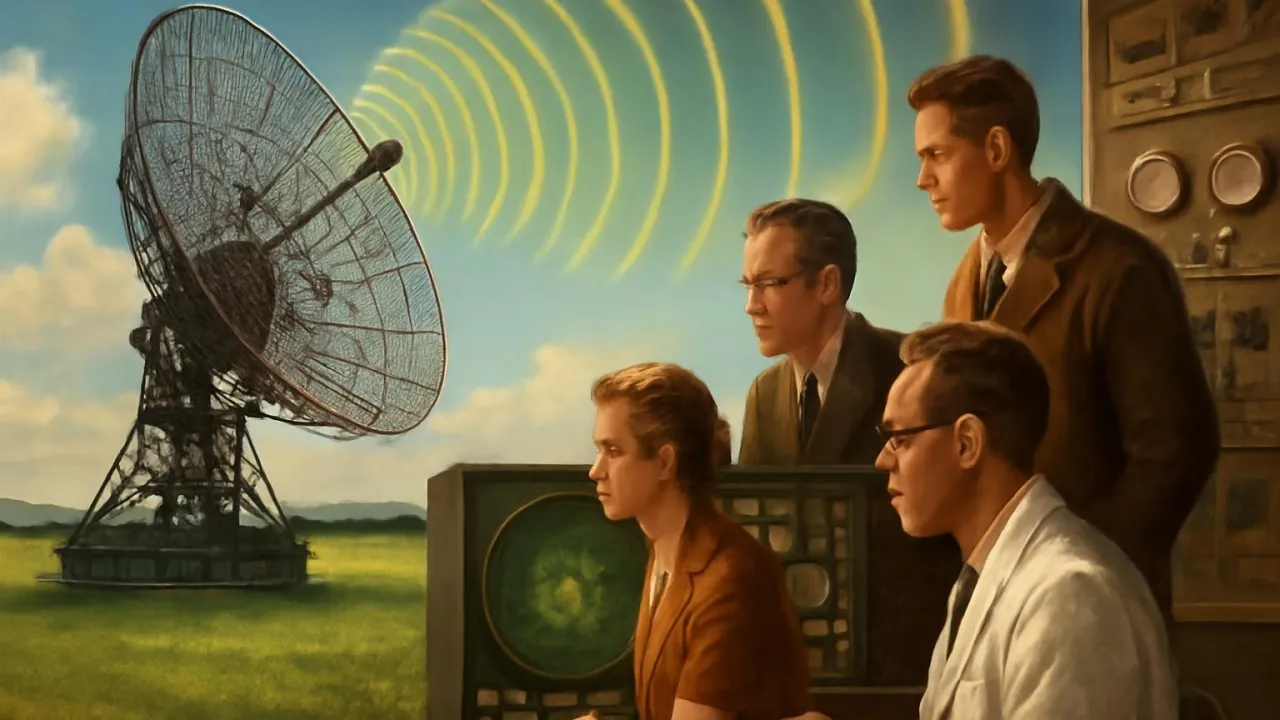
Some space radars can map the surface of Venus through thick clouds!
1 How Radar Sees the Unseen
Radar systems transmit pulses of electromagnetic energy, which travel outward at light speed. When these pulses strike an object, such as an airplane or a rain cloud, they reflect back toward the radar . By analyzing the time it takes for the reflected signal to return, the radar can calculate the object's distance and direction. This process lets radar 'see' through darkness, fog, or storms where human eyes cannot.
2 A Revolution in Safety and Science
Invented by Sir Robert Watson-Watt in 1935, radar technology became crucial during World War II for detecting enemy aircraft. After the war, radar spread into airports, harbors, and weather stations, making travel and forecasting much safer. Meteorologists use weather radar to track rain, snow, and tornadoes, helping communities prepare for dangerous storms. Radar even helps astronomers map planets and asteroids in space.
3 Inside the Radar System
A radar system includes a , which sends out the radio waves, and a receiver, which listens for returning . The rotating dish helps the radar scan a wide area, creating a sweeping pattern. The radar display shows blips or dots where objects are detected, allowing operators to track many moving things at once. Engineers continue to improve radar with digital technology and better antennas.
4 Global Impact and Everyday Uses
Today, radar is used in air traffic control, weather forecasting, ship navigation, and even in some cars for collision avoidance. It has made travel safer and given scientists powerful tools to explore the world and beyond. Radar’s ability to see through darkness and storms has changed how we understand and interact with our environment. Its invention remains one of the most important advances in modern engineering.
1. How does radar find the distance to an object?
2. Which field did radar help after World War II?