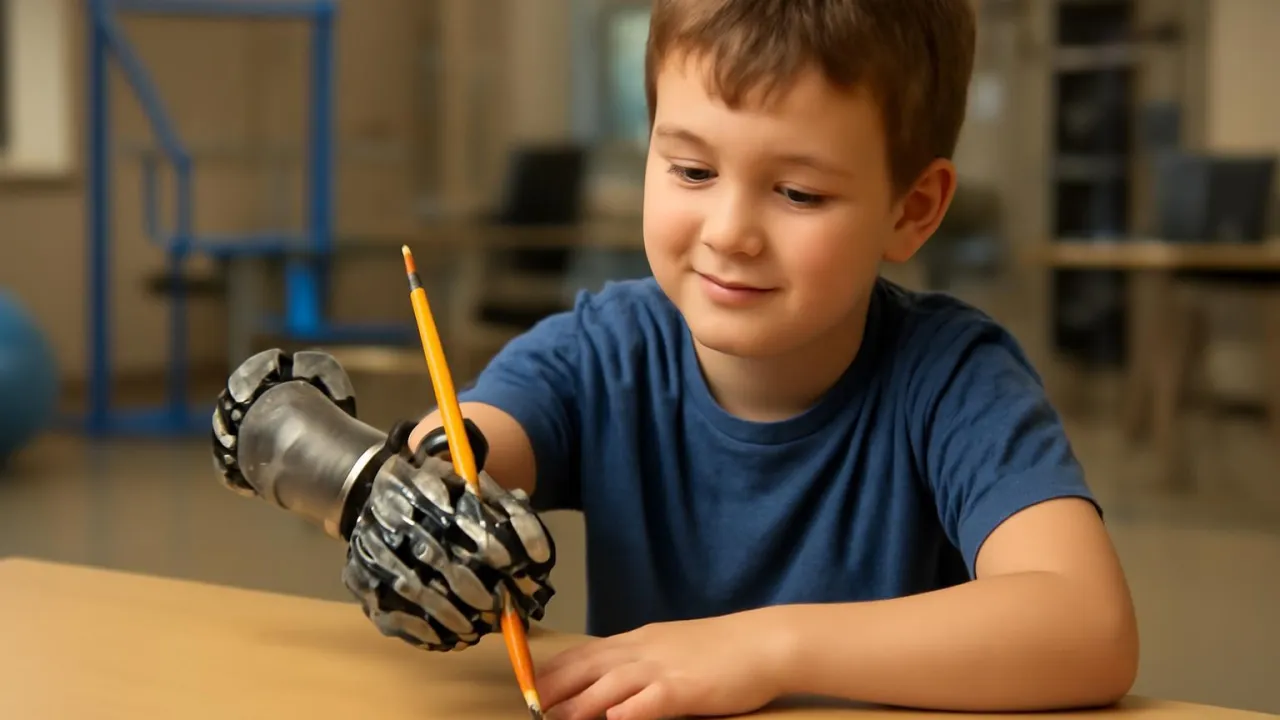
Some bionic limbs can connect to a smartphone for easy control!
✨ Word Sparks (Grade 2 Glossary)
Tap 🔊 to hear
bionic
Part robot, part human
muscle
Body part that helps you move
motor
A part that makes things move
🪝
Can you imagine a hand that moves when you think?
1
Robot Limbs for People
Some people lose an arm or leg, but limbs help them play again. These special robot arms or legs can bend and grip like real ones. People can pick up blocks, wave, or even ride a bike.
2
How Does It Work?
limbs use sensors and wires to read signals. When a person thinks about moving, the limb moves too. inside help the fingers or toes wiggle and grab.
3
A Superpower for Kids
limbs can look cool and colorful, and they fit just right. Some even let people feel soft or hard things. These inventions help kids run, draw, and play with friends.
Some bionic limbs can play piano or tie shoelaces!
✨ Word Sparks (Grade 3 Glossary)
Tap 🔊 to hear
prototype
A first model of something new
vibration
A quick shaking movement
haptic
Related to the sense of touch
🪝
What if a robot hand could feel a soft puppy?
1
Amazing Bionic Limbs
Imagine a hand that moves when you think! Bionic limbs use advanced technology to help people who have lost an arm or leg. These limbs can open, close, and even pick up tiny things. Some are designed to look and feel like real arms.
2
How Do They Move?
Bionic limbs use special sensors that detect muscle signals under the skin. When a person tries to move, the sensor sends a signal to a small computer. Motors and wires inside the limb create movement, making fingers curl or feet step forward. This process is called biomechanical control.
3
Feeling the World Again
Some new bionic limbs have sensors that create a sense called ' feedback.' This lets people feel if something is soft, hard, or warm. Engineers are working to make these feelings more real, using and pressure sensors.
4
Changing Lives Everywhere
Bionic limbs help people walk, play sports, and even play music again. They are built in labs by teams of doctors and engineers. Each limb is a unique made just for its user. These inventions are changing how people live all over the world.
Some bionic limbs can sense heat and cold, just like real skin!
✨ Word Sparks (Grade 4 Glossary)
Tap 🔊 to hear
myoelectric
Using muscle electricity to move
actuator
A part that makes things move
biomedical
Mixing medicine and engineering
🪝
How do bionic limbs turn thoughts into real movement?
1
The Science Behind Bionic Limbs
Bionic limbs combine robotics, electronics, and biology to replace lost arms or legs. These advanced devices use sensors that detect electrical signals from muscles, which are then processed by a tiny computer. The computer translates these signals into precise movements, allowing the limb to grip, point, or even play an instrument. This process is called ' control,' and it helps the limb respond almost like a natural one.
2
From Prototype to Personalized Fit
Each bionic limb starts as a prototype designed for a specific person. Engineers and doctors use 3D scanning and printing to shape the limb so it fits perfectly. Motors and are carefully placed to match the user’s natural movement patterns. The limb is tested and adjusted many times to ensure comfort and accuracy. This teamwork results in a custom device that feels like part of the person’s own body.
3
Feeling and Sensing the World
Modern bionic limbs are equipped with haptic sensors that provide feedback about pressure, texture, and temperature. These sensors use vibrations or electrical pulses to send signals back to the brain, helping users feel if something is soft, rough, or hot. Engineers are constantly improving these systems to make sensations more lifelike. This technology gives people greater confidence and independence in daily life.
4
A Global Impact on Lives
Bionic limbs have changed lives for people around the world, allowing them to walk, run, and even return to work. Inventions like these show the power of science and teamwork to solve real problems. They have inspired new careers in engineering and robotics. As technology advances, bionic limbs may become even more powerful and affordable for everyone.
1. What does a myoelectric bionic limb use to move?
2. Why are haptic sensors important in bionic limbs?
🤯 Mind-Blowing Fact • Grade 5
Some bionic limbs can type on a keyboard and play musical instruments with remarkable dexterity.
✨ Word Sparks (Grade 5 Glossary)
Tap 🔊 to hear
microprocessor
A tiny computer inside a machine
neural interface
A link between nerves and machines
dexterity
Skill at moving hands or fingers
🪝
Could a bionic limb one day feel as real as your own hand?
1
Engineering the Impossible: The Rise of Bionic Limbs
Picture a limb that responds to your thoughts, flexes with your muscles, and even senses the world around you. Modern bionic limbs represent a fusion of robotics, electronics, and biomedical engineering, transforming lives for people with limb loss. Using sophisticated myoelectric sensors, these devices detect faint electrical signals generated by muscle contractions in the residual limb. Embedded interpret these signals and activate precision motors, allowing the artificial limb to move, grip, and perform complex tasks with remarkable accuracy.
2
From Custom Design to Functional Masterpiece
The journey of a bionic limb begins with a detailed digital scan of the user’s body, ensuring a perfect anatomical match. Engineers employ 3D modeling and printing to craft lightweight, durable frames that integrate seamlessly with the user’s skin and muscles. Actuators and artificial tendons are strategically installed to mimic natural joint movement, while advanced algorithms calibrate the limb’s responses for each individual. The result is a highly personalized and functional prosthesis that feels increasingly like a natural extension of the body.
3
Sensory Feedback: Touch, Heat, and Beyond
A groundbreaking leap in bionic limb technology is the integration of sensory feedback systems. Haptic sensors embedded in the fingertips and palm detect pressure, texture, and even temperature changes, relaying this information through electrical impulses to the user’s nerves. Some experimental limbs use direct , allowing users to experience sensations almost identical to those of a biological hand. This innovation not only restores function but also brings back the emotional experience of touch.
4
Global Impact and the Future of Human Augmentation
Bionic limbs have transformed countless lives, enabling children to play, adults to work, and athletes to compete. The global market for advanced prosthetics is rapidly expanding, driven by breakthroughs in materials science, robotics, and artificial intelligence. Researchers are now exploring brain-computer interfaces, wireless control, and self-healing materials, aiming to make bionic limbs even more lifelike and accessible. These innovations hold promise for millions worldwide, democratizing mobility and independence.
5
From Ancient Prostheses to Tomorrow’s Bionics
The concept of prosthetic limbs dates back to ancient Egypt, where wooden toes and metal arms offered basic function and dignity. Today’s bionic limbs, protected by international patents and developed by interdisciplinary teams, represent a quantum leap in human ingenuity. As technology continues to evolve, the line between biological and artificial may blur, raising exciting questions about the future of human enhancement. The story of bionic limbs is a testament to the power of science, empathy, and creativity working together.