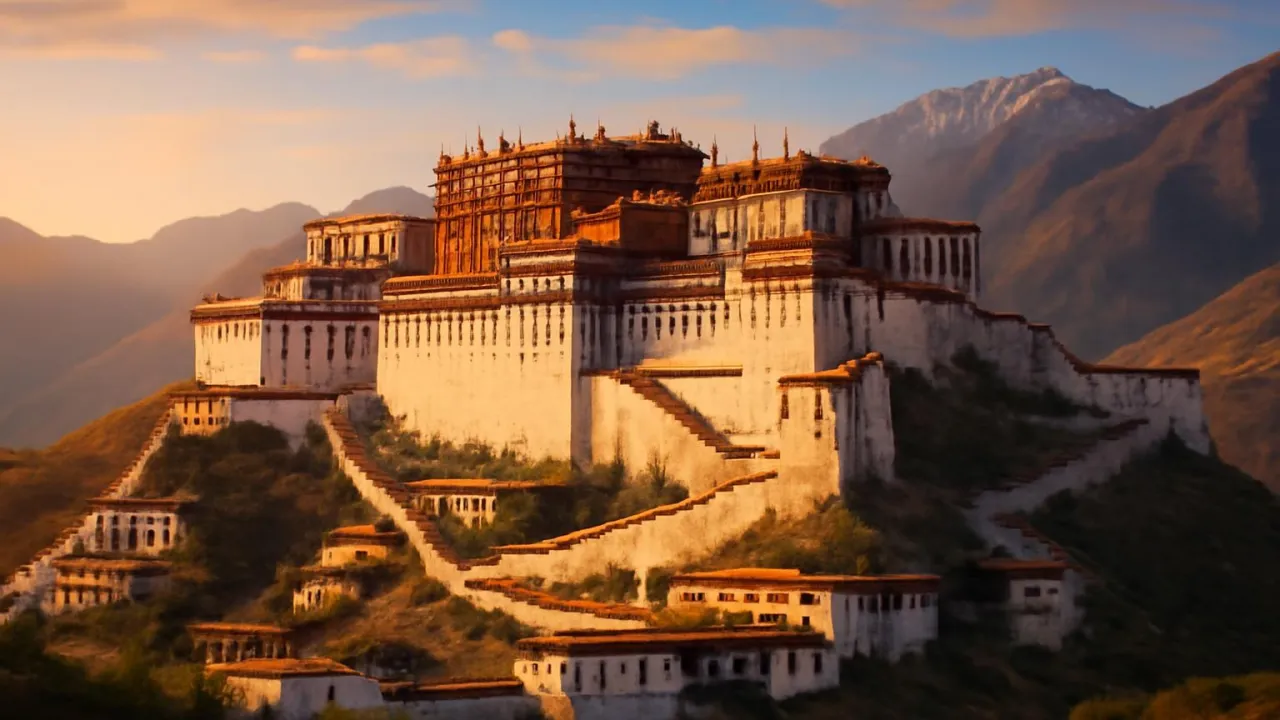
Potala Palace (Lhasa)
The Mountain Castle in the Sky
Potala Palace has over 1,000 rooms inside!
What if you could climb a palace on top of a mountain?
1 A Palace in the Clouds
Potala sits high on a hill. It looks like a red and white castle. The roof shines in the sun.
2 Steps Up, Up, Up
Many lead to the . People climb to see the view. The air feels cool and fresh.
3 Golden Roofs and Quiet Halls
Inside, rooms glow with gold. pray in quiet halls. Visitors walk and whisper softly.
1. Where does Potala Palace sit?
2. What shines on the palace roof?
Potala Palace was built with more than 200,000 blocks of stone!
Can you imagine climbing thousands of steps to a palace in the sky?
1 A Palace Above the City
Potala Palace stands tall above , looking over the city below. Its red and white walls shine brightly in the sunlight, and its golden roofs sparkle. People visit from far away to see the city from high up and to learn about its special history.
2 Climbing to the Top
Visitors walk up many stone steps to reach the palace, feeling the air grow thinner and cooler as they climb higher. The journey is long and exciting, and you can see colorful flags waving in the wind. Monks and travelers both make the journey, stopping to rest and enjoy the amazing view.
3 Rooms Full of History
Inside, there are golden roofs and quiet, colorful halls filled with and art. Monks pray and sing in special rooms, and the sound echoes through the palace. The palace holds old and statues that tell stories from long ago. Visitors walk softly, listening and looking at the beautiful decorations.
1. What colors are the palace walls?
2. What do visitors find inside Potala Palace?
Potala Palace was built to survive earthquakes using special wooden supports.
What secrets might you find inside a palace built on a mountain top?
1 The Palace in the Sky
Potala Palace rises above Lhasa, perched on Marpo Ri, the 'Red Hill.' Its thirteen stories are painted bright red and white, glowing in the mountain sun. Visitors climb steep steps, feeling the cool, thin air as they ascend. From the top, you can see the whole city spread out below.
2 A Fortress of Stone
The palace was built with thick stone walls to protect it from wind and earthquakes. Its strong helps it stand tall against harsh weather. Ancient builders used wooden beams to hold up the many roofs. These beams help the palace resist shaking from the ground, showing smart engineering.
3 Rooms of Gold and Color
Inside, over a thousand rooms are filled with golden statues and colorful paintings. Monks chant and pray in echoing halls, creating a peaceful vibration. The palaceโs design lets soft sounds carry through the long corridors. Visitors walk quietly, listening to the gentle hum of history.
4 A Place of History and Hope
Potala Palace was once the home of the Dalai Lama, the leader of Tibetan Buddhism. Today, it is a museum and a sacred site for pilgrims. People from around the world visit to learn about its rich culture and stories. The palace stands as a to Tibetan history and hope.
1. What helps Potala Palace survive earthquakes?
2. Why do monks chant in the palace?
The palaceโs thickest walls are over 16 feet wide at the base!
Imagine standing on a mountain, gazing up at a palace that touches the cloudsโhow did people build it so high?
1 A Fortress Above the Clouds
Potala Palace stands atop Marpo Ri, towering 117 meters above the city of Lhasa. Its thirteen stories, painted in brilliant red and white, gleam against the blue Tibetan sky. The palaceโs location was chosen for both its defensive advantage and spiritual meaning. From the highest roof, visitors can see snowy mountains and the bustling city far below.
2 Engineering for the Ages
Built between 1645 and 1694, Potala Palaceโs thick stone walls and massive wooden beams make it remarkably earthquake-resistant. Ancient engineers used interlocking wood to absorb vibrations from the ground, protecting the palace from tremors. The structureโs wide base and design help distribute weight and prevent collapse. This clever use of materials and design principles has kept the palace standing for centuries.
3 A Tapestry of Art and Sound
Inside, over a thousand rooms are decorated with golden statues, colorful , and intricate carvings. The palaceโs acoustic design allows monksโ chants to echo softly through long corridors, creating a sense of peace and unity. Pilgrims and tourists alike marvel at the shimmering golden rooftops and the gentle hum of prayer. Every hall tells a story of Tibetan culture and faith.
4 A Symbol of Tibetan Heritage
Once home to the Dalai Lama, Potala Palace is now a UNESCO World Heritage site and museum. It attracts people from around the world who wish to learn about Tibetan Buddhism and history. The palace stands as a monument to Tibetan , spirituality, and artistry. Its presence continues to inspire hope and pride in people across the globe.
1. How do the palaceโs walls help it survive earthquakes?
2. What can you find inside Potala Palace?
Potala Palace contains over 200,000 Buddhist statues, scriptures, and precious artifacts within its walls.
What feats of engineering and faith allowed Potala Palace to rise above the clouds and endure for centuries?
1 A Mountain Fortress at the Roof of the World
Potala Palace dominates the skyline of Lhasa from its perch atop Marpo Ri, or 'Red Hill,' at an altitude of about 3,700 meters (12,100 feet) above sea level. Its thirteen stories soar 117 meters (384 feet) high, making it one of the tallest ancient structures on Earth. The palaceโs striking red and white walls, golden roofs, and tiered terraces reflect both Tibetan Buddhist symbolism and practical defensive design. From the uppermost terraces, visitors are treated to panoramic views of the Himalayas and the city below, emphasizing the palaceโs strategic and spiritual importance.
2 Architectural Marvels: Earthquake Engineering and Design
Constructed between 1645 and 1694, Potala Palace is a masterpiece of traditional Tibetan engineering. Its stone walls are up to 5 meters (16 feet) thick at the base, tapering as they rise to support immense weight and resist forces. Ancient builders embedded massive wooden beams and interlocking supports throughout the structure, allowing it to absorb ground vibrations and survive major earthquakes. The palaceโs wide, tiered base distributes its 400,000 square feet of area and prevents structural collapse, while its sloped walls and terraces shed rainwater and snow efficiently.
3 A Living Museum of Art and Ritual
Inside, Potala Palace houses over 1,000 rooms, including grand assembly halls, private chapels, and storied tombs of past Dalai Lamas. The walls are adorned with thousands of vibrant murals depicting Buddhist legends, historical events, and daily life in Tibet. Intricately carved altars, golden statues, and shimmering fill the halls with color and meaning. The palaceโs unique acoustic resonance allows monksโ chants and ceremonial music to carry softly through the labyrinth of corridors, creating a meditative atmosphere for visitors and worshippers alike.
4 Legacy of Faith, Power, and Cultural Identity
Potala Palace served as the winter residence of the Dalai Lama and the center of Tibetan government for centuries. Its construction symbolized the unity of spiritual and political authority in Tibet, blending religious devotion with architectural ambition. Today, as a UNESCO World Heritage site, the palace attracts scholars, pilgrims, and tourists from around the globe who seek to understand its enduring legacy. It stands as a testament to Tibetan resilience, artistry, and the enduring power of faith amid historical change.
5 Challenges and Preservation in the Modern Era
Preserving Potala Palace poses ongoing challenges due to its altitude, climate, and the pressures of tourism. Conservationists use traditional materials and methods to repair stonework, murals, and wood, ensuring that the palace retains its historical integrity. Strict visitor limits help protect fragile interiors from excess humidity and wear. As global awareness of Tibetan culture grows, Potala Palace remains a symbol of hope, heritage, and the triumph of human creativity over natureโs obstacles.
1. Why are Potala Palaceโs walls built so thick at the base?
2. How do conservationists help protect Potala Palace today?