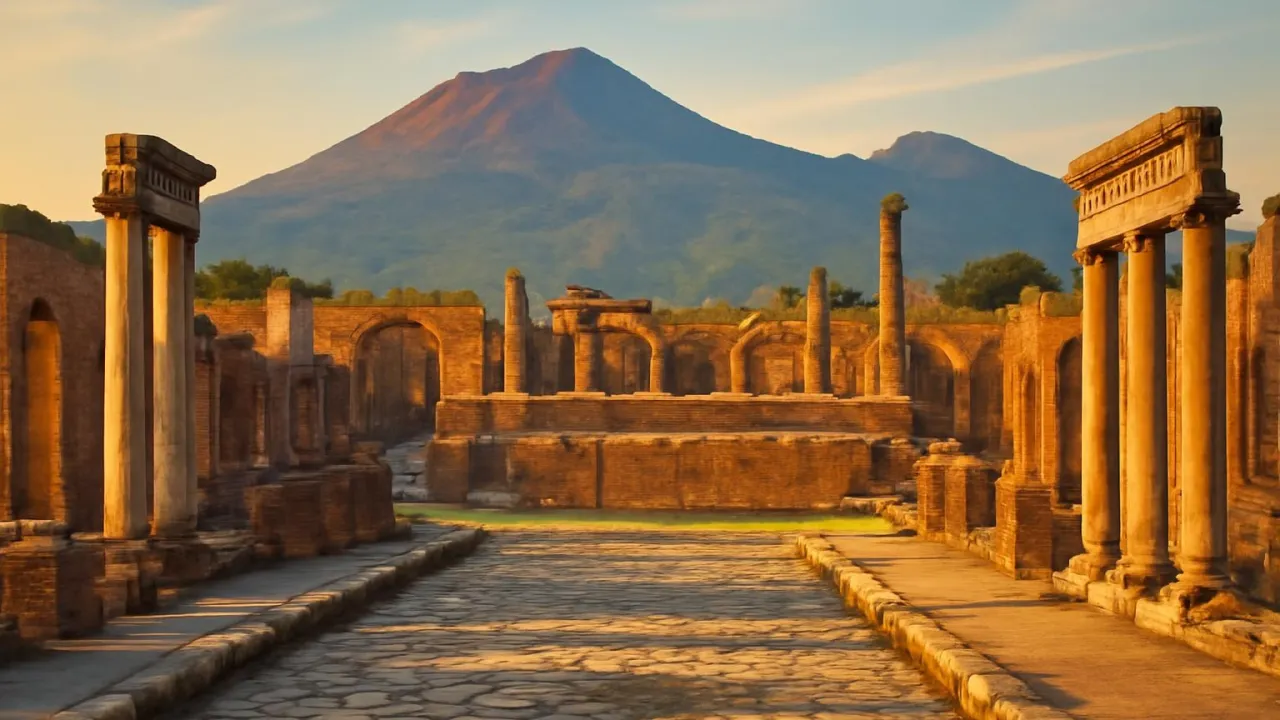
Pompeii even has old Roman bakeries with bread ovens still standing!
✨ Word Sparks (Grade 2 Glossary)
Tap 🔊 to hear
volcano
A mountain that can shoot out lava
erupt
To burst out suddenly
fountain
A place where water comes out
🪝
Can you imagine a city frozen by a volcano?
1
A Lost Roman Town
Pompeii was a busy Roman city. People shopped, played, and cooked here. Suddenly, a named Vesuvius erupted nearby. Hot ash and rocks buried everything quickly.
2
Secrets Under the Ash
The ash covered houses, shops, and even streets. It kept the city hidden for hundreds of years. When people dug it up, they found walls with paintings and old pots.
3
Walking Through History
Today, visitors walk on real Roman streets. They see old and stone ovens. It feels like traveling back in time to ancient Rome.
Scientists even found ancient graffiti scratched onto Pompeii’s walls by Roman kids!
✨ Word Sparks (Grade 3 Glossary)
Tap 🔊 to hear
archaeologist
A person who digs up old things
eruption
A big burst from a volcano
mosaic
A picture made from tiny colored pieces
🪝
What would you hear if you walked ancient Pompeii’s streets today?
1
An Ancient Roman City
Long ago, Pompeii was full of busy people. Merchants sold goods in the marketplace every day. Children played games in the open courtyards. The city’s stone roads echoed with the sounds of chariot wheels.
2
The Power of Mount Vesuvius
In AD 79, Mount Vesuvius erupted with a thunderous roar. Clouds of hot ash and pumice rained down on Pompeii. The city was buried so quickly that many things were frozen in place. This sudden event preserved homes, shops, and even food.
3
Digging Up the Past
carefully excavate the ruins using special tools. They find floors, painted walls, and ancient pottery. The volcanic ash protected these treasures from erosion and weather. Each discovery helps us learn more about Roman daily life.
4
A Walk Through History
Today, visitors explore the winding streets and grand amphitheater. They see plaster casts of people and animals made from the ash molds. The city’s design shows Roman engineering with strong arches and stone buildings. Pompeii is a real-life time capsule from the ancient world.
1. What helped preserve Pompeii’s buildings and art?
2. What do archaeologists find in Pompeii?
🤯 Mind-Blowing Fact • Grade 4
Pompeii’s amphitheater is the oldest surviving Roman stone amphitheater in the world!
✨ Word Sparks (Grade 4 Glossary)
Tap 🔊 to hear
aqueduct
A bridge or pipe that carries water
fresco
A wall painting made on wet plaster
preservation
Keeping something safe from harm or decay
🪝
What secrets would you uncover if you explored a city buried by a volcano?
1
Life in Ancient Pompeii
Pompeii was a thriving Roman city with bustling markets, public baths, and grand villas. Its streets were paved with volcanic stone, and water flowed through a network of fountains and . People gathered in the amphitheater for plays and gladiator games. The city’s design reflected advanced Roman engineering and urban planning.
2
Disaster Strikes: The Eruption of Vesuvius
On a summer day in AD 79, Mount Vesuvius erupted violently, sending a massive cloud of ash and pumice into the sky. Hot gases and volcanic debris rained down, burying Pompeii in just hours. The ash acted as a protective blanket, preserving buildings, mosaics, and even food items from decay and erosion. Many people and animals were trapped, leaving behind haunting shapes in the hardened ash.
3
Rediscovery and Archaeology
Pompeii remained hidden for over 1,500 years until explorers began to uncover its ruins in the 1700s. Archaeologists use careful excavation techniques to reveal houses, shops, and public spaces. They study artifacts like pottery, tools, and to learn about Roman daily life. The city’s offers a rare, detailed look into ancient history.
4
Pompeii’s Lasting Impact
Today, Pompeii is a UNESCO World Heritage Site visited by millions each year. Its ruins teach us about Roman culture, architecture, and engineering. The city’s sudden destruction and inspire scientists and artists worldwide. Pompeii’s story reminds us of the power of nature and the importance of protecting our past.
1. How did the ash from Vesuvius help archaeologists?
2. What do scientists learn from studying Pompeii?
🤯 Mind-Blowing Fact • Grade 5
Pompeii’s preserved graffiti reveals jokes, love notes, and even political slogans from ancient Romans!
✨ Word Sparks (Grade 5 Glossary)
Tap 🔊 to hear
pyroclastic flow
A fast, hot cloud of ash and gas
stratigraphy
Studying layers of earth and ash
conservation
Protecting old things from damage
🪝
If you could walk Pompeii’s ancient streets, what stories would the ruins tell you?
1
A Glimpse Into Roman Civilization
Pompeii, located near the Bay of Naples, was a prosperous Roman city renowned for its vibrant marketplaces, intricate villas, and advanced urban infrastructure. Its streets were precisely laid out in a grid pattern, with stone-paved roads, public fountains, and elaborate bathhouses that showcased Roman engineering expertise. Residents enjoyed amenities such as heated floors, running water, and decorated courtyards, reflecting a high standard of living for the era. The city’s amphitheater, temples, and forums served as centers for social, political, and cultural gatherings. Pompeii’s architecture and daily life provide historians with a remarkably detailed snapshot of Roman society in the first century CE.
2
The Catastrophic Eruption of Mount Vesuvius
On August 24, AD 79, Mount Vesuvius erupted catastrophically, releasing a towering column of volcanic ash, pumice, and toxic gases into the atmosphere. —a deadly mix of hot gas and volcanic material—swept through Pompeii, burying the city under up to 20 feet (6 meters) of ash and debris. This rapid burial instantly halted daily life, preserving buildings, artifacts, and even the positions of people and animals as they tried to escape. The eruption’s sequence was documented by Pliny the Younger, providing valuable scientific insight into volcanic phenomena. The ash’s mineral content also prevented erosion and bacterial decay, allowing organic materials to survive for centuries.
3
Archaeological Excavation and Scientific Discovery
Systematic excavations of Pompeii began in the 18th century and continue to this day, revealing an extraordinary wealth of information about ancient Roman life. Archaeologists employ careful stratigraphic techniques to uncover layers of volcanic material, using plaster casting to recreate the forms of victims and animals. The discovery of mosaics, frescoes, and everyday objects has allowed researchers to reconstruct Roman diets, social customs, and architectural methods. Scientific studies of the ash layers and preserved remains have advanced our understanding of volcanic eruptions and their environmental impact. Pompeii’s preservation is considered one of the greatest archaeological treasures in the world.
4
Engineering Marvels and Urban Planning
Pompeii’s infrastructure included sophisticated drainage systems, aqueducts, and public baths, demonstrating advanced Roman engineering and city planning. The streets featured raised stepping stones for pedestrians, while wheel ruts carved into the stone reveal the frequent passage of carts and chariots. Buildings were constructed using a combination of local volcanic stone, brick, and concrete, with strong arches supporting roofs and doorways. The city’s amphitheater, built in 70 BCE, could seat up to 20,000 spectators and is the oldest surviving Roman stone amphitheater. These engineering achievements influenced urban development throughout the Roman Empire and beyond.
5
Pompeii’s Legacy and Lessons for Today
Today, Pompeii is a UNESCO World Heritage Site and one of the world’s most visited archaeological parks, attracting over two million visitors annually. Its ruins provide invaluable insights into Roman art, culture, and technology, shaping modern understanding of ancient civilizations. The catastrophic eruption serves as a powerful reminder of the destructive forces of nature and the importance of disaster preparedness. Ongoing efforts aim to protect Pompeii’s fragile structures from weathering, pollution, and tourism-related damage. The city’s story continues to inspire scientists, artists, and historians, highlighting the enduring connection between past and present.