Pompeii Ancient Ruins
A City Frozen in Volcanic Time
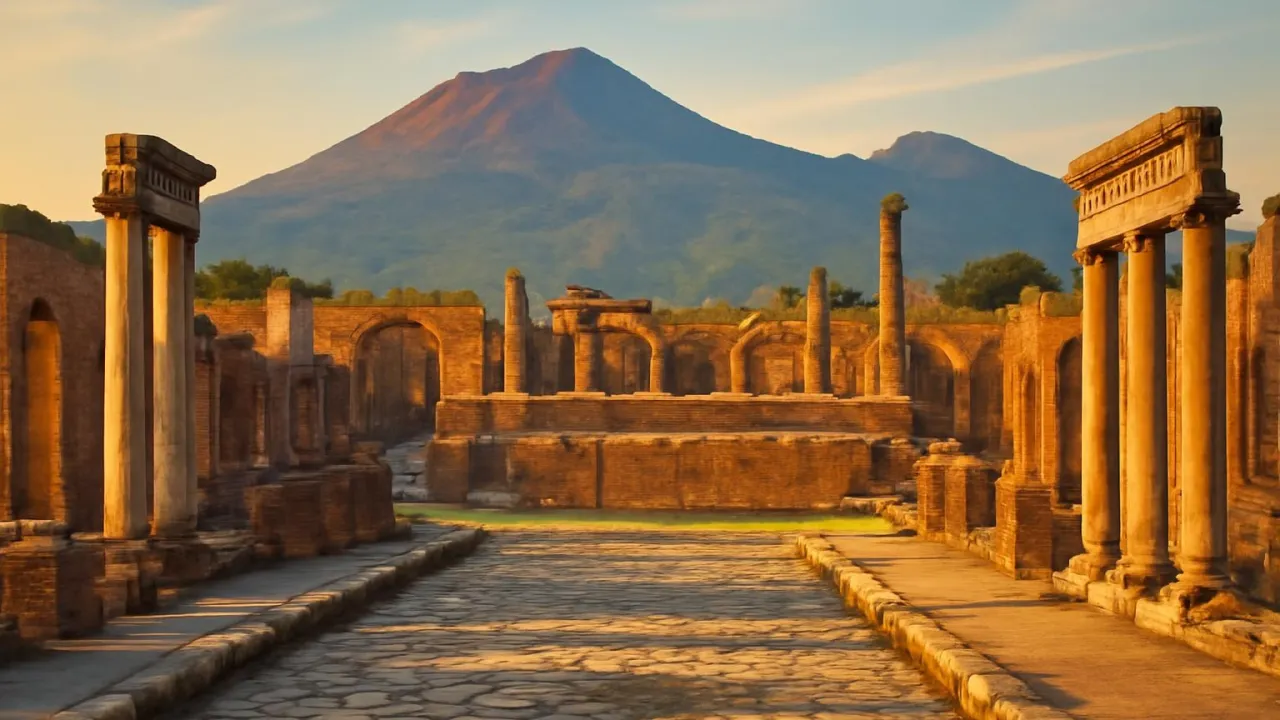
Pompeii’s preserved graffiti reveals jokes, love notes, and even political slogans from ancient Romans!
1 A Glimpse Into Roman Civilization
Pompeii, located near the Bay of Naples, was a prosperous Roman city renowned for its vibrant marketplaces, intricate villas, and advanced urban infrastructure. Its streets were precisely laid out in a grid pattern, with stone-paved roads, public fountains, and elaborate bathhouses that showcased Roman engineering expertise. Residents enjoyed amenities such as heated floors, running water, and decorated courtyards, reflecting a high standard of living for the era. The city’s amphitheater, temples, and forums served as centers for social, political, and cultural gatherings. Pompeii’s architecture and daily life provide historians with a remarkably detailed snapshot of Roman society in the first century CE.
2 The Catastrophic Eruption of Mount Vesuvius
On August 24, AD 79, Mount Vesuvius erupted catastrophically, releasing a towering column of volcanic ash, pumice, and toxic gases into the atmosphere. —a deadly mix of hot gas and volcanic material—swept through Pompeii, burying the city under up to 20 feet (6 meters) of ash and debris. This rapid burial instantly halted daily life, preserving buildings, artifacts, and even the positions of people and animals as they tried to escape. The eruption’s sequence was documented by Pliny the Younger, providing valuable scientific insight into volcanic phenomena. The ash’s mineral content also prevented erosion and bacterial decay, allowing organic materials to survive for centuries.
3 Archaeological Excavation and Scientific Discovery
Systematic excavations of Pompeii began in the 18th century and continue to this day, revealing an extraordinary wealth of information about ancient Roman life. Archaeologists employ careful stratigraphic techniques to uncover layers of volcanic material, using plaster casting to recreate the forms of victims and animals. The discovery of mosaics, frescoes, and everyday objects has allowed researchers to reconstruct Roman diets, social customs, and architectural methods. Scientific studies of the ash layers and preserved remains have advanced our understanding of volcanic eruptions and their environmental impact. Pompeii’s preservation is considered one of the greatest archaeological treasures in the world.
4 Engineering Marvels and Urban Planning
Pompeii’s infrastructure included sophisticated drainage systems, aqueducts, and public baths, demonstrating advanced Roman engineering and city planning. The streets featured raised stepping stones for pedestrians, while wheel ruts carved into the stone reveal the frequent passage of carts and chariots. Buildings were constructed using a combination of local volcanic stone, brick, and concrete, with strong arches supporting roofs and doorways. The city’s amphitheater, built in 70 BCE, could seat up to 20,000 spectators and is the oldest surviving Roman stone amphitheater. These engineering achievements influenced urban development throughout the Roman Empire and beyond.
5 Pompeii’s Legacy and Lessons for Today
Today, Pompeii is a UNESCO World Heritage Site and one of the world’s most visited archaeological parks, attracting over two million visitors annually. Its ruins provide invaluable insights into Roman art, culture, and technology, shaping modern understanding of ancient civilizations. The catastrophic eruption serves as a powerful reminder of the destructive forces of nature and the importance of disaster preparedness. Ongoing efforts aim to protect Pompeii’s fragile structures from weathering, pollution, and tourism-related damage. The city’s story continues to inspire scientists, artists, and historians, highlighting the enduring connection between past and present.
1. How did the mineral-rich volcanic ash help preserve Pompeii’s ruins?
2. Why is Pompeii considered an archaeological treasure?