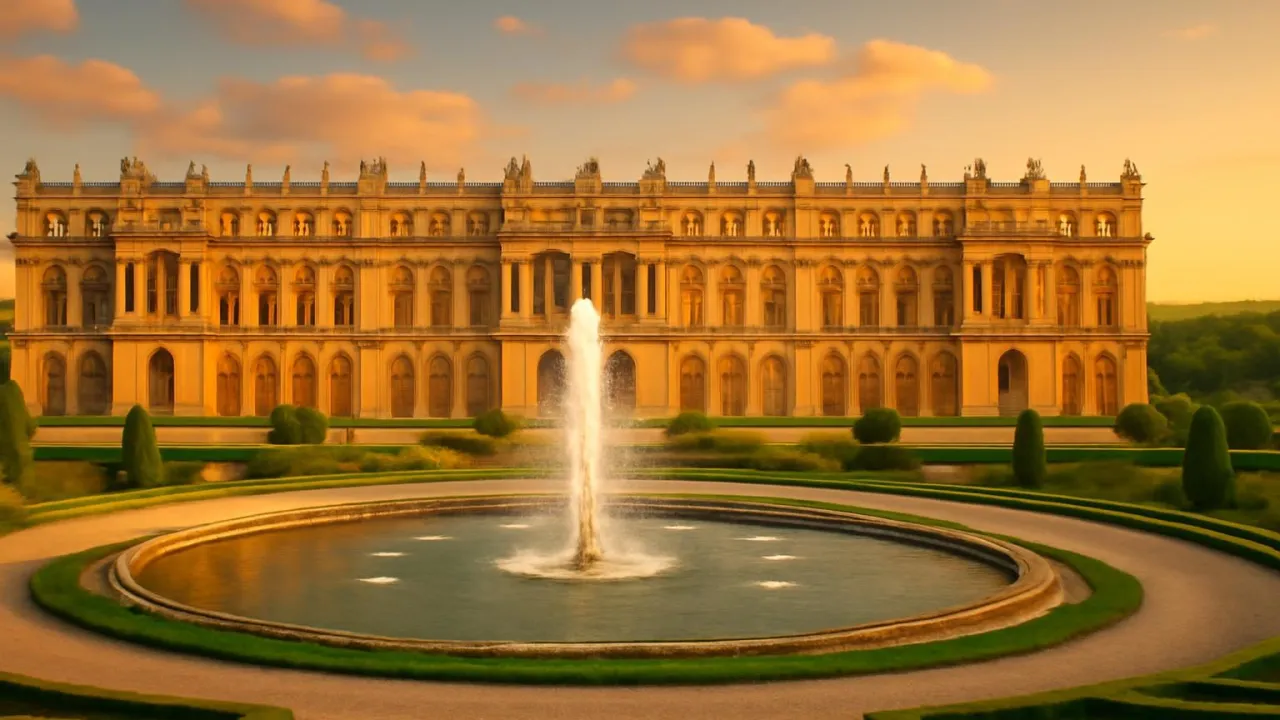
Can you imagine walking through a hallway of mirrors and gold?
1
A Palace of Sparkles
Versailles shines with gold and glass everywhere. The Hall of Mirrors glows with light, and people see themselves in every direction. Visitors walk through huge rooms and tall doors, feeling amazed. The palace looks like a dream come true.
2
Gardens That Go On Forever
Outside, the gardens stretch farther than you can see. There are fountains that shoot water high, and flowers in neat lines. People stroll along paths, listening to birds and watching the water dance. It feels like a magical outdoor .
3
Home of French Kings
Long ago, French kings and queens lived here and held grand parties. Musicians played, and guests wore fancy clothes and masks. Today, the palace is a , and people from all over the world visit. They take photos and learn about its past.
Versailles’ gardens have over 50 musical fountains that 'dance' to music in summer!
✨ Word Sparks (Grade 3 Glossary)
Tap 🔊 to hear
baroque
A fancy, decorated art style
monument
A building that honors history
engineer
A person who designs and builds things
🪝
What would it feel like to dance in a hall filled with shining mirrors and golden light?
1
The Dazzling Hall of Mirrors
The Hall of Mirrors is the most famous room at Versailles. Its walls are covered with 357 mirrors that reflect sunlight from tall windows. When you walk through, you see yourself from every angle, surrounded by sparkling gold decorations. This room once hosted royal balls and important meetings.
2
Gardens Designed Like Art
The palace gardens are a masterpiece of landscape design. They stretch over 1,900 acres and include fountains, statues, and flower beds arranged in perfect patterns. Water jets shoot high into the air, and the sound of splashing fills the air. Gardeners use careful planning to keep everything neat and beautiful.
3
A Symbol of Royal Power
King Louis XIV ordered Versailles to be built to show his power. The palace became the center of French government and culture in the 1600s. Its grand size and style inspired other palaces across Europe. Today, it is a to history and art.
4
How Versailles Was Built
Building Versailles took thousands of workers many years to finish. Architects used style, with lots of curves and fancy details. designed special fountains that still work today by moving water through underground pipes. The palace stands as a triumph of design and teamwork.
Versailles’ water system used over 30,000 laborers and 200 horses to build!
✨ Word Sparks (Grade 4 Glossary)
Tap 🔊 to hear
hydraulic
Powered by moving water
symmetry
The same on both sides
preservation
Keeping things safe from damage
🪝
Imagine sunlight bouncing off hundreds of mirrors as you step into a room where kings once danced—what secrets would these walls tell?
1
A Hallway of Light and Reflection
The Hall of Mirrors, Versailles' most celebrated chamber, is lined with 357 mirrors that catch sunlight from seventeen tall windows. This dazzling effect made the room perfect for royal celebrations, as the mirrors multiplied the golden glow of candles and sunlight. The hall’s arches and high ceilings create echoes, making voices sound grand and important. Today, visitors marvel at the clever use of reflection and light, which made the room a symbol of royal luxury.
2
Gardens Engineered for Wonder
The gardens of Versailles were designed by André Le Nôtre, who used geometry to create perfect patterns of trees, flowers, and fountains. Engineers built an advanced system to power over fifty fountains, some of which still work today. Water was pumped from miles away using windmills and aqueducts, a huge achievement for the 1600s. The gardens’ and musical fountains amazed visitors from all over Europe.
3
Versailles and the Rise of French Power
King Louis XIV transformed Versailles from a hunting lodge into the grandest palace in Europe to display his absolute power. The palace became the political and cultural heart of France, hosting important treaties and royal ceremonies. Its baroque architecture and lavish decorations influenced palaces and gardens across the continent. Versailles remains a powerful symbol of French history and royal ambition.
4
Lasting Impact and Preservation
Today, the Palace of Versailles is a UNESCO World Heritage Site, visited by millions each year. Expert teams restore its paintings, sculptures, and gardens to keep them looking as they did centuries ago. The palace teaches us about art, engineering, and the lives of kings and queens. Its legacy continues to inspire artists, architects, and dreamers around the world.
1. How did engineers power the fountains at Versailles?
2. Why is Versailles important today?
🤯 Mind-Blowing Fact • Grade 5
The Marly Machine, built for Versailles, was the largest water-lifting system of its era and could move 3,200,000 gallons daily!
✨ Word Sparks (Grade 5 Glossary)
Tap 🔊 to hear
acoustics
How sound moves and echoes in a space
symmetry
When both sides match perfectly
preservationist
A person who protects old buildings and art
🪝
What would you discover if you traced the path of sunlight from the Hall of Mirrors across the grand gardens of Versailles, just as a royal guest might have centuries ago?
1
Engineering the Hall of Mirrors
Step into the Hall of Mirrors and you’ll be surrounded by 357 expertly crafted mirrors, each reflecting beams of sunlight from the seventeen arched windows. This architectural marvel was designed to maximize natural light and amplify the brilliance of gold leaf, crystal chandeliers, and marble columns. The of the vaulted ceiling allowed music and voices to resonate during royal balls, creating a sense of grandeur and awe. French artisans used advanced glassmaking techniques, making these mirrors a symbol of technological progress in 17th-century Europe. The hall became the stage for historic events, including the signing of the Treaty of Versailles in 1919.
2
The Genius of Versailles’ Gardens
The gardens of Versailles, covering nearly 2,000 acres, are a masterpiece of Baroque landscape architecture, meticulously designed by André Le Nôtre. Their geometric layout features over 600 fountains, 372 statues, and vast reflecting pools, all arranged in perfect . Engineers constructed a sophisticated hydraulic system, including the Marly Machine, to transport water from the Seine River over 10 miles away. The musical fountains, which still perform today, use water pressure and hidden pipes to create synchronized displays that delighted royal guests. This blend of art, mathematics, and engineering set new standards for garden design across Europe.
3
Versailles as a Symbol of Absolute Monarchy
King Louis XIV, known as the Sun King, transformed Versailles from a modest hunting lodge into the political and cultural epicenter of France. The palace’s immense scale—with over 2,300 rooms—was intended to impress visitors and reinforce the king’s absolute authority. Versailles hosted elaborate ceremonies, masked balls, and diplomatic meetings, shaping European politics and culture for generations. The palace’s Baroque architecture, with its dramatic arches, ornate ceilings, and gilded sculptures, inspired countless other royal residences, including Schönbrunn Palace in Austria and Peterhof in Russia.
4
Preservation and Modern Legacy
Today, the Palace of Versailles is one of the world’s most visited museums, attracting nearly eight million people annually. and historians work tirelessly to restore its paintings, sculptures, and intricate gardens using both traditional techniques and modern technology. Versailles stands as a living classroom, teaching visitors about the evolution of art, engineering, and government. Its influence extends to global diplomacy, as world leaders still gather here for important meetings and commemorations. The palace’s continued restoration ensures that its legacy will inspire future generations.
5
Scientific and Cultural Impact
Versailles represents a turning point in architectural and engineering history, demonstrating how science, technology, and art can work together. The palace’s innovative water system, use of geometry in garden design, and acoustical engineering in the Hall of Mirrors were groundbreaking for their time. Its cultural impact is equally profound, as it remains a symbol of both the achievements and excesses of monarchy. By studying Versailles, students and scientists gain insight into the social, technological, and artistic forces that shaped modern Europe. Its story continues to spark curiosity and creativity worldwide.