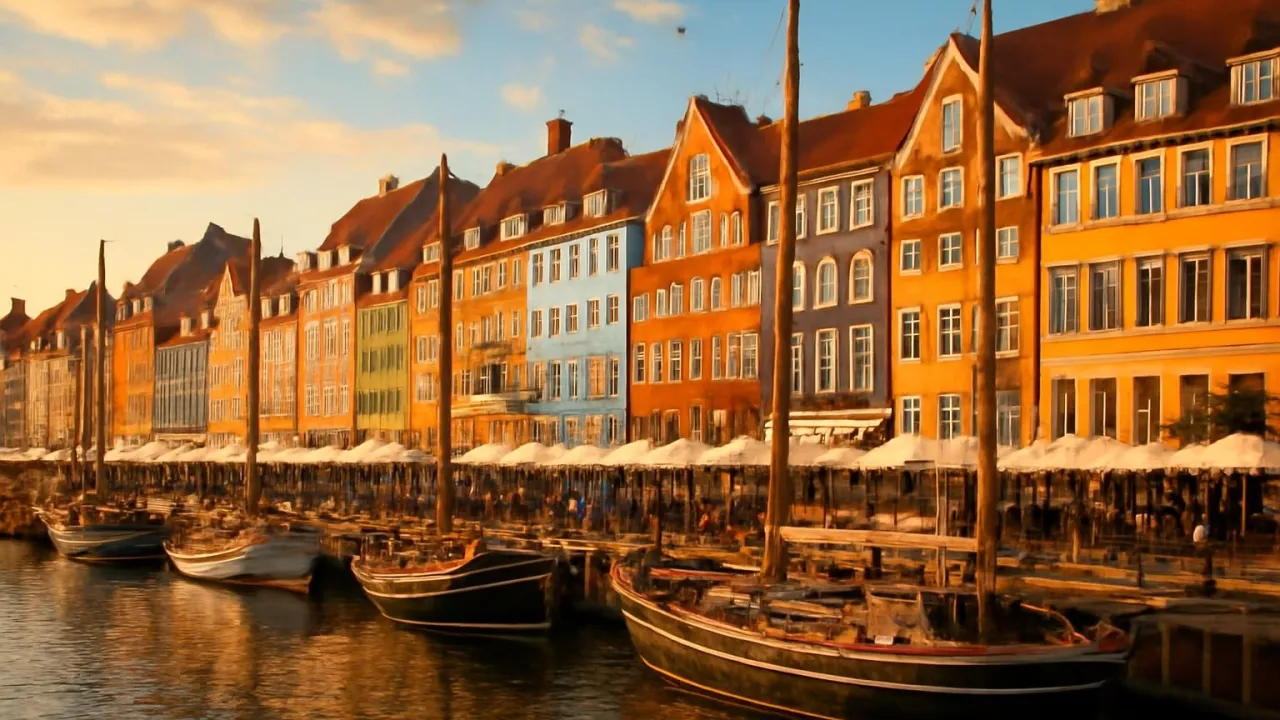
Nyhavn Harbor of Copenhagen
Colorful Canals and Seafaring Stories Await
Some houses here are over 300 years old!
What if you could walk by a rainbow of houses by the water?
1 Colors by the Canal
Bright houses line the waterโs edge. Boats bob gently in the . People walk and laugh nearby.
2 Boats and Bridges
Old wooden boats float in the . Some boats have tall masts. Small bridges cross over the blue water.
3 A Happy Place
Cafes have tables outside. Families eat and watch boats. The sun makes the water sparkle.
1. What do people see at Nyhavn?
2. What floats in the canal?
Famous storyteller Hans Christian Andersen once lived in Nyhavn!
Can you imagine hearing boat horns and laughter by a colorful canal?
1 A Rainbow by the Water
Nyhavn is a bright place with houses painted many colors. The runs through the city, and boats float gently on the water. People come here to walk, watch boats, and take pictures.
2 Old Boats and Busy Cafes
Some boats in Nyhavn are old wooden ships with tall . Cafes line the , and people sit outside to eat and enjoy the view. The air smells like fresh food and salty water.
3 Bridges and Stories
Small bridges cross the , letting people walk from side to side. At night, lights shine on the water, making it sparkle. Nyhavn is full of stories from long ago.
1. What do people do at Nyhavn?
2. What lights up Nyhavn at night?
Nyhavnโs canal was dug by Danish soldiers in the 1670s using only shovels!
What would it feel like to stand on a wooden boat in a canal lined with rainbow houses?
1 A Harbor Full of Color
Nyhavnโs famous canal is lined with tall, colorful houses built centuries ago. Their bright reds, yellows, and blues reflect on the water, making the whole harbor look like a painting. The canal is always alive with the sounds of boat horns and people talking. This lively place is a favorite spot for both locals and tourists.
2 Sailing Through History
Many old wooden sailing ships are docked in Nyhavn, and some are over 100 years old. These boats once carried goods and people across the sea, using wind power and strong sails. Today, visitors can see the tall and ropes, and sometimes even hear the creak of wood as boats rock in the water. The harbor is a living museum of Denmarkโs seafaring past.
3 Bridges, Quays, and Cafes
Several small bridges cross the canal, connecting the two sides of Nyhavn. Wide stone let people stroll right beside the water and watch boats come and go. Outdoor cafes serve Danish food, and the smell of fresh bread and fish fills the air. At night, string lights glow above the canal, creating a magical scene.
4 A Place of Stories
Nyhavn is not just pretty; it is full of stories and history. Famous author Hans Christian Andersen wrote fairy tales while living here. The canal was dug by hand in the 1600s, showing how hard people worked to build it. Today, Nyhavn is protected as a site, so its beauty and history can last for many years.
1. Why do people call Nyhavn a 'living museum'?
2. Who wrote stories while living in Nyhavn?
Some Nyhavn houses still have original wooden beams from the 1600s inside!
Can you picture sunlight sparkling on water as you cross a stone bridge in Nyhavn?
1 A Canal Built for Sailors
Nyhavn was carefully constructed in the 1670s as a working harbor for Danish sailors and . The canal was dug by hand, stretching 400 meters from the city center to the open sea, and was designed wide enough for tall-masted ships to enter. The colorful houses lining the canal were once homes and for sailors after long journeys. Today, these historic buildings are carefully protected to preserve their unique architecture.
2 Engineering the Waterfront
The canalโs stone quays were built to withstand waves and the constant docking of heavy wooden ships. Bridges were engineered to allow both foot traffic and the passage of boats, some even lifting to let taller vessels through. The harborโs design helped Copenhagen become a major trading city, connecting Denmark to the rest of Europe. efforts now keep the old wood, brick, and stone in strong, safe condition.
3 Culture and Community
Nyhavn is more than just a pretty placeโitโs a lively community space. Outdoor cafes and music fill the air, while artists paint the colorful scene. The canalโs gentle waves create a peaceful soundscape, and at sunset, the light reflects off the water and windows, making everything glow. Local traditions, like eating fresh fish by the quay, are still enjoyed by visitors and residents alike.
4 A Lasting Legacy
Nyhavnโs history includes famous residents like Hans Christian Andersen, who wrote many fairy tales here. The area is now a UNESCO World Heritage candidate, recognized for its cultural and architectural importance. By protecting Nyhavn, Copenhagen honors its seafaring roots and shares its stories with the world. The harbor remains a symbol of Denmarkโs connection to the sea and its creative spirit.
1. Why were Nyhavnโs bridges designed to move or lift?
2. How does Nyhavn connect Denmark to the world?
Nyhavnโs canal was dug entirely by hand over just five years in the 1670s!
Imagine hearing the echo of ship bells and footsteps on ancient cobblestones as you stroll Nyhavnโs historic quayโwhat stories would you uncover?
1 Origins and Maritime Engineering
Nyhavn Harbor was engineered in the late 17th century as an ambitious urban maritime project to connect Copenhagenโs city center with the รresund Strait. Danish soldiers and workers excavated the 400-meter canal entirely by hand, using shovels and wheelbarrows to move thousands of tons of earth. The canal was designed with a width of approximately 12 meters (about 40 feet), accommodating the eraโs largest trading vessels. Its robust stone quays and deep basin allowed for the safe mooring of heavy wooden ships, which were vital for Denmarkโs growing sea trade. The engineering of Nyhavnโs canal and quay system was essential in transforming Copenhagen into a thriving European port.
2 Architectural Heritage and Urban Evolution
The iconic row of narrow, multi-story houses along Nyhavnโs north side were constructed between the late 1600s and early 1700s, using timber framing, brickwork, and brightly colored . These buildings originally served as homes, taverns, and warehouses for sailors, merchants, and craftsmen. Many still retain their original wooden beams, steep staircases, and decorative gables, reflecting the distinct architectural style of Denmarkโs Golden Age. Over centuries, efforts have ensured that both the exteriors and interiors remain structurally sound, even as the district has evolved into a vibrant cultural and tourist destination.
3 Cultural Significance and Literary Legacy
Nyhavn is deeply woven into Denmarkโs cultural identity, serving as a gathering place for artists, musicians, and writers. The harborโs most famous resident, Hans Christian Andersen, lived in three different houses here while writing some of his most beloved fairy tales. Today, outdoor cafes and galleries line the quay, and the canalโs lively atmosphere continues to inspire creativity. Annual festivals, music performances, and maritime parades celebrate Nyhavnโs legacy, attracting both locals and visitors from around the world.
4 Preservation, Restoration, and Modern Use
In recent decades, extensive restoration projects have stabilized Nyhavnโs historic buildings and reinforced the canalโs stone . Conservationists use traditional materials and techniques to repair wooden beams, brickwork, and quay stones, ensuring the districtโs authenticity is maintained. Modern engineering solutions, such as flood barriers and improved drainage, protect the harbor from rising water levels and erosion. The canal is now closed to commercial shipping, but classic wooden boats and heritage vessels are carefully preserved as floating museum pieces.
5 Global Impact and UNESCO Recognition
Nyhavn stands as a symbol of Denmarkโs maritime heritage and urban resilience, drawing millions of visitors annually. Its demonstrates the importance of safeguarding historic waterfronts in cities worldwide, balancing tourism with cultural integrity. As a candidate for UNESCO World Heritage status, Nyhavn showcases how thoughtful engineering and community stewardship can protect architectural treasures for future generations. The harborโs colorful , bustling quays, and enduring stories continue to connect Copenhagen to the global community.
1. How did Nyhavnโs engineering help Copenhagen become a major European port?
2. Why is it important to restore Nyhavnโs historic buildings using traditional materials?