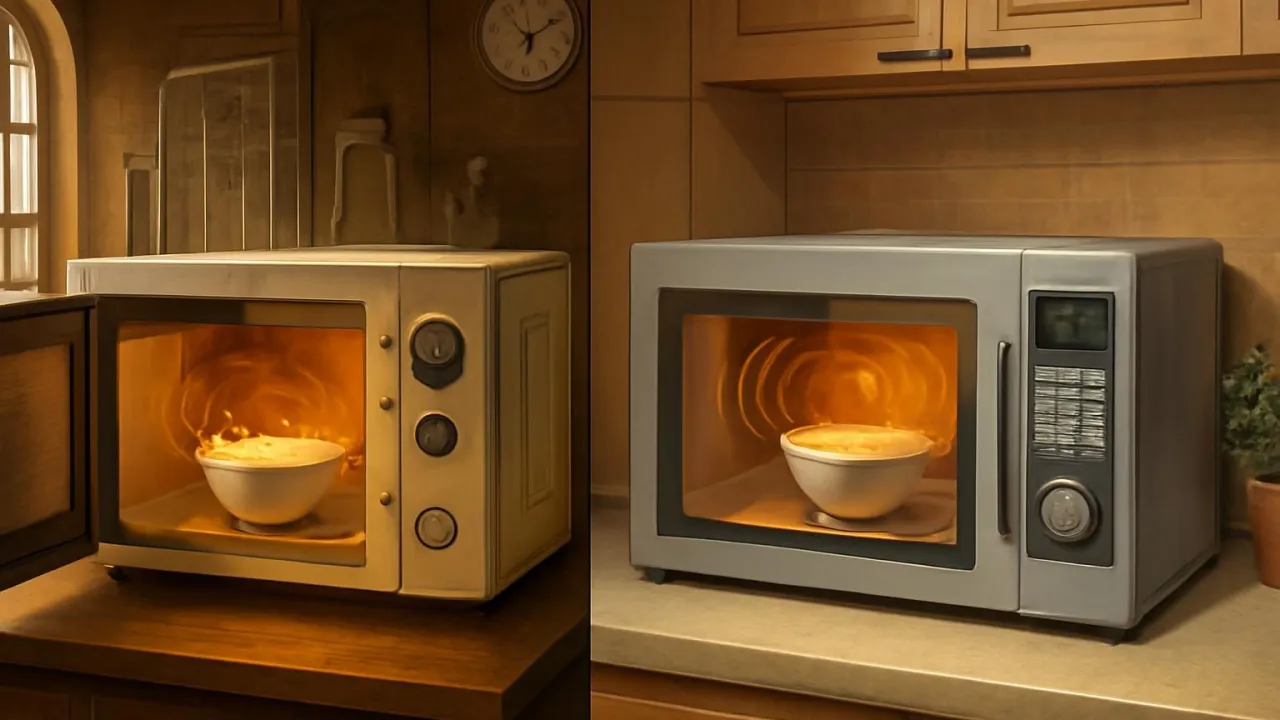
Microwaves can heat a cup of soup in just one minute!
✨ Word Sparks (Grade 2 Glossary)
Tap 🔊 to hear
molecule
A tiny part of everything
invisible
Something you cannot see
counter
A flat place in the kitchen
🪝
Have you ever watched popcorn dance in the microwave?
1
A Kitchen Helper
Microwaves help people heat food very quickly, using special waves. When you press the buttons, the microwave starts to hum and spin the plate. Soon, you can smell your food getting warm and tasty. Many families use microwaves every day.
2
How Do Microwaves Work?
Inside the microwave, waves bounce around and make water in food move. These moving water get hot, which cooks the food from the inside. The door keeps the waves safely inside. That is why you can watch but not feel the heat.
3
From Giant to Tiny
The first microwaves were huge and heavy, almost as big as a refrigerator. Today, microwaves are small enough to fit on your kitchen . Now, people all around the world use them to make meals fast and easy.
2. Where do most people keep their microwave today?
🤯 Mind-Blowing Fact • Grade 3
The first food cooked by microwave was popcorn, followed by an egg that exploded!
✨ Word Sparks (Grade 3 Glossary)
Tap 🔊 to hear
electromagnetic
Energy that travels in waves
vibration
Quick shaking back and forth
radiation
Invisible energy moving through space
🪝
What if you could cook noodles using invisible energy in less than two minutes?
1
A Surprising Discovery
Long ago, Percy Spencer noticed a candy bar melted in his pocket while he worked with radar. He realized invisible microwaves made the chocolate warm up quickly. This curious accident led to the first microwave oven, which was huge and used in restaurants.
2
How Microwaves Heat Food
A microwave oven uses waves to make water molecules in food vibrate. creates heat, which cooks the food from the inside out. The spinning plate helps spread the waves evenly. The door is lined with a metal mesh to keep the waves inside.
3
From Labs to Kitchens
At first, only big companies could afford microwave ovens, but soon they became smaller and cheaper. Now, millions of homes have microwaves for fast meals and snacks. People love how microwaves can pop popcorn, warm leftovers, and even cook some cakes.
4
Safe and Fast Cooking
Microwave ovens are designed with safety locks and shields to protect users from . The waves only heat food, not the air around it. This makes microwaves energy-efficient and safe for families. Always use microwave-safe containers to keep food and people safe.
1. Why does a microwave oven have a spinning plate?
2. Who discovered how microwaves could cook food?
🤯 Mind-Blowing Fact • Grade 4
Early microwave ovens cost more than $2,000 and needed plumbing for water cooling!
✨ Word Sparks (Grade 4 Glossary)
Tap 🔊 to hear
dielectric heating
Heating by shaking water molecules fast
mesh
A net-like metal screen
appliance
A machine that helps in the home
🪝
Imagine discovering a way to cook food using invisible waves from the air!
1
A Sweet Accident Sparks an Invention
In 1945, engineer Percy Spencer was testing radar equipment when he noticed a chocolate bar in his pocket had melted. Intrigued, he experimented with popcorn, which popped, and an egg, which exploded from the heat. This surprising event led Spencer to invent the first microwave oven, which used electromagnetic waves to cook food much faster than traditional ovens.
2
The Science Behind Microwave Cooking
Microwave ovens work by generating microwaves, a form of electromagnetic radiation, inside a metal box. These microwaves cause water molecules in food to vibrate rapidly, creating heat through a process called . The spinning turntable helps distribute the waves, ensuring food cooks evenly. The in the oven door blocks microwaves from escaping, keeping users safe.
3
From Giant Machines to Everyday Appliances
The very first microwave ovens were enormous, standing nearly six feet tall and weighing over 700 pounds. They were used mostly in restaurants and cost as much as a car! As technology improved, microwaves became smaller, safer, and affordable for families. Today, microwaves are found in kitchens all over the world, making fast meals and snacks possible.
4
Changing the Way We Eat
Microwave ovens revolutionized cooking by making it quick and convenient to heat food. They save energy by heating only the food, not the air, and help reduce food waste by making leftovers easy to reheat. The microwave has changed meal times in homes, schools, and workplaces, showing how one invention can impact daily life everywhere.
1. What happens to water molecules when microwaves hit them?
2. Why did early microwave ovens need water cooling?
🤯 Mind-Blowing Fact • Grade 5
The first commercial microwave oven cost $5,000, weighed 750 pounds, and stood nearly six feet tall!
✨ Word Sparks (Grade 5 Glossary)
Tap 🔊 to hear
magnetron
A tube that makes microwaves
polar molecule
A molecule with positive and negative ends
mode stirrer
A device that spreads microwaves evenly
🪝
What if you could harness invisible energy to cook dinner in seconds, not hours?
1
From Radar Labs to Kitchen Counters
In 1945, engineer Percy Spencer was working on radar at Raytheon when he noticed a chocolate bar melting in his pocket. Curious, he placed popcorn kernels near the magnetron, watching them pop from the heat of invisible microwaves. This accidental discovery led to the very first microwave oven prototype, which was almost six feet tall and weighed over 750 pounds. The invention marked a turning point in both culinary technology and electromagnetic research.
2
The Physics of Microwave Heating
Microwave ovens use a device called a to generate electromagnetic waves at a frequency of about 2.45 gigahertz. These microwaves penetrate food and cause polar water molecules to rotate rapidly, producing heat through molecular friction, a process known as dielectric heating. Unlike conventional ovens, microwaves heat food from the inside out, dramatically reducing cooking times. The metal mesh in the door reflects microwaves, ensuring user safety by containing the radiation.
3
Evolution from Industrial Giant to Household Staple
The first commercial microwave ovens, called Radaranges, were expensive, bulky, and required water-cooling systems to prevent overheating. By the late 1960s, technological advances made microwaves smaller, safer, and affordable for families. Today, over 90% of American homes have a microwave oven, and they are used globally for everything from reheating leftovers to sterilizing kitchen sponges.
4
Engineering and Safety Innovations
Modern microwave ovens include multiple safety features, such as interlocking doors, automatic shut-off switches, and shielding to prevent microwave leakage. Engineers designed turntables or to distribute microwaves more evenly, minimizing cold spots in food. Only containers labeled 'microwave-safe' should be used, as certain plastics or metals can cause sparks or fires.
5
A Global Impact on Food and Society
The microwave oven transformed not only how people cook, but also how they live and eat. It enabled the rise of convenience foods, changed meal patterns, and contributed to reduced energy consumption in kitchens. Today, scientists continue to study microwave heating for new uses, including medical therapies and advanced materials processing, showing how one accidental discovery can ripple across the world.