Luna Moth
The Nighttime Moon-Green Marvel
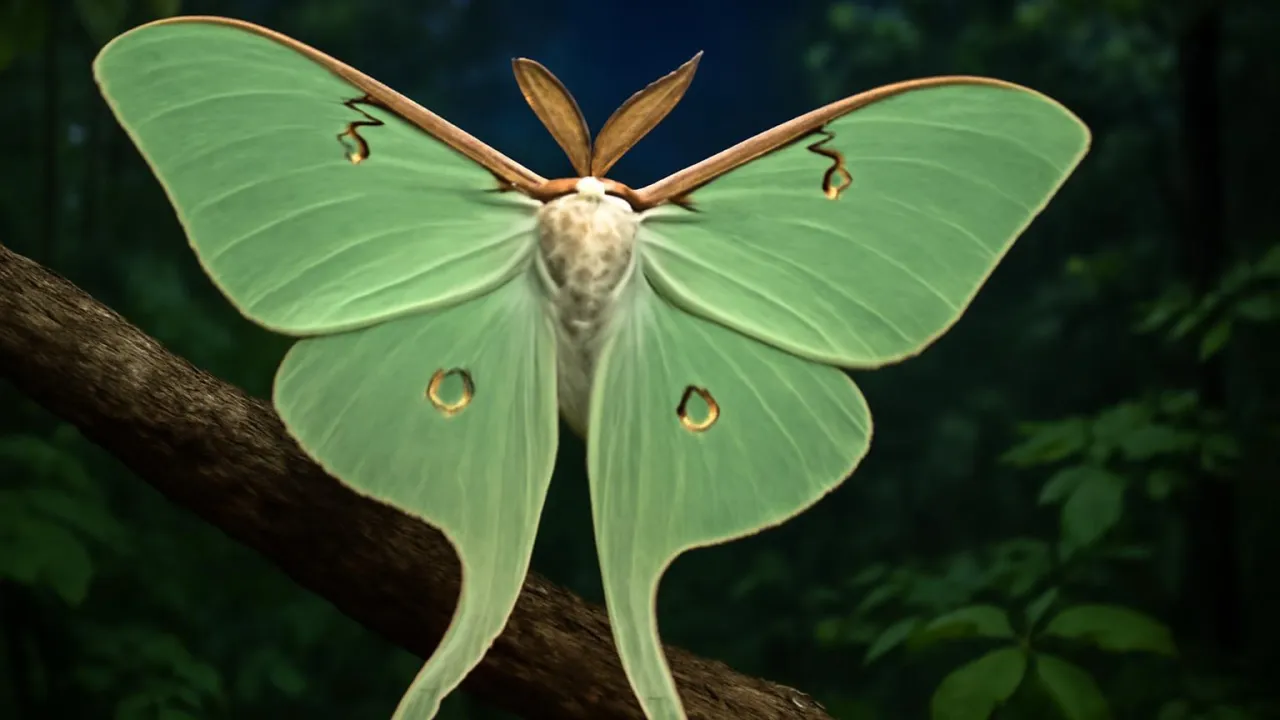
Luna moths’ tails can actually make bats miss them in midair by confusing the bats’ sonar!
1 Scientific Wonders of the Luna Moth
The luna moth, scientifically named Actias luna, is a member of the family, often called giant silk moths. Its wingspan can reach up to 4.5 inches (11.4 cm), placing it among North America’s largest moths. Luna moths are easily recognized by their pale green, translucent wings and long, twisting tails. Unlike butterflies, luna moths are , meaning they are most active at night. Their genus name, Actias, refers to the moon, which matches their moon-like coloring and nighttime habits.
2 Complex Life Cycle and Metamorphosis
Luna moths undergo complete metamorphosis, passing through egg, larva (caterpillar), pupa, and adult stages. Females lay 100–300 eggs on the leaves of hardwood trees such as hickory, walnut, and sweet gum. The caterpillars are bright green and can grow up to 3 inches (7.6 cm) long, feeding voraciously on leaves to store energy for metamorphosis. After about three weeks, the caterpillar spins a silk cocoon and enters the pupal stage, which can last several weeks or even months depending on temperature. The adult moth emerges, ready to reproduce but unable to eat, as it has no functional mouthparts.
3 Adaptations for Survival
Luna moths have evolved several remarkable adaptations for survival in their forest habitats. Their lime-green wings and brownish eyespots provide camouflage against tree foliage and bark, reducing the risk of predation. The long, trailing tails on their hindwings are believed to disrupt the echolocation of hunting bats, making it harder for bats to target them in flight. This defense mechanism is so effective that studies show bats often attack the tails instead of the moth’s body, allowing the moth to escape. These adaptations demonstrate how natural selection shapes species to fit their environments.
4 Ecological Importance and Human Impact
Luna moths play a significant role in forest ecosystems as both consumers and prey. Their caterpillars recycle plant material, transforming leaves into nutrients that enrich the soil. Adult moths, although short-lived, are an important food source for birds, bats, and small mammals. However, human activities such as deforestation, pesticide use, and light pollution threaten luna moth populations by reducing habitat and disrupting their nighttime behaviors. Conservation efforts that protect forests and reduce artificial lighting can help maintain healthy populations of these iconic insects.
5 Amazing Numbers and Mysteries
A luna moth’s adult life lasts only about 7–10 days, during which it focuses solely on reproduction. Females release special chemicals called to attract males, who can detect these scents from over a mile away using their feathery antennae. Despite their size, luna moths are completely harmless to humans and do not damage crops or trees. Each year, depending on the climate, there can be one to three generations of luna moths. Their mysterious beauty and brief, moonlit flights have inspired legends and scientific curiosity for centuries.
1. What adaptation helps luna moths escape bats?
2. How do luna moths find mates if they cannot eat or live long?