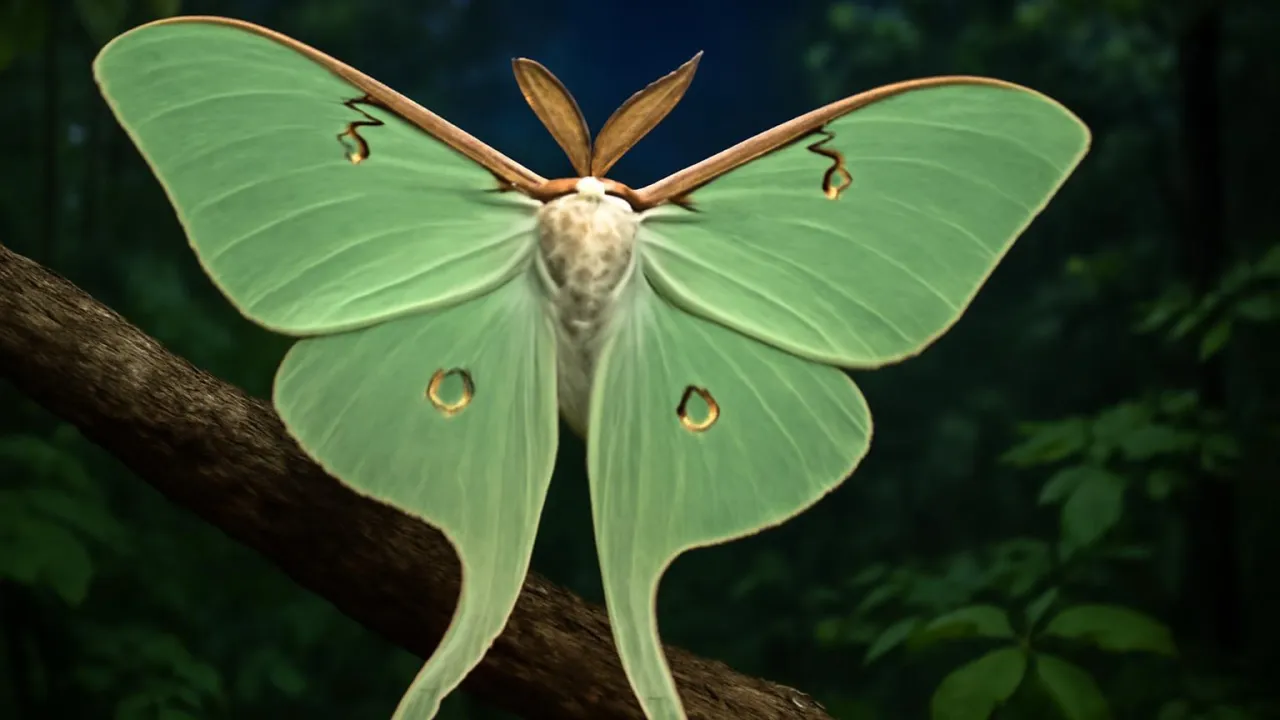
Luna Moth
The Nighttime Moon-Green Marvel
A luna moth does not eat after it becomes an adult!
Have you ever seen a green moth at night?
1 Shiny Green Wings
The luna moth has big green . Its wings look like leaves. It flies at night. Its wings are very soft.
2 Nighttime Flier
Luna moths sleep during the day. They wake up when it is dark. They fly under the moon. They look for a safe place.
3 From Baby to Moth
A luna moth starts as an . It turns into a green . The caterpillar eats leaves. Then it becomes a moth.
1. What color are a luna moth's wings?
2. When do luna moths fly?
Luna moths use their long tails to confuse bats in the dark!
Did you know some moths glow in the moonlight?
1 Moonlight Wings
Luna moths have large, pale green wings that look like leaves. Their wings help them hide from birds and bats. The moths are most active at night, when they fly under the moon. They rest during the day on tree trunks.
2 Life of a Luna Moth
A luna moth starts as a tiny egg on a leaf. It hatches into a green caterpillar that eats lots of leaves. After growing bigger, the caterpillar wraps itself in a . Soon, it changes into a beautiful adult moth.
3 A Moth That Doesn't Eat
Adult luna moths do not eat any food. They only live for about one week, just enough time to find a . Their main job as adults is to lay eggs for the next generation. The caterpillars do all the eating and growing.
1. What do luna moth caterpillars eat?
2. Why do luna moths have green wings?
Luna moths are among the largest moths in North America, with wings as wide as a small hand!
Can you imagine a moth that looks like a flying green leaf?
1 Masters of Disguise
Luna moths have bright green wings with long, curving tails. Their wings help them blend in with the leaves, making them hard for predators to spot. This is called , and it protects them from hungry birds and bats. The moths are most active at night, when their pale color almost glows.
2 The Luna Moth Life Cycle
A luna moth begins life as a tiny egg laid on a tree leaf. The egg hatches into a caterpillar, which eats leaves and grows quickly. After several weeks, the caterpillar spins a silk cocoon and transforms inside. This change is called , turning it into a beautiful adult moth.
3 Special Tails and Silent Nights
The luna mothâs long tails are more than just pretty. Scientists believe the tails confuse bats by making it harder for them to catch the moth. Adult luna moths do not eat at all, because they have no mouths. They live only about a week, just long enough to find a mate and lay eggs.
4 Where Luna Moths Live
Luna moths are found in forests across eastern North America. They like to rest on tree trunks during the day, blending in with the bark. Their caterpillars eat the leaves of trees like hickory, walnut, and sweet gum. Each year, there can be one to three of luna moths, depending on the climate.
1. How do luna moths avoid being eaten by bats?
2. What happens inside the luna mothâs cocoon?
Luna moths belong to the giant silk moth family, and their wings can span up to 4.5 inches!
What if you could glow softly and disappear in the moonlight?
1 A Master of Moonlit Camouflage
The luna mothâs pale green wings and long, trailing tails make it one of the most easily recognized moths in North America. These unique wings provide excellent camouflage, allowing the moth to blend perfectly with leaves and tree bark. Their coloration and shape help them avoid being spotted by predators such as birds and bats. At night, their wings even reflect moonlight, making them appear almost ghostly as they fly.
2 An Amazing Life Cycle
Luna moths undergo complete metamorphosis, which means they change dramatically from egg to adult. The female lays eggs on the leaves of hardwood trees like hickory, walnut, and sweet gum. The caterpillars eat these leaves for several weeks, growing larger and shedding their skin multiple times. When ready, the caterpillar spins a silk cocoon and transforms into a , eventually emerging as a fully formed moth.
3 Survival Tricks and Ecosystem Roles
Luna moths have evolved long tails on their wings, which scientists believe help confuse the of bats. This adaptation makes it harder for bats to catch them in flight, increasing their survival chances. Although adult luna moths do not eat, their caterpillars play an important role by recycling plant matter into nutrients for the forest soil. Luna moths are also food for many animals, making them a key part of the food web.
4 Where and When to Find Luna Moths
Luna moths are found in deciduous forests throughout eastern North America, from Canada down to Florida and Texas. They are most common in late spring and early summer, when adults emerge to mate and lay eggs. Depending on the regionâs climate, there can be one to three generations each year. Human activities like and light pollution can affect their populations, but luna moths are still a magical sight for anyone lucky enough to spot them.
1. How do luna moths help forests even though adults do not eat?
2. Why are luna moths sometimes hard to find?
Luna mothsâ tails can actually make bats miss them in midair by confusing the batsâ sonar!
How does a moth with no mouth survive and become a moonlit legend?
1 Scientific Wonders of the Luna Moth
The luna moth, scientifically named Actias luna, is a member of the family, often called giant silk moths. Its wingspan can reach up to 4.5 inches (11.4 cm), placing it among North Americaâs largest moths. Luna moths are easily recognized by their pale green, translucent wings and long, twisting tails. Unlike butterflies, luna moths are , meaning they are most active at night. Their genus name, Actias, refers to the moon, which matches their moon-like coloring and nighttime habits.
2 Complex Life Cycle and Metamorphosis
Luna moths undergo complete metamorphosis, passing through egg, larva (caterpillar), pupa, and adult stages. Females lay 100â300 eggs on the leaves of hardwood trees such as hickory, walnut, and sweet gum. The caterpillars are bright green and can grow up to 3 inches (7.6 cm) long, feeding voraciously on leaves to store energy for metamorphosis. After about three weeks, the caterpillar spins a silk cocoon and enters the pupal stage, which can last several weeks or even months depending on temperature. The adult moth emerges, ready to reproduce but unable to eat, as it has no functional mouthparts.
3 Adaptations for Survival
Luna moths have evolved several remarkable adaptations for survival in their forest habitats. Their lime-green wings and brownish eyespots provide camouflage against tree foliage and bark, reducing the risk of predation. The long, trailing tails on their hindwings are believed to disrupt the echolocation of hunting bats, making it harder for bats to target them in flight. This defense mechanism is so effective that studies show bats often attack the tails instead of the mothâs body, allowing the moth to escape. These adaptations demonstrate how natural selection shapes species to fit their environments.
4 Ecological Importance and Human Impact
Luna moths play a significant role in forest ecosystems as both consumers and prey. Their caterpillars recycle plant material, transforming leaves into nutrients that enrich the soil. Adult moths, although short-lived, are an important food source for birds, bats, and small mammals. However, human activities such as deforestation, pesticide use, and light pollution threaten luna moth populations by reducing habitat and disrupting their nighttime behaviors. Conservation efforts that protect forests and reduce artificial lighting can help maintain healthy populations of these iconic insects.
5 Amazing Numbers and Mysteries
A luna mothâs adult life lasts only about 7â10 days, during which it focuses solely on reproduction. Females release special chemicals called to attract males, who can detect these scents from over a mile away using their feathery antennae. Despite their size, luna moths are completely harmless to humans and do not damage crops or trees. Each year, depending on the climate, there can be one to three generations of luna moths. Their mysterious beauty and brief, moonlit flights have inspired legends and scientific curiosity for centuries.
1. What adaptation helps luna moths escape bats?
2. How do luna moths find mates if they cannot eat or live long?