Luna Moth
The Nighttime Moon-Green Marvel
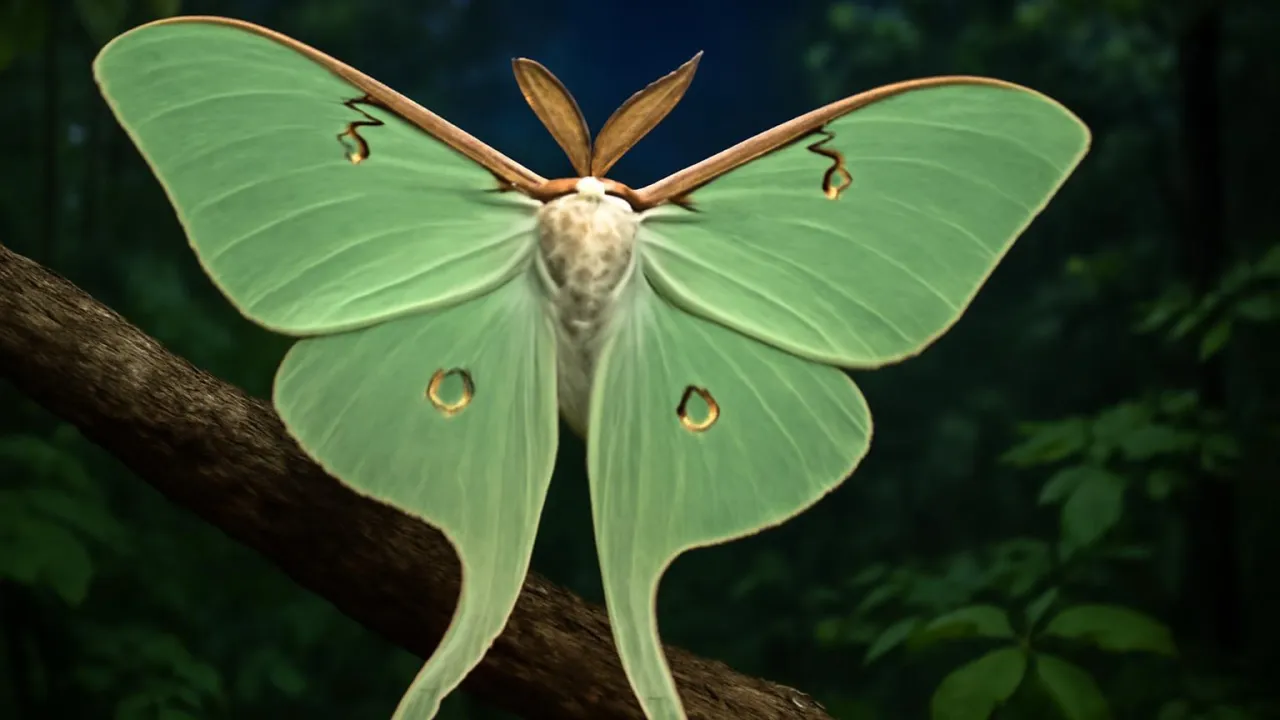
Luna moths belong to the giant silk moth family, and their wings can span up to 4.5 inches!
1 A Master of Moonlit Camouflage
The luna moth’s pale green wings and long, trailing tails make it one of the most easily recognized moths in North America. These unique wings provide excellent camouflage, allowing the moth to blend perfectly with leaves and tree bark. Their coloration and shape help them avoid being spotted by predators such as birds and bats. At night, their wings even reflect moonlight, making them appear almost ghostly as they fly.
2 An Amazing Life Cycle
Luna moths undergo complete metamorphosis, which means they change dramatically from egg to adult. The female lays eggs on the leaves of hardwood trees like hickory, walnut, and sweet gum. The caterpillars eat these leaves for several weeks, growing larger and shedding their skin multiple times. When ready, the caterpillar spins a silk cocoon and transforms into a , eventually emerging as a fully formed moth.
3 Survival Tricks and Ecosystem Roles
Luna moths have evolved long tails on their wings, which scientists believe help confuse the of bats. This adaptation makes it harder for bats to catch them in flight, increasing their survival chances. Although adult luna moths do not eat, their caterpillars play an important role by recycling plant matter into nutrients for the forest soil. Luna moths are also food for many animals, making them a key part of the food web.
4 Where and When to Find Luna Moths
Luna moths are found in deciduous forests throughout eastern North America, from Canada down to Florida and Texas. They are most common in late spring and early summer, when adults emerge to mate and lay eggs. Depending on the region’s climate, there can be one to three generations each year. Human activities like and light pollution can affect their populations, but luna moths are still a magical sight for anyone lucky enough to spot them.
1. How do luna moths help forests even though adults do not eat?
2. Why are luna moths sometimes hard to find?