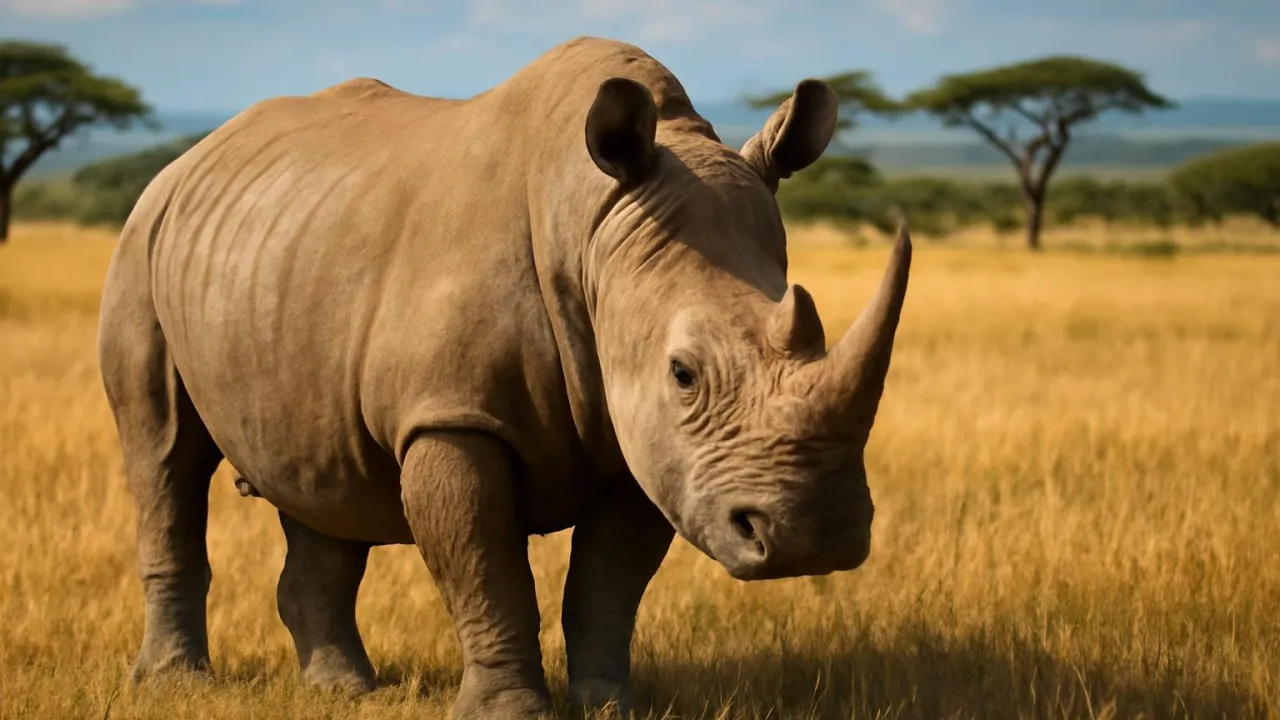
White rhinos can run up to 30 miles per hour, faster than many cars in cities!
✨ Word Sparks (Grade 2 Glossary)
Tap 🔊 to hear
horns
Hard, pointed parts on animals’ noses or heads
predator
An animal that hunts other animals for food
grasslands
Large areas covered mostly with grass and few trees
🪝
Can you imagine a huge rhino running faster than a car in a city?
1
Huge Animals with Big Horns
White rhinos are huge animals that live in African . They have two big on their nose. Their thick gray skin protects them well from the sun and bugs.
2
Grass Eaters That Drink Water Daily
These rhinos eat mostly grass every day to stay strong and healthy. They have wide mouths that help them cut grass easily. They also drink water daily to keep their bodies cool.
3
Fast Runners in Open Lands
White rhinos can run very fast even though they are big and heavy. They live in open lands where they can see coming. Their speed helps them escape danger quickly.
White rhinos have a wide mouth that is specially adapted to graze grass efficiently.
✨ Word Sparks (Grade 3 Glossary)
Tap 🔊 to hear
grazing
Eating grass or plants from the ground
ecosystem
All living and nonliving things in one place
adaptation
A body part or behavior that helps survival
🪝
Did you know the white rhinoceros uses its wide mouth to eat grass better than other rhinos?
1
Massive Mammals with Protective Skin
White rhinoceroses are massive mammals that weigh up to 5,000 pounds. Their thick, gray skin acts like armor to protect them from predators and thorny bushes. They have two horns made of keratin, the same material as human hair and nails.
2
Adapted Mouths for Grazing Grass
Unlike other rhinos, white rhinos have wide, flat mouths adapted for on grass. This helps them gather large amounts of food quickly. Their feeding behavior supports the grassland by trimming plants and helping new growth.
3
Living in African Grasslands
White rhinos live mostly in savannas and open grasslands across southern Africa. These habitats provide plenty of grass and water sources. Their large size and speed help them avoid predators like lions and hyenas.
4
Role in the Ecosystem
White rhinos play a key role in their by shaping the landscape. Their helps maintain grassland health, which supports many other animals. They also serve as prey for large predators, balancing the food web.
White rhinos help keep African grasslands healthy by grazing and shaping plant growth patterns.
✨ Word Sparks (Grade 4 Glossary)
Tap 🔊 to hear
keratin
A hard material that makes up horns and nails
biodiversity
Many different kinds of plants and animals living together
poaching
Illegal hunting of animals for valuable parts
🪝
How does the white rhinoceros shape its environment and survive in Africa’s grasslands?
1
Physical Traits and Protection
The white rhinoceros has thick, tough skin that protects it from thorny plants and insect bites, allowing it to roam safely. Its two horns, made of , serve as defense against predators and rivals, while its large body size deters many threats. This protective armor is essential for survival in the wild.
2
Feeding Habits and Ecosystem Impact
White rhinos are specialized grazers with wide mouths adapted to clip grass close to the ground, which helps maintain healthy grasslands. Their grazing patterns prevent overgrowth and promote by allowing sunlight to reach smaller plants. This role is vital for supporting other herbivores and maintaining ecosystem balance.
3
Habitat and Geographic Range
White rhinoceroses primarily inhabit savannas and open grasslands in southern Africa, including countries like South Africa, Namibia, and Zimbabwe. These regions provide abundant grasses and water sources necessary for their survival. Human activities, however, have reduced their range, making conservation efforts critical.
4
Conservation and Human Impact
Due to for their valuable horns and habitat loss, white rhino populations have declined significantly. Conservation programs involve anti-poaching patrols and protected reserves to ensure their survival. Their presence also supports eco-tourism, which benefits local communities economically.
2. What is one reason white rhinos are endangered?
🤯 Mind-Blowing Fact • Grade 5
White rhinos can run up to 30 miles per hour despite weighing over two tons!
✨ Word Sparks (Grade 5 Glossary)
Tap 🔊 to hear
subspecies
A smaller group within a species with small differences
mega-herbivore
A very large plant-eating animal
habitat fragmentation
Breaking habitats into smaller, separated pieces
🪝
What scientific secrets help the white rhinoceros thrive and why is protecting them vital for Africa’s ecosystems?
1
Taxonomy and Scientific Classification
The white rhinoceros, scientifically named Ceratotherium simum, belongs to the family Rhinocerotidae, which includes five living species. It is divided into two : the southern white rhino and the much rarer northern white rhino. This classification helps scientists understand their evolutionary history and conservation needs.
2
Physiological Adaptations and Mechanics
White rhinos have a unique wide, square lip adapted for grazing coarse grasses efficiently, unlike the pointed lips of black rhinos. Their large nasal cavity supports a strong sense of smell, crucial for detecting predators and other rhinos. Despite their bulk, they can run up to 30 miles per hour over short distances using powerful leg muscles.
3
Ecological Role and Conservation History
As , white rhinos play a critical role in shaping African savannas by controlling grass growth and maintaining biodiversity. Historically, their populations declined due to intense poaching for horns used in traditional medicine and ornamental carvings. Conservation efforts since the 20th century, including protected reserves and breeding programs, have helped stabilize numbers.
4
Quantitative Comparisons and Environmental Needs
Adult white rhinos weigh between 4,000 and 5,100 pounds, standing about 5.9 feet tall at the shoulder. They require daily water intake and consume up to 120 pounds of grass each day to sustain their massive bodies. Their habitat temperature ranges from 68 to 95 degrees Fahrenheit, thriving in warm savanna climates.
5
Current Threats and Future Protection
Despite conservation successes, white rhinos face ongoing threats from poaching and . International laws and anti-poaching patrols are vital to their survival. Protecting these animals also supports eco-tourism, which provides economic incentives for local communities to preserve natural habitats.