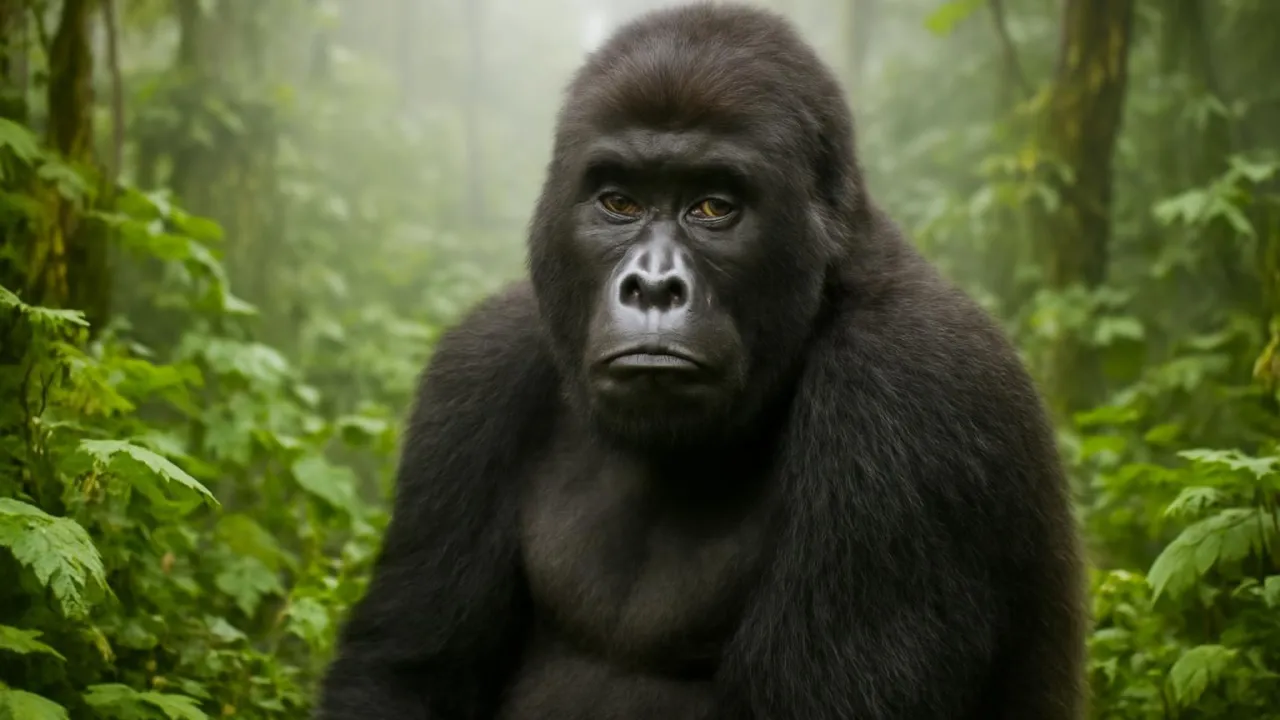
A silverback gorilla can weigh as much as a small car!
✨ Word Sparks (Grade 2 Glossary)
Tap 🔊 to hear
fur
Soft hair that keeps animals warm
troop
A group of animals living as a family
silverback
A big male gorilla with silver fur on his back
🪝
Have you ever wondered how mountain gorillas stay warm in cold mountains?
1
Thick Fur Keeps Them Warm
Mountain gorillas have thick black that keeps them warm in cold mountain air. They live in forests on tall mountains in Africa. Their fur helps them survive chilly weather and rain.
2
Living in Groups
These gorillas live in groups called that include many family members. The leader is a big male who protects the group. Troops eat plants like leaves, stems, and fruits together every day.
3
Strong and Gentle
Mountain gorillas are very strong animals but they are gentle and calm with their family. They use their strength to climb trees and move heavy branches. Their large hands help them grab food and hold babies.
Mountain gorillas share about 98% of their DNA with humans!
✨ Word Sparks (Grade 3 Glossary)
Tap 🔊 to hear
adaptation
A change that helps animals survive better
troop
A group of animals living together as family
herbivore
An animal that eats only plants
🪝
Did you know mountain gorillas use their thick fur as an adaptation to cold mountain climates?
1
Adapted to Cold Mountains
Mountain gorillas live in the misty mountains of Central Africa where temperatures are cool. Their thick black fur acts as camouflage and keeps them warm during cold weather. This helps them survive in their high-altitude forest habitat.
2
Living in Social Groups
These gorillas live in social groups called , usually led by a dominant silverback male. The silverback protects the troop from predators and helps find food. Troops include females and their young, forming a close family unit.
3
Eating Plants for Nutrition
Mountain gorillas are that eat leaves, stems, shoots, and fruits. Their strong teeth and jaws help them chew tough plant fibers for nutrients. This diet provides energy and vitamins needed for their large bodies.
4
Using Strength and Intelligence
Mountain gorillas use their powerful arms to climb trees and break branches for food. Their intelligence helps them communicate with grunts and gestures to keep the safe. These skills are important for survival in dense forests.
Mountain gorilla populations have grown thanks to strong conservation efforts protecting their homes.
✨ Word Sparks (Grade 4 Glossary)
Tap 🔊 to hear
ecosystem
A community of plants and animals living together
conservation
Protecting animals and their homes
troop
A group of animals living as a family
🪝
How do mountain gorillas play a vital role in their mountain forest ecosystems?
1
Surviving in Mountain Forests
Mountain gorillas live in dense forests on high mountains where the cool climate requires thick fur for warmth. Their habitat includes parts of Rwanda, Uganda, and the Democratic Republic of Congo. The misty environment provides rich vegetation for their diet, which includes many types of plants.
2
Important Role in Ecosystems
These gorillas help spread seeds through their droppings, supporting forest growth and biodiversity. By eating plants and moving through the forest, they shape the ’s health and help maintain balance. Their presence supports many other animals by keeping the forest environment healthy.
3
Social Structure and Protection
Mountain gorillas live in led by dominant silverbacks who protect the group from predators and rival males. This social structure ensures safety and care for young gorillas and helps the group stay strong. The silverback’s strength and leadership are crucial for the troop’s survival and harmony.
4
Human Impact and Conservation
Mountain gorillas face threats from habitat loss and poaching, but efforts have helped increase their numbers. Protected parks and wildlife laws in Central Africa support their survival and reduce dangers. Ecotourism also raises awareness and funds to protect these gentle giants and their homes.
1. What do mountain gorillas help grow by spreading seeds?
2. Why is the silverback important in a gorilla troop?
🤯 Mind-Blowing Fact • Grade 5
Mountain gorillas can lift weights over four times heavier than an average car!
✨ Word Sparks (Grade 5 Glossary)
Tap 🔊 to hear
keystone species
An animal that helps keep its home healthy
conservation
Efforts to protect animals and nature
physiology
How an animal’s body works
🪝
What fascinating scientific facts explain how mountain gorillas thrive in high-altitude African forests?
1
Scientific Classification and Habitat
Mountain gorillas (Gorilla beringei beringei) belong to the family Hominidae and inhabit the volcanic mountains of Central Africa. These primates are found primarily in the Virunga volcanic mountain range and Bwindi Impenetrable Forest. Their habitat ranges from 8,000 to 13,000 feet in elevation, where temperatures are cooler and vegetation is dense.
2
Physiological Adaptations for Survival
Their thick, coarse fur insulates them against cold mountain temperatures, while their large nostrils and lungs efficiently process oxygen in thin air. Mountain gorillas have powerful muscles that enable them to climb steep slopes and manipulate heavy vegetation. Their opposable thumbs allow precise grasping of food and tools.
3
Conservation History and Efforts
Once critically endangered due to poaching and habitat destruction, mountain gorilla populations have rebounded through international efforts. Protected areas, anti-poaching patrols, and community education have increased their numbers to over 1,000 individuals. Ecotourism provides funding and awareness to support ongoing protection.
4
Ecological Role and Interactions
Mountain gorillas are that maintain forest health by dispersing seeds and pruning vegetation, which promotes biodiversity. Their social structure includes multi-male troops with complex communication through vocalizations and gestures. These interactions help reduce conflict and strengthen group cohesion.
5
Quantitative Comparisons and Facts
Adult male silverbacks can weigh up to 430 pounds (195 kilograms) and stand nearly 6 feet (1.8 meters) tall when upright. They can lift more than 1,800 pounds (816 kilograms), making them one of the strongest primates. Their diets consist of up to 40 pounds (18 kilograms) of vegetation daily, highlighting their role as large herbivores. These impressive physical traits allow them to thrive in challenging mountain environments.