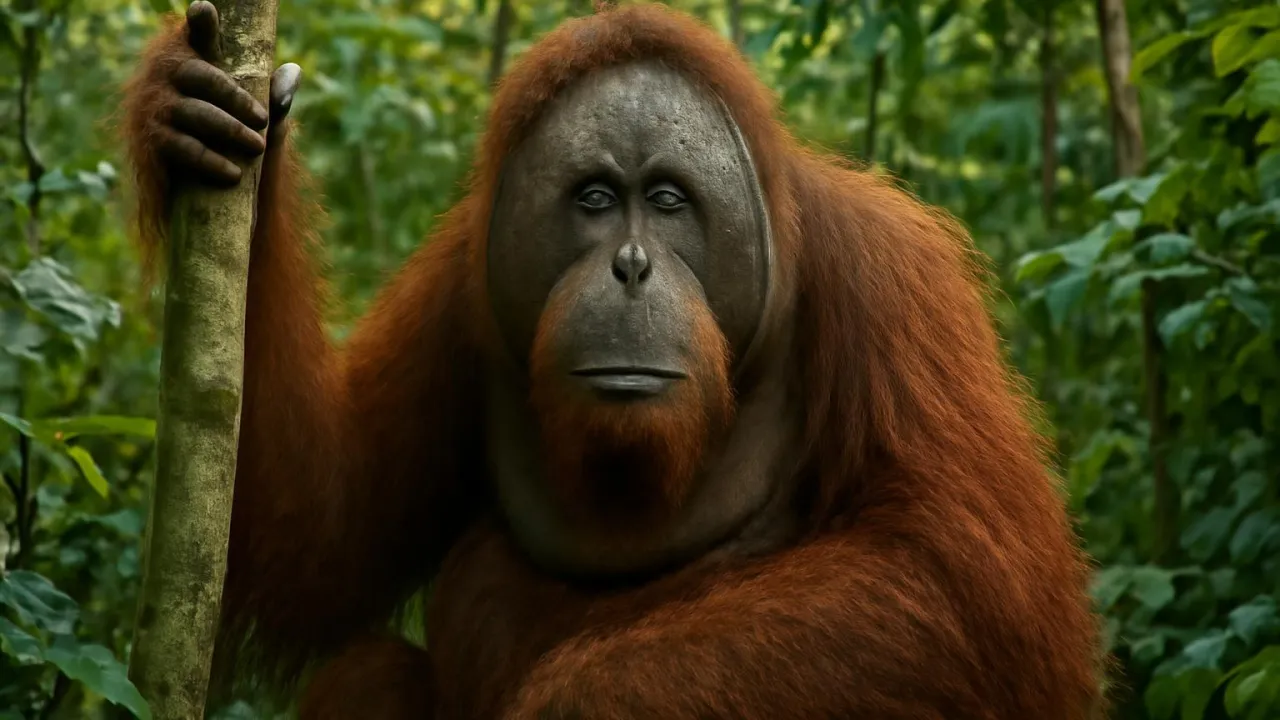
Orangutans can use sticks as tools to reach food or scratch themselves!
✨ Word Sparks (Grade 2 Glossary)
Tap 🔊 to hear
rainforest
A wet forest with many tall trees and animals
nest
A cozy home made by animals to sleep in
tool
Something used to help do a job or task
🪝
Have you ever seen an animal that swings through trees like a superhero?
1
Orangutans Live in Rainforests
Bornean orangutans live in the of Borneo island. They spend most time in tall trees. Their strong arms help them swing from branch to branch.
2
What They Eat and How They Grow
Orangutans eat fruits, leaves, and insects to stay healthy. Baby orangutans stay with their mothers for many years. They learn how to find food and build .
3
A Cool Orangutan Feature
Orangutans have long, orange hair that helps them blend into the forest. They build soft in trees to sleep safely at night.
2. Why do baby orangutans stay with their mothers?
🤯 Mind-Blowing Fact • Grade 3
Orangutans can remember how to use tools even after many years without practice!
✨ Word Sparks (Grade 3 Glossary)
Tap 🔊 to hear
canopy
The top layer of trees in a forest
camouflage
Colors or shapes that help animals hide
ecosystem
A community of plants and animals living together
🪝
Did you know orangutans are one of the smartest tree animals on Earth?
1
Living High in the Rainforest
Bornean orangutans live in dense rainforests on the island of Borneo. They spend most of their lives in the forest , which is the top layer of trees. This high home helps them avoid many predators and find food easily. Their long arms and curved fingers are perfect adaptations for swinging between branches.
2
Eating and Growing Up
These orangutans eat mostly fruits, leaves, and insects to get nutrients. Baby orangutans stay with their mothers for up to eight years to learn survival skills. This long care period is important for learning how to find food and build nests. Their slow growth is an adaptation to their complex environment.
3
Building Nests and Using Tools
Orangutans build nests from branches and leaves to sleep safely in trees. They use tools like sticks to reach insects or scratch hard-to-reach places. This use of tools shows their intelligence and helps them survive in the wild. Their reddish hair also provides among the forest leaves.
4
Why Orangutans Are Special
Orangutans are one of the few great apes that live mostly in trees. Their ability to use tools and build nests is rare among animals. They play an important role in their by spreading seeds from the fruits they eat. This helps the rainforest grow and stay healthy.
Bornean orangutans can live up to 45 years in the wild, showing remarkable longevity.
✨ Word Sparks (Grade 4 Glossary)
Tap 🔊 to hear
symbiosis
When two living things help each other survive
deforestation
Cutting down many trees in a forest
regeneration
The forest growing back after damage
🪝
How does the Bornean orangutan’s life in the rainforest show nature’s clever design?
1
Adaptations for Tree Living
The Bornean orangutan has evolved long, strong arms and curved fingers that allow it to swing efficiently through the rainforest canopy. This adaptation helps it avoid ground predators and reach fruits high in the trees. Their reddish-orange hair provides camouflage among the leaves, protecting them from predators. These physical traits are essential for survival in their complex forest environment.
2
Role in the Rainforest Ecosystem
Orangutans play a crucial role in their ecosystem by dispersing seeds from the fruits they consume, which supports forest . They also help maintain biodiversity by spreading a variety of plant species across the forest. Their nests provide shelter for some smaller animals after use, showing a form of . Human activities like logging threaten their habitat, causing population declines.
3
Life Cycle and Growth
Orangutans have a slow life cycle with long childhoods, sometimes lasting up to eight years under maternal care. This extended period allows young orangutans to learn vital skills such as tool use and nest building. The slow growth rate is an adaptation to the demanding rainforest environment. Juveniles gradually become independent but often remain close to their mothers for protection.
4
Geographic Distribution and Conservation
The Bornean orangutan is native only to the island of Borneo, where tropical rainforests provide their habitat. Due to and habitat loss, they are classified as endangered by conservation groups. Efforts to protect their forests and reduce logging are critical to their survival. Conservation programs also focus on education and rehabilitation of rescued orangutans.
1. Why do orangutans have long arms and curved fingers?
2. What human activity threatens orangutans’ homes?
🤯 Mind-Blowing Fact • Grade 5
Bornean orangutans can consume fruits from over 400 plant species, aiding rainforest diversity.
✨ Word Sparks (Grade 5 Glossary)
Tap 🔊 to hear
brachiation
Swinging from branch to branch using arms
frugivore
An animal that mainly eats fruit
omnivorous
Eating both plants and animals
🪝
What makes the Bornean orangutan a unique and vital species in rainforest biology?
1
Scientific Classification and Habitat
The Bornean orangutan, scientifically known as Pongo pygmaeus, is a great ape native exclusively to Borneo’s tropical rainforests. It belongs to the family Hominidae, sharing ancestry with humans, chimpanzees, and gorillas. This species inhabits lowland and mountainous forests, thriving in dense canopy layers where it spends most of its life. Its geographic range is limited, making habitat preservation critical.
2
Physiological Adaptations for Arboreal Life
Bornean orangutans have highly flexible shoulder joints and extremely long arms, which can span up to seven feet, enabling efficient through the forest canopy. Their curved fingers and opposable thumbs provide powerful grips on branches, while their thick reddish fur protects them from rain and sun. Their large, strong jaws allow them to eat tough fruits and leaves, supporting their diet.
3
Conservation Challenges and Efforts
Due to habitat destruction from logging, palm oil plantations, and illegal hunting, Bornean orangutans are classified as endangered by the International Union for Conservation of Nature. Conservation programs focus on protecting forest habitats, rehabilitating orphaned orangutans, and educating local communities. Scientific research monitors population trends, aiming to increase numbers through habitat corridors and anti-poaching laws.
4
Ecological Role and Seed Dispersal
As , Bornean orangutans play a vital role in seed dispersal, consuming over 400 fruit species and spreading seeds across wide forest areas. This activity promotes genetic diversity and forest regeneration, which supports numerous other species. Their nests, built daily from branches and leaves, sometimes provide shelter for insects and small mammals, contributing to forest biodiversity.
5
Quantitative Comparisons and Longevity
Adult Bornean orangutans typically weigh between 66 and 220 pounds (30 to 100 kilograms) and measure about 4.3 to 5 feet (1.3 to 1.5 meters) tall. They can live up to 45 years in the wild, with some individuals reaching over 50 years in captivity. Their arm span can exceed their height by nearly two feet, highlighting their arboreal specialization. They travel roughly one to two miles daily searching for food.