Laptop Computer
The Foldable Machine That Travels With You
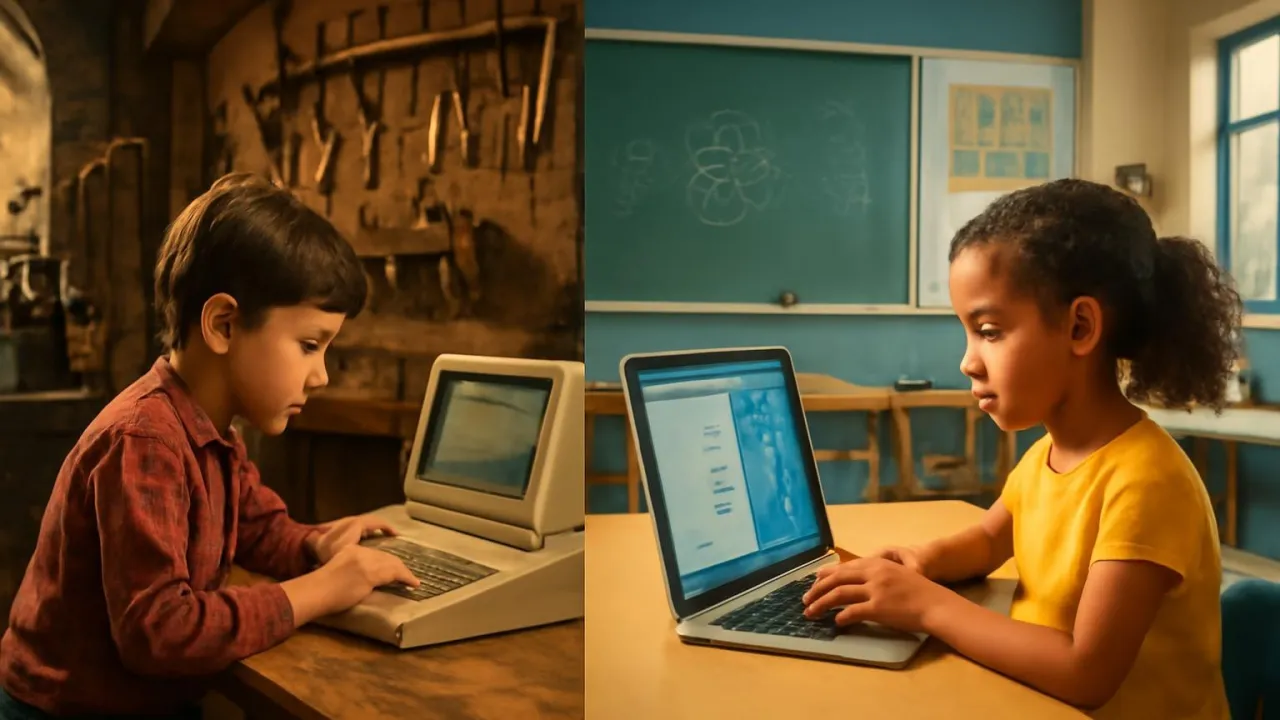
Modern laptops can contain over five billion transistors—more than all the people on Earth!
1 Revolution in a Suitcase: The First Laptops
In 1981, Adam Osborne unveiled the Osborne 1, a groundbreaking portable computer that weighed about 24 pounds and featured a 5-inch monochrome screen. Unlike earlier desktop machines, the Osborne 1 could be closed and carried like a suitcase, making digital work possible outside the office for the first time. Its design included a full keyboard, two floppy disk drives, and a handle for transport, though its size and weight were still challenging by today’s standards. This invention launched the era of mobile computing, inspiring engineers to create lighter and more powerful models. The Osborne 1’s success showed the world that computers could be personal, portable, and practical.
2 Engineering Marvels: How Laptops Work
A modern laptop integrates millions of onto tiny silicon chips called integrated circuits, which process data at lightning speed. The (LCD) uses electric signals to control pixels, creating sharp images and vibrant colors on the screen. Laptops are powered by rechargeable lithium-ion batteries, allowing hours of use without being plugged in. Advanced cooling systems, such as miniature fans and heat pipes, prevent the computer from overheating during heavy use. The compact design combines the motherboard, storage, keyboard, and display into a single foldable unit. Wireless technologies like Wi-Fi and Bluetooth enable laptops to connect to the internet and other devices seamlessly.
3 From Heavy to Handy: Evolution of the Laptop
Over the past four decades, laptops have evolved dramatically in speed, size, and features. Early models were bulky and slow, but today’s ultra-thin laptops can weigh as little as two pounds and last over ten hours on a single charge. (SSDs) have replaced spinning hard disks, making data access much faster and more reliable. Touchscreens, high-definition webcams, and flexible hinges allow laptops to transform into tablets or stand in tent mode for presentations. Engineers use lightweight materials like aluminum and carbon fiber to make laptops durable and easy to carry. Each improvement has made laptops more essential for learning, creativity, and communication.
4 Global Impact: Laptops and Society
The invention of the laptop has transformed how people learn, work, and communicate around the world. Students use laptops for research, writing, and virtual classrooms, while professionals rely on them for designing, coding, and collaborating across continents. Laptops have helped bridge the digital divide, making technology accessible in remote areas and developing countries. During emergencies or pandemics, laptops enable remote work and online learning, keeping people connected and productive. The portability of laptops supports creativity and problem-solving wherever inspiration strikes. As a result, laptops have become one of the most influential inventions of the modern era.
5 What’s Next? The Future of Laptops
Engineers are constantly pushing the boundaries of laptop technology, aiming for even lighter, faster, and more energy-efficient devices. Innovations like foldable OLED screens, artificial intelligence-powered assistants, and quantum computing chips may soon become part of everyday laptops. Advances in battery chemistry could allow laptops to run for days without recharging. Environmental concerns are leading to more recyclable materials and energy-saving designs. The line between laptops, tablets, and smartphones continues to blur as devices become more versatile and interconnected. The story of the laptop is still being written, and its next chapter promises even more exciting possibilities.
1. What key engineering advance allows laptops to process information so quickly?
2. How have laptops helped connect people around the world?