1. What sound can you hear on Lake Baikal in winter?
2. Which animal rests on Lake Baikal’s ice?
🤯 Mind-Blowing Fact • Grade 2
Lake Baikal is older than the dinosaurs!
✨ Word Sparks (Grade 2 Glossary)
Tap 🔊 to hear
freshwater
Water without salt
crack
A sharp breaking sound
seal
A swimming animal with flippers
🪝
What would it feel like to walk on singing ice?
1
A Lake Like No Other
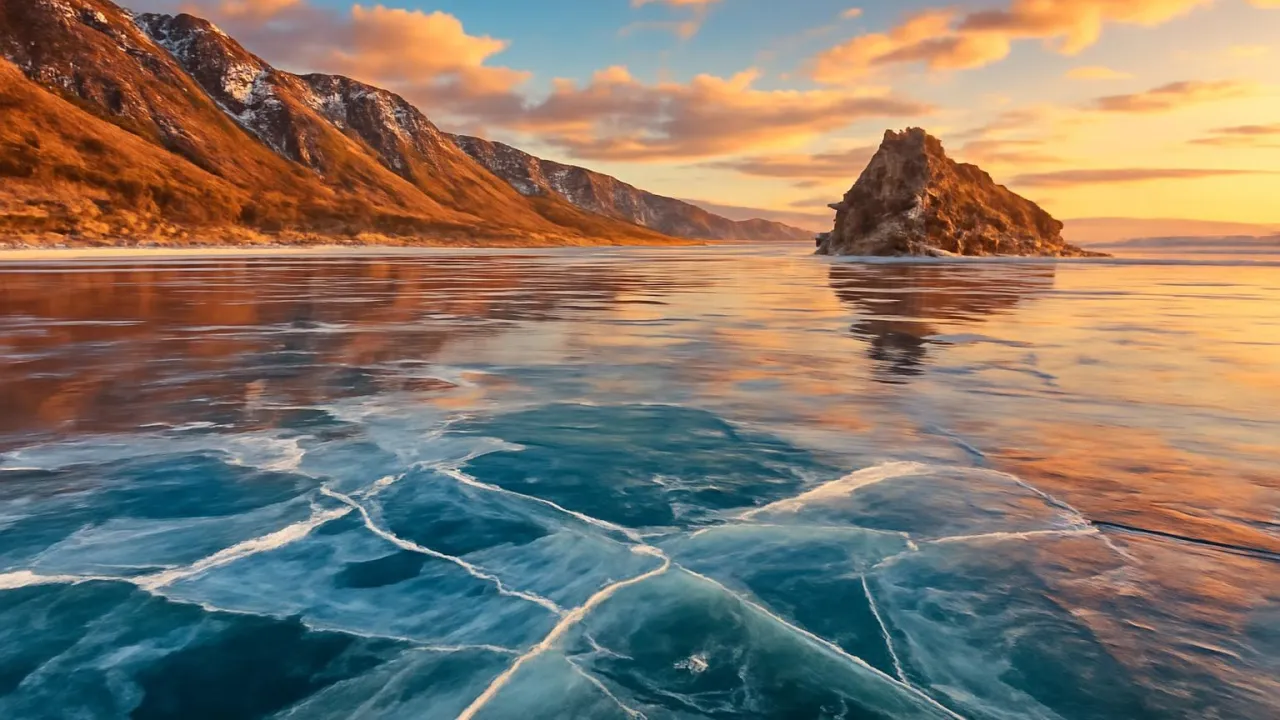
Lake Baikal is so big and deep that it holds more water than any other lake. People visit to see its sparkling clear water and amazing mountains. In winter, the lake freezes with thick, glassy ice. You can even see fish swimming under your feet.
2
Ice That Makes Music
When the ice forms, it and pops so loudly that it sounds like singing. Some people skate and slide across the ice, listening to the strange sounds. The ice is so clear, you can spot rocks and bubbles below. It feels magical and mysterious.
3
Home for Special Animals
Lake Baikal is home to animals you can’t find anywhere else. The Baikal is the only seal in the world. Tiny fish called golomyanka swim in the cold water. Many birds come to visit the lake too.
Lake Baikal holds about 20% of all the world’s fresh surface water!
✨ Word Sparks (Grade 3 Glossary)
Tap 🔊 to hear
rift valley
A deep crack in Earth’s crust
acoustic
Related to sound or hearing
species
A special kind of living thing
🪝
What secrets are hidden beneath the world’s clearest, deepest lake?
1
A Lake of Superlatives
Lake Baikal is the deepest and oldest freshwater lake on Earth. It formed in a giant millions of years ago. The water is so clear, you can see over 130 feet down. Scientists call it a natural wonder because it holds more water than all the Great Lakes combined.
2
Ice That Vibrates and Sings
In winter, Baikal’s thick ice vibrates and cracks, creating sounds like laser zaps and drumbeats. This happens because the ice expands and contracts as temperatures change. The vibrations travel across the frozen surface. People skate and listen to the musical noises echoing around them.
3
Unique Life Forms
Lake Baikal is home to over 1,700 , many found nowhere else. The Baikal seal, or nerpa, is the world’s only freshwater seal. Tiny transparent fish called golomyanka live in its cold, deep waters. Scientists study these creatures to learn about evolution and adaptation.
4
A Place for Adventure
People visit Baikal to hike, skate, and explore its wild shores. In summer, the water sparkles and the forests are green. In winter, the frozen lake becomes a playground for ice sports and science experiments. Baikal’s beauty inspires artists, writers, and explorers from around the globe.
Lake Baikal’s oldest water at the bottom is over 2,000 years old!
✨ Word Sparks (Grade 4 Glossary)
Tap 🔊 to hear
biodiversity
Many different living things together
acoustic phenomena
Special sounds made by vibrations
rift valley
A huge crack in the ground
🪝
Imagine standing on crystal-clear ice, hearing mysterious sounds echoing from deep below—what’s happening under Lake Baikal’s frozen surface?
1
A Deep, Ancient Rift Lake
Lake Baikal formed in a vast about 25 to 30 million years ago, making it the world’s oldest lake. Its basin is so deep that it reaches 5,387 feet (1,642 meters) at its lowest point. The lake’s water is famously clear, allowing sunlight to penetrate deep below the surface. Scientists believe Baikal’s unique geology helps it stay fresh and clean for millions of years.
2
The Physics of Singing Ice
Each winter, Lake Baikal’s surface freezes into a thick, transparent sheet of ice that can be over three feet thick. As temperatures shift, the ice expands and contracts, causing cracks that release powerful vibrations. These vibrations produce —strange, musical sounds that travel across the frozen lake. The effect is so dramatic that people can hear the ‘singing’ ice from miles away.
3
A Biodiversity Hotspot
Lake Baikal is home to more than 1,700 species of plants and animals, two-thirds of which are found nowhere else. The Baikal seal, or nerpa, is the only freshwater seal in the world and thrives in the cold, oxygen-rich water. Unique fish, like the golomyanka, have adapted to survive at incredible depths. This makes Baikal a natural laboratory for studying evolution and environmental change.
4
Cultural and Global Importance
For centuries, Lake Baikal has been a sacred place for local peoples and a source of inspiration for artists and scientists. It supplies clean water to millions and supports important fisheries. Today, Baikal is protected as a UNESCO World Heritage site, but it faces threats from pollution and climate change. People around the world work together to preserve its beauty and mystery for the future.
Lake Baikal’s water is so clear that sunlight can reach depths of over 130 feet (40 meters)!
✨ Word Sparks (Grade 5 Glossary)
Tap 🔊 to hear
endemic
Found only in one place
resonance
Vibrations that make strong sounds
tectonic
Related to Earth’s moving crust
🪝
If you dropped a stone into Lake Baikal, how far would it fall before reaching the bottom—and what ancient secrets might it pass along the way?
1
A Geological Marvel: The World’s Oldest and Deepest Lake
Lake Baikal’s origins trace back approximately 25 to 30 million years, making it the oldest existing freshwater lake on Earth. Located in a massive continental rift valley in southern Siberia, its basin plunges to a maximum depth of 5,387 feet (1,642 meters), making it the planet’s deepest lake. Baikal’s extraordinary depth means it contains about 5,662 cubic miles (23,600 cubic kilometers) of water—roughly 20% of all unfrozen fresh surface water on Earth. The lake’s unique setting causes the basin to deepen each year at a measurable rate, a rare phenomenon among lakes worldwide.
2
Physics and Acoustics: The Science of Singing Ice
During Siberia’s harsh winters, Lake Baikal freezes with a thick, transparent ice sheet that can exceed three feet (one meter) in thickness. As temperatures fluctuate, the ice contracts and expands, creating fractures that release intense acoustic energy as vibrations. These vibrations propagate across the ice, producing a range of sounds—from sharp cracks to melodic, laser-like tones—due to the unique properties of the ice. Scientists study these acoustic phenomena to better understand the physics of ice, sound transmission, and even climate patterns in the region.
3
A Living Laboratory: Baikal’s Unique Biodiversity
Lake Baikal is renowned for its exceptional biodiversity, hosting over 1,700 species of plants and animals, with nearly two-thirds to the lake. The Baikal seal, or nerpa, is the only exclusively freshwater seal species on Earth, adapted to the lake’s cold, oxygen-rich waters. The golomyanka, a translucent fish, thrives at depths over 1,600 meters and gives birth to live young, a rare trait among fish. Scientists consider Baikal a natural laboratory, using it to study evolutionary processes, adaptation to extreme environments, and the effects of environmental change.
4
Cultural, Historical, and Environmental Significance
For thousands of years, Lake Baikal has been a cultural and spiritual symbol for the indigenous Buryat people and other Siberian communities. Its pristine waters support vital fisheries and provide drinking water for millions. Artists, writers, and explorers have long been inspired by Baikal’s beauty and mystery, making it a subject of countless legends and scientific expeditions. Today, Baikal is a UNESCO World Heritage site, recognized for its ecological and cultural value, but it faces serious threats from industrial pollution, invasive species, and climate change.
5
Preservation and Global Responsibility
Efforts to protect Lake Baikal involve international cooperation, scientific research, and local stewardship. Conservationists monitor water quality, fight pollution, and study the effects of global warming on the lake’s unique ecosystem. Educational programs teach children and adults about Baikal’s importance and how to safeguard its future. By understanding the lake’s scientific, ecological, and cultural significance, people worldwide can help ensure that Lake Baikal remains a source of wonder and life for generations to come.